


Publications
More than 180 papers, books and chapters, newest first, generated from the same bibliography as my CV. Each comes with its abstract and links: an open padlock marks a free copy, on HAL (the French open archive) when it is there, else on arXiv or a university repository. A title opens the paper's own page, which is also what Share sends.
Selected papers
-
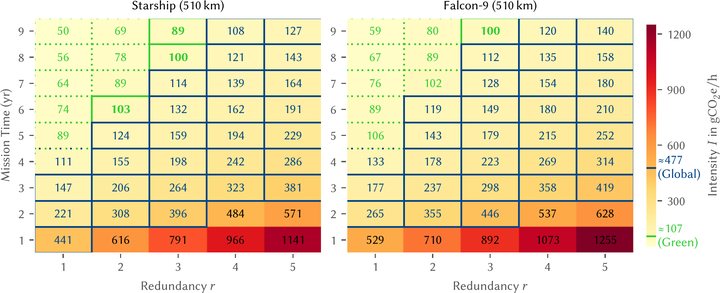
Figure CC BY 4.0 Dark Clouds Rising in Low-Earth Orbit: On Environmental Limits to Massive Orbital AI
ACM Workshop on LEO Networking and Communication (LEO-NET), co-located with ACM SIGCOMM
-
Figure © 2025 Elsevier -
Figure © 2024 IEEE On the Use of Mega Constellation Services in Space: Integrating LEO Platforms Into 6G Non-Terrestrial Networks
IEEE Journal on Selected Areas in Communications
-
Figure © 2022 IEEE Distributed On-Demand Routing for LEO Mega-Constellations: A Starlink Case Study
Advanced Satellite Multimedia Systems Conference and Signal Processing for Space Communications Workshop (ASMS/SPSC)
-
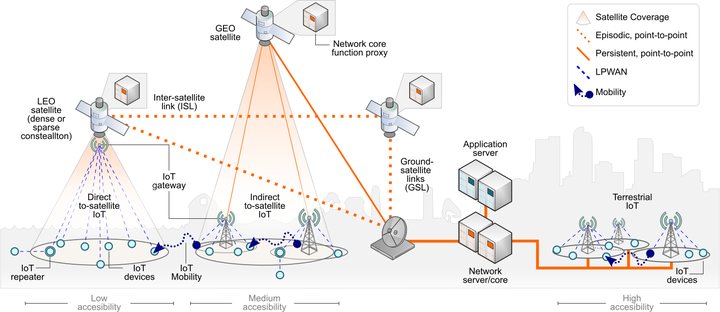
Figure © 2022 IEEE Space-Terrestrial Integrated Internet of Things: Challenges and Opportunities
IEEE Communications Magazine
-
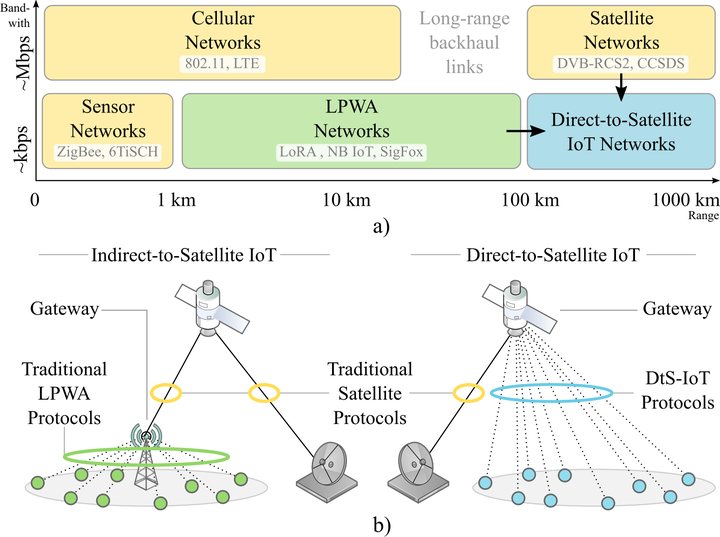
Figure CC BY 4.0 Sparse Satellite Constellation Design for Global and Regional Direct-to-Satellite IoT Services
IEEE Transactions on Aerospace and Electronic Systems
-
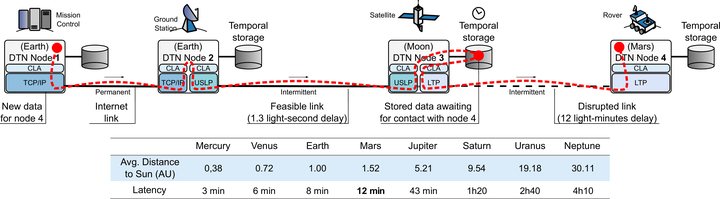
Figure © 2020 Elsevier Routing in the Space Internet: A contact graph routing tutorial
Elsevier Journal of Network and Computer Applications
-
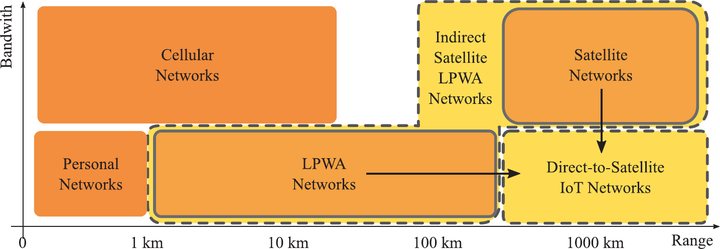
Figure © 2019 Springer Nature Switzerland AG Direct-To-Satellite IoT - A Survey of the State of the Art and Future Research Perspectives - Backhauling the IoT Through LEO Satellites
International Conference on Ad-Hoc Networks and Wireless (ADHOC-NOW)
-
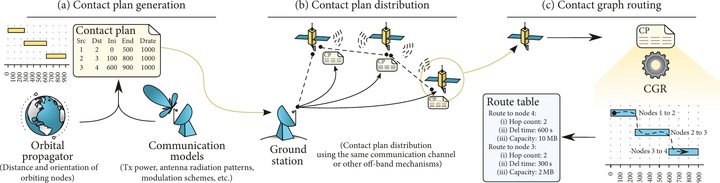
Figure CC BY 4.0 Assessing Contact Graph Routing Performance and Reliability in Distributed Satellite Constellations
Journal of Computer Networks and Communications
-
Cover © 2018 Artech House Delay Tolerant Satellite Networks
Artech House
-
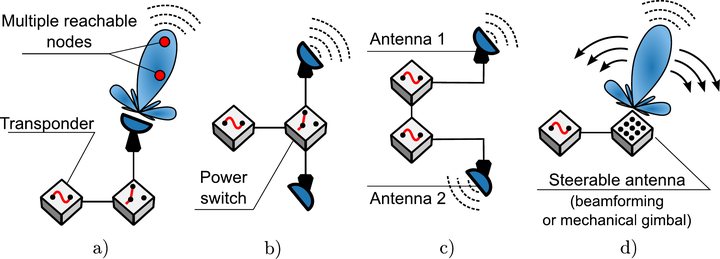
Figure © 2015 IEEE Design challenges in contact plans for disruption-tolerant satellite networks
IEEE Communications Magazine
-
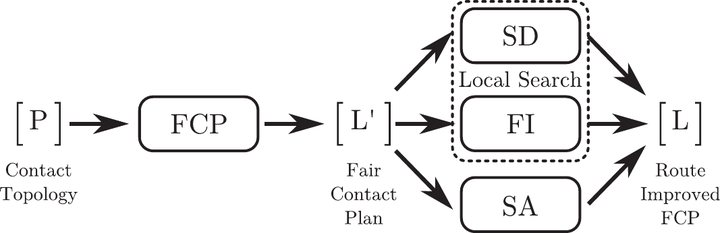
Figure © 2014 Elsevier Routing-aware fair contact plan design for predictable delay tolerant networks
Elsevier Ad Hoc Networks


All publications
2026
-
Beyond the Cone Model: Quantifying the Impact of Beam-Level Constraints on LEO Satellite Networks
ACM Workshop on LEO Networking and Communication (LEO-NET), co-located with ACM SIGCOMM, 2026
Abstract
Existing LEO satellite network simulators widely approximate satellite coverage using a cone-based model that assumes uniform capacity distribution within a satellite's field of view. However, modern systems employ phased-array antennas that impose discrete beam constraints, fundamentally altering coverage characteristics. In this paper, we investigate the extent to which ignoring beam-level constraints biases network-level performance estimates. We introduce a simplified beam-aware model that captures beam count, capacity, and limited spatial reuse, and compare it against traditional cone-based approximations across a range of user distributions. Our results show that cone models can significantly overestimate service coverage, particularly under sparse or highly clustered demand, due to beam-count and beam-capacity exhaustion effects. We further analyze how beam-hopping and -stacking mitigate these limitations and quantify their impact on predicted coverage differences, demonstrating reductions in predicted coverage difference of 40% and 65% respectively. We position these results of our model as the first step towards higher-fidelity simulation to show the importance of modeling beams and we sketch directions for future work that further improves fidelity.
-
Blind vs. Satellite-Detect Uplink in LEO Direct-to-Satellite IoT: An Analytical Threshold
IEEE Transactions on Vehicular Technology, 2026
Abstract
Direct-to-Satellite IoT (DtS-IoT) networks deploy Low Earth Orbit (LEO) nanosatellites as fast-moving gateways for stationary, mobile, and vehicular sensor platforms. Their intermittent contact windows force a fundamental uplink design choice: transmit blindly and accept a non-zero loss probability, or first detect an overhead satellite via a downlink beacon. We derive a first-order analytical design rule for this trade-off and obtain a closed-form crossover constellation size that depends on only two dimensionless quantities: a beacon-overhead parameter, which combines the receive-to-transmit power ratio, the receiver duty cycle, the beacon period, and the uplink frame duration, and the single-satellite coverage fraction set by altitude and elevation mask. Below the threshold satellite-detect is more energy-efficient; above it, blind uplink wins. Walker Star propagation simulations locate the geometry-specific crossover and delimit the validity regime of the independent-coverage approximation, a parametric study quantifies how altitude, elevation mask, and duty cycle shift the threshold, and a lightweight ALOHA collision extension cross-checked by Monte Carlo assesses its sensitivity to offered load, including the pass-start traffic bursts that penalise beacon-triggered access. For baseline LoRa-over-satellite parameters (600 km altitude, 1% receiver duty cycle) the analytical threshold is about 220 satellites, while the propagated Walker Star crossover lies at about 120 satellites because structured constellations saturate coverage earlier than independent satellites. For 3GPP NB-IoT over non-terrestrial networks, under a chipset-averaged power ratio derived from public module datasheets, the threshold rises to about 540 satellites in the absence of acquisition overhead and falls below 200 once a synchronisation chain of 100 ms is charged to every delivery, identifying the constellation sizes beyond which a hypothetical lightweight-access mode would outperform today's acquisition-mandatory protocol.
-
CGR*: A* Search for Contact Graph Routing
IEEE International Conference on Wireless for Space and Extreme Environments (WiSEE), Space-Terrestrial Internetworking Workshop (STINT), 2026
Abstract
Routing in space Delay-Tolerant Networks relies on Contact Graph Routing (CGR), standardized within the CCSDS Schedule-Aware Bundle Routing (SABR) framework. Existing SABR implementations use Dijkstra's algorithm, which ignores any information about the remaining cost to the destination and therefore explores many unnecessary states. We propose CGR*, an A*-based variant that exploits domain-specific heuristics to prune this search. Two heuristics are designed: h_Delay, an admissible heuristic suited to delay-dominated deep-space networks, and h_Geo, a greedy geographic heuristic for near-Earth networks, where contact availability rather than propagation delay drives arrival time. Experiments on realistic orbital scenarios show that h_Delay accelerates routing on deep-space networks by up to an order of magnitude with no loss of optimality, while h_Geo speeds up near-Earth routing at the cost of arrival times up to ∼2.5× the optimum — revealing cost-model design, rather than heuristic design alone, as the open challenge for A*-based routing in near-Earth scenarios. CGR* and its heuristics are released as part of the open-source A-SABR library.
-
Constellation Management for Inter-Satellite Link Scheduling in NB-IoT Non-Terrestrial Networks
Joint European Conference on Networks and Communications and 6G Summit (EuCNC/6G Summit), 2026
Abstract
Inter-Satellite Links (ISL) can improve data delivery in Low Earth Orbit (LEO) constellations by enabling relay paths when direct satellite-to-ground contacts are unavailable. However, ISL transmissions are operational tasks that consume satellite resources and affect scheduling constraints, aspects typically abstracted away in network-centric routing approaches. This paper extends our previous work, the Constellation Management System (CMS) framework, to incorporate ISL as schedulable tasks within its multi-objective optimization, jointly considering satellite operational constraints and network service metrics. We present the mathematical formulation of two ISL task types for Mobile Originated and Mobile Terminated data relay, including constraint extensions for dualsatellite memory tracking, data availability enforcement across relay chains, and end-to-end latency computation through recursive path chasing. A configurable hop limit parameter enables operators to control the trade-off between scheduling flexibility and computational complexity. Validation with a 6-satellite polar constellation demonstrates throughput improvements of up to 23% with ISL enabled, while quantifying the associated reduction in optimization speed up to 70% at two-hop configurations.
-
Contact Plan Design for Cross-Linked GNSSs: An ILP Approach for Extended Applications
IEEE Transactions on Aerospace and Electronic Systems, 2026
Abstract
Global Navigation Satellite Systems (GNSSs) employ intersatellite links (ISLs) to reduce dependence on ground stations, enabling precise ranging and communication across satellites. Beyond their traditional role, ISLs can support extended applications, including providing navigation and communication services to external entities. However, designing effective contact plan design (CPD) schemes for these multifaceted ISLs, operating under a polling time-division duplex framework, remains a critical challenge. Existing CPD approaches focus solely on meeting GNSS satellites' internal ranging and communication demands, neglecting their extended applications. This article introduces a CPD scheme capable of supporting extended GNSS ISLs. By modeling GNSS requirements and designing a tailored service process, our approach ensures the allocation of essential resources for internal operations while accommodating external user demands. Based on the BeiDou constellation, simulation results demonstrate the proposed scheme's efficacy in maintaining core GNSS functionality while providing extended ISLs on a best-effort basis. In addition, the results highlight the significant impact of GNSS ISLs in enhancing orbit determination and clock synchronization for the Earth–Moon libration point constellation, underscoring the importance of extended GNSS ISL applications.
-
Contact Plan Design for Optical Interplanetary Communications
Elsevier Ad Hoc Networks, 2026
Abstract
Space exploration missions generate rapidly increasing volumes of scientific telemetry that far exceed the capacity of today's manually scheduled, RF-based deep-space infrastructure. Free-space optical (FSO) communications promise orders of magnitude higher throughput, but their narrow beams require precise pointing, acquisition, and tracking (PAT) for link establishment and tightly synchronized contact schedules. Critically, no existing contact plan design (CPD) framework accounts for optical head retargeting delay, the time spent during coarse pointing and link acquisition before data transmission begins, which directly reduces usable contact time. Retargeting delay is the dominant impairment unique to optical networks, which induces a seconds-to-minutes-long mechanical pointing process for an optical terminal's laser from its current partner to the next receiver. This paper introduces the first PAT-aware CPD framework for optical interplanetary backhaul networks. The model captures directional temporal flows across both direct-to-Earth optical links and two-hop relay paths using delay/disruption-tolerant networking (DTN) satellites. We also introduce an optical network duty-cycle metric that quantifies the proportion of time spent transmitting to the contact window duration, exposing capacity lost to retargeting delay. Our results show that our MILP scheduler delivers over 30 percent higher network capacity than a greedy algorithm. More importantly, the results uncover a fundamental behavioral shift: when retargeting delays are modeled accurately, optimal schedules favor fewer but longer optical links that maximize throughput while minimizing retargeting overhead. These findings demonstrate that zero-delay assumptions substantially overestimate achievable performance and yield unrealistic contact plans.
-
Dark Clouds Rising in Low-Earth Orbit: On Environmental Limits to Massive Orbital AI
ACM Workshop on LEO Networking and Communication (LEO-NET), co-located with ACM SIGCOMM, 2026
Abstract
In 2026, we saw rising numbers of proposals for orbital data centers to facilitate AI, e.g., by SpaceX (up to one million satellites), Blue Origin, and Google—yet none include rigorous lifecycle sustainability analysis. We present ESpaS-ODC, a lifecycle carbon model that accounts for the three subsystems physically unavoidable at GPU-class power densities but absent from prior work: a thermal radiator sized from ISS data, solar-array degradation and eclipse margin, and cold-standby spares for no-repair access. Applying the model to an edge data center in a 510 km orbit reveals that the service-overhead-scaled radiator weighs about eleven times the GPU it serves and that modeled power and thermal infrastructure dominate launched component mass—not compute. Using mission duration T as the denominator to amortize launch, re-entry, and manufacturing carbon, model-boundary parity with a global-average terrestrial DC occurs within the first two mission years in our parameter sweep. With respect to a renewables-powered green-energy DC (Finland grid intensity: 68 gCO2e/kWh, PUE: 1.2), parity requires multi-year missions with cold-standby spares compensating the shorter component lifetimes. Idealized dawn-dusk SSO (no-eclipse regime, β > βcrit) eliminates the eclipse battery, cutting modeled component mass significantly (e.g., 25% on the 1 kW-ODC for a 3 yr mission), but leaves the radiator unchanged: high-beta orbits solve the battery problem, not the thermal problem. Finally, carrying one full cold spare (r = 2) increases amortized carbon per GPU hour by 40% on Starship and 34% on Falcon-9 at T = 3 yr, while its dependability benefit remains to be quantified.
-
Deploying QUIC in Challenged Networks: Profiling and Volume-Aware Congestion Control
IEEE International Conference on Wireless for Space and Extreme Environments (WiSEE), Space-Terrestrial Internetworking Workshop (STINT), 2026
Abstract
As communication networks expand into environments characterized by extreme latency and frequent disruptions, reliable data delivery requires Store&Forward (SnF) architectures. While Delay-Tolerant Networking (DTN) has traditionally served as the de facto standard for these challenged networks, there is renewed interest in leveraging the IP suite, specifically the QUIC transport protocol. However, existing literature often evaluates QUIC strictly within Interplanetary Network (IPN) contexts, mixing the fundamental constraints of general challenged networks with the specific architectural issues of a heterogeneous “network of networks.” This paper isolates the generalized challenged network problem to evaluate QUIC's end-to-end transport viability. We identify that while QUIC's internal logic is inherently resilient to delay fluctuations when supported by IP-layer S&F, classic Congestion Control Algorithms (CCAs) critically fail due to unreliable signaling and extreme feedback delays. To address this, we propose a comprehensive deployment strategy that combines rigorous QUIC parameter profiling with a novel, volume-aware CCA. This approach bounds in-flight data to a path's routable volume of data rather than relying on classic congestion signals like loss or delay increase. We validate our strategy through a ns-3 simulation of a dynamic “data mule” topology. Results show that a properly configured volume-aware QUIC/IP stack effectively utilizes available bandwidth without exceeding the nodes' storage capabilities. These findings provide initial evidence that QUIC is a viable alternative to DTN for generalized challenged networks, while delimiting the regime—single-flow, scheduled-contact scenarios with known path volumes—in which the result currently holds.
-
Direct-to-satellite internet of things (DtS-IoT): a tutorial review on architectures, protocols, and future directions
Frontiers in Communications and Networks, 2026
Abstract
The Internet of Things (IoT) is increasingly used in agriculture, logistics, smart cities, environmental monitoring, and industrial automation. However, many remote, rural, maritime, and disaster-prone regions remain disconnected because deploying terrestrial infrastructure is prohibitively expensive or technically infeasible. Direct-to-Satellite IoT (DtS-IoT) addresses this gap by leveraging Low Power Wide Area Network (LPWAN) technologies, such as adapted LoRa and Narrowband IoT (NB-IoT), which both enable direct communication between IoT devices and Low Earth Orbit (LEO) satellites and provide the long-range, low-power operation required for such links. This tutorial paper provides a structured and accessible introduction to DtS-IoT. Building on recent literature, it covers seven major themes: ( i ) system architectures, ( ii ) constellation design, ( iii ) LPWAN protocols, ( iv ) key challenges, ( v ) simulation tools, ( vi ) experimental studies, and ( vii ) future directions and open research issues. The goal is to guide the reader through the foundational concepts, design principles, and current technological landscape of DtS-IoT, offering a comprehensive set of references for further study.
-
Distributed Reinforcement Learning for Resource Management in Satellite Edge Computing Systems
IEEE Aerospace Conference, 2026
Abstract
The emergence of large-scale Low Earth Orbit (LEO) satellite constellations has renewed attention to satellite networks, with a vision to deliver global connectivity and performance levels comparable to terrestrial infrastructures. Despite this progress, such constellations are often treated as standalone systems rather than being fully integrated into next-generation communication architectures. To bridge this gap, extensive research has been devoted to the development of Non-Terrestrial Networks (NTN), aiming to enable unified operation across terrestrial and space segments within cellular infrastructures. Nonetheless, realizing this vision remains challenging due to persistent issues in latency, dynamic scheduling, and resource management. To tackle these challenges, we present the development of a Space Cloud, where Multi-access Edge Computing (MEC) services are deployed across satellite nodes and interconnected through Inter-Satellite Links (ISL), forming a distributed space-based data center. By enabling in-orbit computation, the Space Cloud reduces dependence on terrestrial infrastructure, as processing no longer needs to be offloaded to ground-based data centers. This architectural shift is key to meeting the lowlatency requirements of modern, latency-sensitive applications. This paper proposes a distributed Reinforcement Learning (RL) approach to manage computational resources in space-based MEC environments. The system leverages a scalable actorcritic framework, where neural network-based actors and critics are deployed on individual satellites. Each node operates autonomously and in a distributed manner, enabling the network to optimize actions locally while considering both instant rewards and long-term impact. The RL model leverages historical data and processing patterns to control the activation of on-orbit servers, aiming for efficient resource utilization. We evaluate the proposed strategy using a synthetic constellation designed with our in-house satellite emulation and MEC computation framework. Moreover, through Pareto-efficient analysis across key performance indicators (KPI), we benchmark our approach against conventional baselines and assess its applicability under the constraints of specific space missions. The results demonstrate that the RL controller achieves comparable task failure and latency rates to the baselines, while significantly reducing resource consumption.
-
DORSAL: Downlink Optimization for Robust Direct-to-Satellite LoRaWAN
IEEE Internet of Things Journal, 2026
Abstract
Delivering downlink (DL) ACKs to Class A LoRaWAN devices via low Earth orbit (LEO) satellite constellations requires predicting end-to-end propagation delays of 10–500 ms to hit a 1-s receive window, a timing challenge absent from terrestrial schedulers. We present downlink optimization for robust direct-to-satellite LoRaWAN (DORSAL), the first mixed-integer linear programming (MILP) scheduler for DL delivery in direct-to-satellite (DtS) LoRaWAN networks. It introduces the downlink arrival receive-window timing (DART) as the central constraint to jointly optimize gateway (GW) selection and packet injection timing across ISL-capable and bent-pipe architectures. Evaluation on a Walker 5× 5 polar constellation (25 satellites, 650 km) and a commercial ground station (GS) network yields five results: 1) DART infeasibility blocks 73% of bent-pipe deliveries regardless of scheduler quality: DART-unaware approaches collapse from 93% nominal to only 20% real delivery; 2) ISL routing raises %ACK by + 67.4 pp over bent-pipe (91.6% versus 24.2% at n_mathrm GS=3 ground stations, ISM band) by eliminating the three-way simultaneous-visibility constraint, with 73% of ACKs delivered via ≥ 2 -hop paths; 3) ISL %ACK is nearly flat across n_mathrm GSin 3,6,12 GSs (91.6%–92.7%), showing that a minimal three-station polar network captures the full scheduling benefit of an ISL-equipped constellation; 4) ISL hardware speed has negligible impact up to 300 ms/hop: %ACK is flat from 0 to 300 ms, then degrades in two discrete steps (−5.3 pp at 500 ms, −2 pp at 700 ms) as successive hop-count tiers lose causal injection feasibility; and 5) the MILP solves to proven optimality within seconds for up to 10^3 devices, confirming that the sparse conflict-graph structure keeps the problem tractable at realistic Internet of Things (IoT) subscriber counts.
-
End-to-End Testbed Validation of Periodic and Probabilistic-Aware Constellation Scheduling for Non-Terrestrial Networks
Elsevier Acta Astronautica, 2026
Abstract
Integrated satellite-and-network scheduling frameworks for Non-Terrestrial Networks (NTN) are validated almost exclusively through simulation, in which task execution is instantaneous and data volumes match planned values exactly. Real operations deviate: data generation rates fluctuate, onboard resources drift from their modeled states, and constraint violations cascade into lost service time. To our knowledge, no existing testbed closes the scheduling loop of an integrated satellite-and-network scheduler under execution deviations. This work makes two contributions to address this gap. First, we propose an evaluation paradigm for execution-deviation correction methods in this class of schedulers, covering both proactive and reactive strategies, and implement it as a closed-loop, in-the-loop testbed in which a ground scheduler issues plans, a satellite-side execution segment runs them under controlled data-generation deviations, and telemetry from the executed schedule feeds the next planning cycle. Second, we design and implement the satellite-side execution segment that the paradigm requires: a containerized execution agent on satellite-representative hardware that runs scheduled tasks, monitors onboard resources through filesystem telemetry, enforces storage constraints through a recovery mode, and reports actual resource states back to the ground. We instantiate the loop with the Constellation Management System (CMS) as the ground scheduler under test, applying two complementary uncertainty-handling strategies it embeds-periodic rescheduling with telemetry feedback (reactive) and probabilistic-aware planning through a certainty factor (proactive)-across sixteen experiments. The results show that the two strategies address different stages of the same failure mode: rescheduling corrects resource drift after it has accumulated, while the certainty factor removes from the plan the tasks that the probabilistic traffic model expects to cause drift. Each lever also carries an operational cost-additional ground contacts for rescheduling, foregone collection capacity for the certainty factor-so the operating point that balances them is mission-specific. The testbed exposes both effects and lets the same characterization be reproduced for any mission configuration to locate its own operating point.
-
ESC: An Emulation Framework for the Spatial Computing Continuum
IFIP Networking Conference (IFIP Networking), 2026
Abstract
The Computing Continuum (CC) is increasingly employed because it enhances Quality of Service (QoS). Likewise, the relevance of Space Computing is rising thanks to the reinforcement it provides to terrestrial infrastructures against catastrophes. Even if the expansion of the CC paradigm with new layers placed within satellites or further celestial bodies seems like a natural evolution, it certainly does not lack challenges. In fact, adding non-terrestrial layers to the CC could not only imply a significant increase in deployment costs but also make it harder to ensure certain QoS requirements. Therefore, to ensure the viability of mixed earth-space CC infrastructures, the development of new tools for evaluating these architectures a priori remains essential, given the enormous expenditure that an entire deployment on a real infrastructure would entail. To accomplish this goal, this paper presents ESC (Emulator for the Spatial Continuum): an emulation tool that enables the design and evaluation of software behavior in these mixed architectures while avoiding the costs associated with real deployments.
-
Every Kilowatt Shines: Orbital Data Centers After Dark
HAL preprint, 2026
Abstract
Orbital data centers have been filed by the million, and every kilowatt they compute needs square meters of solar array and radiator. We model a compute node whose power sizes its surfaces and sets its attitude, and we turn a production renderer into a calibrated photometer to measure it. The renderer matches closed-form reflectance to 0.1%, and the model reproduces measured satellites to about 0.2 magnitudes. For SpaceX’s filed fleet of one million nodes, Sun-facing arrays hide their lit side from mid-latitude observers for half the year. On winter evenings, up to 31,000 nodes outshine the naked-eye limit for two hours after sunset and before dawn, and the equator sees about ten thousand all year. Power per node, attitude, surface finish, and altitude move these numbers by orders of magnitude. Brightness is a data-center design parameter, and we can engineer it before the fleets fly.
-
Fast Analytical Tuning of Repetition-Based MAC for IoT in Sparse LEO Constellations
IEEE International Conference on Modeling, Analysis and Simulation of Wireless and Mobile Systems (MSWiM), 2026
Abstract
The growing demand for IoT deployments beyond cellular coverage is driving adoption of low-data-rate direct-to-satellite (DtS-IoT) communication, with sparse Low Earth Orbit (LEO) constellations emerging as a cost-effective way to achieve global coverage. In such systems, downlink bandwidth may be too limited to acknowledge every uplink packet, making non-slotted ALOHA with blind retransmissions the dominant MAC paradigm, and turning the choice of repetition count and spacing into a critical design decision. Existing analytical treatments either rely on idealized visibility formulas or require time-consuming event-driven simulation, neither of which is well-suited to per-device, per-location deployment tuning. We propose an analytical model, grounded in renewal theory and discrete-time Markov chains, that uses empirical visibility distributions derived from real Two-Line Element (TLE) sets to compute the full reception-probability distribution under both blind (BlindTx) and beacon-assisted (SatDetect) MAC schemes. For a given deployment, the model returns optimal retransmission parameters in seconds, versus minutes for event-driven simulation. Validated against the FLoRaSat simulator (RMSE <3%), which is itself calibrated to Kinéis on-field measurements, the model shows that SatDetect achieves almost 4× better energy efficiency than BlindTx at low latitudes while meeting a 95% reception target.
-
From emerging LEO satellite constellations to the space cloud: Emulation platforms and orchestration methods
Elsevier Computer Networks, 2026
Abstract
In the rapidly advancing field of satellite communications, mega-constellations of Low Earth Orbit (LEO) satellites are gaining significant attention from the academic and industrial sectors. Managing these expanding constellations has become increasingly complex, and integrating them with classical cellular networks presents new automation challenges. We envision a Space Cloud in which Multiaccess Edge Computing (MEC) services are deployed within cross-liked space networks to address emerging Non-Terrestrial Networks (NTNs) latency demands. Integrating computation services in orbit will be instrumental in unlocking a Space Cloud that reduces the need to route computation requests to the Internet backbone. This study's first contribution is MeteorNet, an open-source constellation and edge computing emulation platform aimed at assessing the expected performance of future Space Clouds. MeteorNet realistically replicates the behavior of edge computing in a synthetic satellite constellation network hosting onboard containerized servers. The second contribution comprises two innovative edge orchestration strategies based on fuzzy logic and reinforcement learning. These strategies leverage historical data on task loads and processing failures to control the activation of on-orbit edge servers, ensuring efficient resource utilization. A Pareto-efficient analysis of multiple Key Performance Indicators (KPIs) using MeteorNet proves the approach's feasibility in space missions with energy constraints and limited computation resources.
-
IR-CGR: Time-Aware Inter-Region Contact Graph Routing for Scalable Space DTNs
IEEE International Conference on Wireless for Space and Extreme Environments (WiSEE), Space-Terrestrial Internetworking Workshop (STINT), 2026
Abstract
Regionalization techniques scale Contact Graph Routing (CGR) in space Delay-Tolerant Networks by partitioning the network into routing regions, but existing local-knowledge schemes treat inter-region routing as a time-static problem: the set of viable passageways (nodes bridging two regions) is fixed at plan-derivation time. In orbital environments where passageway availability changes continuously, a statically selected passageway may have no contact left to carry a bundle onward by its arrival time, causing delivery failures. We propose IR-CGR, an Inter-Region Contact Graph Routing algorithm that constructs a time-aware Inter-Region Contact Plan (IRCP) over passageway nodes and applies contact-graph Dijkstra hierarchically at both intra- and inter-region levels, with a sampling parameter Δt that trades IRCP size against temporal resolution. Evaluations on a synthetic scaling model and the realistic Lunar Ring Road scenario show that IR-CGR sustains 100% delivery ratio, matching full-knowledge CGR, on sparse-relay lunar configurations where the static-vent baseline collapses to 53–72%. On the largest synthetic networks, IR-CGR reduces per-bundle computational cost to 7–29% of the full-knowledge baseline at its default sampling interval (Δt = 3600 s). Delivery delay remains within ∼1.9× of the full-knowledge reference on most sparse-relay configurations, with larger penalties confined to dense synthetic networks and degenerate lunar partitions.
-
Joint LoRa and LR-FHSS Resource Allocation Optimization in Direct-to-Satellite IoT Networks
IEEE International Symposium on a World of Wireless, Mobile and Multimedia Networks (WoWMoM), 2026
Abstract
We investigate wireless access optimization in LoRa-based Direct-to-Satellite IoT (DtS-IoT) networks. Namely, we propose to leverage both Long Range (LoRa) and LoRa-Frequency Hopping Spread Spectrum (LR-FHSS) to support terrestrial-spatial massive IoT connectivity. To tackle this problem, we first pose LoRa uplink scheduling as a time-frequency strip packing problem, providing a 2-D integer model and a low-complexity 1-D sequential variant that serves as an upper bound on practical performance. We then design lightweight access methods that are (i) satellite-aware via per-device visibility/power/Doppler feasibility, and (ii) interference-aware via per-SF competitor counts signaled in periodic beacons. Using a Low Earth Orbit (LEO) multi-satellite scenario over continental France at 868 MHz, we show that the proposed joint LoRa+LR-FHSS strategy outperforms pure LR-FHSS once the load exceeds 20 generated packets/sec, with 10-15% higher throughput per additional LoRa channel at 50% Packet Delivery Ratio (PDR). Across a 15-minute pass, the proposed success-probabilitycontrolled access exposes the throughput-reliability trade-off and allows selecting operating points: a higher success threshold improves PDR while reducing unique receptions. Simulation results indicate that a beacon-fed plus orbit estimation policy approaches the sequential 1-D optimum, while remaining implementable on constrained devices. Also, combining LoRa and LR-FHSS improves performance in high-congestion scenarios.11This research has received support from the NII-INRIA MoU Grant funded by NII, the Grant-in-Aid for Scientific Research Kakenhi 22KK0156 from the Ministry of Education, Science, Sports, and Culture of Japan, the JST ASPIRE grant for Top Teams number JPMJAP2325, the EU's H2020 R&D program under the Marie Skłodowska-Curie grant agreement No 101008233 (MISSION project) and the French National Research Agency (ANR) projects ANR-22-CE25-0014-01 and ANR-21-CE25-0002-01.
-
Lifespan-Aware Contact Plan Design for Interplanetary Free-Space Optical Networks
IEEE International Conference on Wireless for Space and Extreme Environments (WiSEE), Space-Terrestrial Internetworking Workshop (STINT), 2026
Abstract
Free-space optical (FSO) communication promises to relieve the capacity bottleneck in radio-frequency deep-space networks, but its narrow beams demand precise pointing, acquisition, and tracking (PAT), which in turn requires that link opportunities be scheduled in advance through contact plan design (CPD). Existing CPD schedulers for optical interplanetary backhaul maximize throughput, while battery state-of-charge has been considered only for RF networks, yet none model the irreversible decay of radioisotope thermoelectric generator (RTG) power or its effect on long-term survivability. We extend the Laser Link Scheduler (LLS) with three resource-aware variants: energy-, battery-, and lifespan-aware, that fold RTG decay and optical-terminal consumption into per-node lifetime constraints, and evaluate the trade-off between capacity, fairness, and survivability across Mars-to-Earth constellations of increasing size. We define network lifetime as the point at which data-producing source nodes can no longer transmit, and find that the capacity-greedy LLS schedules 45 to 55% more data than the fairness baseline while consuming the lowest amount of energy. However, we find that survivability is governed by the hardware power margin, not by scheduling, and stays nearly identical across all schedulers at both end-of-life and beginning-of-life RTG power levels. These distinctions matter for mission operations, where expensive scientific payloads must balance data backhaul rate against mission lifetime.
-
MeteorNet: Continuous-Time Emulation Platform for Edge Intelligence in LEO Constellations
IEEE International Mediterranean Conference on Communications and Networking (MeditCom), 2026
Abstract
Mega-constellations of Low Earth Orbit (LEO) satellites are enabling a new Space Cloud paradigm in which edge servers hosted on-board process tasks autonomously, reducing ground-segment latency for globally dispersed users. Realizing this vision requires Collaborative Edge Intelligence (CEI): distributed algorithms that coordinate Multi-access Edge Computing (MEC) server activation, task offloading, and routing across a time-varying orbital topology. Existing evaluation tools are inadequate—simulation platforms abstract away protocollevel behavior, while emulation testbeds lack orbital dynamics. This paper presents MeteorNet, an open-source, continuous-time emulation platform that integrates SGP4 orbital propagation, Mininet/ONOS network emulation, Docker-containerized MEC services, and MongoDB telemetry. Supporting eight orchestration strategies, including Fuzzy Logic and distributed Reinforcement Learning controllers, MeteorNet enables apples-to-apples CEI benchmarking under realistic orbital conditions. Experiments show that intelligent controllers halve the MEC activation cost at low load, while revealing an orbital-visibility bottleneck that limits task success at high load, regardless of the orchestration policy.
-
On the Distribution of DTN Reachability Information: A Quantitative Push-vs-Pull Analysis
IEEE International Conference on Wireless for Space and Extreme Environments (WiSEE), Space-Terrestrial Internetworking Workshop (STINT), 2026
Abstract
As space networks scale from isolated point-to-point links to multi-operator, multi-hop infrastructures, nodes must discover how to reach each other's Bundle Protocol endpoints. Today, this Endpoint Identifier (EID) to Convergence-Layer Adapter (CLA) binding is pre-provisioned; it will not scale. Two Internet paradigms offer competing solutions: proactive flooding (à la BGP) that replicates every binding everywhere, and on-demand resolution (à la DNS) that queries an authority when needed. We build OMNeT++ models of both and evaluate them across 13 experiments on synthetic grids (up to 400 nodes, 500 EIDs) and three realistic scenarios (terrestrial disaster response, lunar Artemis, and Mars exploration) covering one-way delays from 5 ms to 12 min. The results reveal a sharp, delay-driven regime map: below ∼100 ms round-trip time, DNS delivers 9–141× lower overhead with sub-200 ms query latency; above ∼3 s, BGP's one-time convergence cost amortizes after a single query, making it the only viable option at Mars distances; and a contested crossover emerges at cislunar delays (∼1–3 s), where a hybrid strategy may be optimal. Under EID churn, BGP maintains 100% accuracy at all rates, while DNS degrades to 33% when the churn interval falls below the cache TTL. These findings give the first quantitative guidelines for choosing, or combining, push and pull EID resolution across the solar system.
-
Online Learning for Predictive Satellite Telemetry Analysis: Towards a Digital Twin for Constellation Management
Joint European Conference on Networks and Communications and 6G Summit (EuCNC/6G Summit), 2026
Abstract
The deployment of Low Earth Orbit (LEO) satellite constellations is transforming global connectivity, yet their management remains challenging due to dynamic topologies and intermittent connectivity inherent in Non Terrestrial Networks (NTNs). Traditional offline approaches fail to capture realtime operational changes, and batch Machine Learning (ML) methods cannot adapt to the continuous, evolving nature of satellite telemetry. To address this, we propose and validate an Online Machine Learning (OML) framework for predictive telemetry analysis, designed as the analytics engine of a broader Digital Twin (DT) architecture that integrates the Distributed Satellite Simulator (DSS-SIM) for orbital and network modeling. We develop a comprehensive statistical methodology that combines Principal Component Analysis (PCA) based clustering, Granger causality, and change-point detection to identify optimal predictor variables from high-dimensional telemetry streams. Validated on real 6GStarLab (6GSL) mission data, the framework identifies Attitude and Determination Control System (ADCS) variables as precursors to battery voltage changes, achieving an 82 -minute early warning before a confirmed event. Deployed inside the DT, this far exceeds the typical fewminute LEO ground-contact window and contrasts with reactive approaches that detect anomalies only after the event. These results demonstrate the operational viability of online learning for real-time satellite state prediction, providing a foundation for proactive NTN resource management in sparse LEO constellations.
-
Optimal Design of Space-Based Data Center Constellations for In-Orbit Computing Services
IEEE Communications Letters, 2026
Abstract
With the increasing demand for in-orbit computing services, the architectural design of Space-Based Data Center (SBDC) constellations has emerged as a critical research challenge. However, existing design methodologies remain tailored to traditional constellations and lack specialized models to evaluate the unique cost-performance trade-offs. This letter proposes a comprehensive multi-objective optimization model for SBDC constellation design, aiming to minimize cost and delay while maximizing computational performance. To efficiently solve this complex problem, a novel SBDC Constellation Design Optimization (SCDO) framework, built upon NSGA-II, is developed to obtain the optimal constellation architectures. Extensive simulations demonstrate the effectiveness of the proposed framework, reveal two primary design paradigms, and provide an in-depth analysis of the impact of task characteristics.
-
Optimized Contact Plan Design for Reflector and Phased Array Terminals in Cislunar Space Networks
Science China Information Sciences, 2026
Abstract
Cislunar space is emerging as a critical domain for human exploration, requiring robust infrastructure to support spatial users-spacecraft with navigation and communication demands. Deploying satellites at Earth-Moon three-body orbits offers an effective solution to construct cislunar space infrastructure (CLSI). However, scheduling satellite links to serve users necessitates an appropriate contact plan design (CPD) scheme. Existing CPD schemes focus solely on inter-satellite link scheduling, overlooking their role in providing services to users. This paper introduces a CPD scheme that considers two classes of satellite transponders: Reflector Links (RL) for high-volume data transfers and Phased Array Links (PL) for fast switching and navigation services. Our approach supports both satellites and spatial users in cislunar space. Simulations validate the scheme, demonstrating effective support for user while meeting satellite ranging and communication requirements. These findings provide essential insights for developing future Cislunar Space Infrastructures.
-
Powering the Cloud Above the Clouds: Are Orbital Data Centers the First Real Customer for Space-Based Solar Power?
IEEE Aerospace and Electronic Systems Magazine, 2026
Abstract
Orbital data centers (ODCs) and space-based solar power (SBSP) are converging on the same orbital shell. Most ODC proposals target dawn–dusk sun-synchronous orbit because it almost never enters Earth's shadow, so a compute node can run without a large battery. That orbit is crowded, and it is poorly placed for latency-sensitive AI inference. This article asks whether SBSP can let compute leave it: sunlit relays would beam power to ODCs in other orbits, and orbital compute would become the first real in-space customer for SBSP. We frame the pairing as a fractionated architecture, the Sun-Side Cloud, and test it with an orbital, optical, and carbon model whose uncertain inputs are all set in the relay's favor. Three results bound the idea. First, relays in the dawn–dusk plane shrink an inclined client's eclipse but cannot erase it: for part of every precession cycle the middle of Earth's shadow is hidden from them, so clients keep a residual battery. Second, reaching that shadow core takes links of several thousand kilometers, where a sun-sized receiver captures only a small part of the beam. Third, once relay mass scales with the power it delivers, beamed power beats an onboard battery on carbon only above roughly 10–20% end-to-end efficiency and with tens of clients per fleet. Today's technology falls an order of magnitude short, so near-term value must come from the orbit itself. We turn these thresholds, together with the cooling and computing bottlenecks that no orbit removes, into a research agenda.
-
Progressive Replacement Sequence Planning for Laser-Enhanced BeiDou Navigation Constellations
arXiv preprint, 2026
Abstract
The early satellites of the third-generation BeiDou Navigation Satellite System (BDS-3) are approaching the end of their design lifetime, making progressive constellation replacement an inevitable engineering task. Meanwhile, laser inter-satellite links (LISLs) provide high-precision time transfer, sub-millimeter-level ranging, and high-rate data forwarding capabilities, offering a promising upgrade path for future BeiDou satellites. This paper investigates the replacement-sequence planning problem for progressively replacing legacy microwave satellites with laser-enabled satellites from a networking perspective. To address this problem, three main contributions are made: (i) BeiDou progressive replacement is formulated as a network-aware launch sequence planning problem over evolving laser–microwave hybrid constellation states; (ii) an integer linear programming (ILP) model is developed to evaluate the networking gain of each candidate launch action under practical engineering constraints; and (iii) a priority-aware search heuristic is introduced to reduce the action evaluation space for efficient round-wise decision making. Simulations based on the actual BDS-3 constellation demonstrate that the proposed replacement sequence achieves a more favorable hybrid-network evolution than the historical BDS-3 launch order, including earlier formation of a ground-accessible laser-enhanced network structure, better utilization of laser-link resources, fewer residual non-anchor satellites, and lower microwave-layer waiting delay. The proposed framework can serve as a network-aware decision-support tool for future BeiDou evolution, and the resulting replacement sequence can provide direct engineering guidance for BeiDou replacement planning.
-
RF-Assisted Compensation for Rapid Optical Acquisition in Hybrid Inter-Satellite Links
IEEE Open Journal of the Communications Society, 2026
Abstract
Establishing Optical Inter-Satellite Links (O-ISLs) requires sub-degree pointing accuracy between fast-moving satellites, a challenge resulting from actuator limitations and positioning uncertainties. This work proposes a novel pointing strategy for Hybrid Inter-Satellite Links (H-ISLs), i.e., combining Radio-Frequency (RF) and Optical technologies, to maximize usable contact time. The strategy leverages TLE-based pre-pointing executed before the line-of-sight contact to eliminate the actuator-induced transient regime from the contact window. Once the RF-ISL is established, satellites exchange updated GNSS data to refine pointing accuracy, which narrows the initial optical uncertainty cone. This shortens the optical spatial-acquisition time and increases the effective transmission time of the O-ISL. The approach is evaluated under a realistic LEO-based scenario incorporating actuator dynamics and degraded TLE updates. Results show that the initial pointing error (ideal vs. commanded slew) is reduced from 167 degrees to less than 2.5 degrees, the effective optical transmission time increases from 72% to over 99%, and the memory buffering requirements drop more than 98%. This work demonstrates the feasibility and performance benefits of RF-assisted pre-pointing in smallsats’ O-ISLs.
-
RF-Emulated TN-NTN Testbed for Service Continuity in Emergency Communications
Joint European Conference on Networks and Communications and 6G Summit (EuCNC/6G Summit), 2026
Abstract
The integration of non-terrestrial networks (NTN) with terrestrial infrastructure is fundamental to the sixth generation (6 G) vision of ubiquitous connectivity. However, validating hybrid terrestrial-NTN systems requires realistic testbeds that capture radio frequency (RF) propagation effects and timing synchronization challenges beyond IP-level simulation capabilities. This paper presents a federated RF-emulated testbed for integrated network validation, using OpenAirInterface (OAI) 5G NR, software-defined radios, and both custom open-source (GNU Radio) and commercial (Keysight PROPSIM) channel emulators. The geographically distributed architecture spans i2CAT Foundation and Gradiant research centers, enabling collaborative experimentation. We implement and validate two application layer handover mechanisms for an emergency response use case in which a rescue vehicle transitions between terrestrial and geostationary satellite coverage. Experimental results demonstrate that our GNU Radio achieves partial 5G NR attach while PROPSIM enables complete attach with bidirectional data transfer, identifying timing synchronization as the critical technical challenge. Results achieve handover success with complete service continuity, confirming that position reporting services successfully operate with GEO satellite latency. This work provides a reference implementation and validation methodology for the NTN research community using OAI, demonstrating the feasibility of integrated terrestrial satellite systems for emergency communications.
-
Security-Aware Route Selection in DTNs: Towards Optimal Key Provisioning
IEEE International Conference on Wireless for Space and Extreme Environments (WiSEE), Space-Terrestrial Internetworking Workshop (STINT), 2026
Abstract
Bundle Protocol Security (BPSec) provides integrity and confidentiality for Delay-Tolerant Networks (DTNs) but deliberately leaves key management to the operator. In space networks, where intermittent contacts preclude interactive key exchange, the adopted security scheme—End-to-End, Hop-by-Hop, Edge-by-Edge, or Edge-to-Edge—determines which symmetric keys must be pre-provisioned for each route to remain usable. This paper introduces a security-aware route selection framework that couples routing feasibility with cryptographic provisioning: routes computed via Contact Graph Routing are translated into scheme-induced key scopes, and a mixed-integer linear program minimizes the active key scopes required to reach a target connectivity ratio. Results on a four-plane orbital scenario quantify the trade-off between key provisioning, cryptographic processing, and data-at-rest exposure: End-to-End minimizes exposure and processing at maximal key cost, Hop-by-Hop exhibits the opposite profile, while the edge-based schemes provide practical intermediate operating points, turning BPSec policy selection into a quantitative decision.
-
Semicentralized Online Resource Allocation for Ensuring QoS in Deep Space DTN
Wiley International Journal of Satellite Communications and Networking, 2026
Abstract
Deep space exploration has seen rapid advancements in recent years, accompanied by a surge in exploration equipment and service traffic. Delay/disruption‐tolerant networks (DTNs) offer a robust communication architecture to support these missions by providing unified and efficient communication services. A critical network metric, the service payoff, reflects the value delivered by the network and is directly tied to the ability to meet quality of service (QoS) requirements for diverse service flows. However, in the deep‐space DTN architecture, there is a lack of solutions for allocating corresponding network resources for different service flows to achieve QoS guarantees, making it challenging to improve network service payoff. Therefore, this paper introduces a fully centralized online resource allocation (FCORA) scheme to maximize the service payoff in deep space DTNs. By incorporating non‐orthogonal multiple access (NOMA) technology, the scheme enhances spectrum utilization through joint optimization of bandwidth allocation, user clustering, and power control. To address the computational challenges of centralized allocation, we propose a semicentralized online resource allocation (SCORA) algorithm, which offloads fine‐grained service flow control to edge nodes using parallel edge computing. Simulation results demonstrate that FCORA and SCORA significantly enhance service payoff, even under heavy traffic conditions. Furthermore, SCORA achieves low computational latency, meeting the real‐time requirements for online resource allocation in deep space DTNs.
-
Space Cloud Networks: Technologies, Architectures, and Key Enablers
IEEE Communications Magazine, 2026
Abstract
The rapid growth of artificial intelligence models and global computing demands has placed an unsustainable burden on ground-based data centers, exacerbating energy consumption and environmental concerns. Simultaneously, emerging space-based infrastructures face stringent real-time processing requirements, while underserved regions experience persistent connectivity gaps. To address these challenges, we propose a space cloud network powered by space-based data centers interconnected through high-speed laser links. We present a three-layer architecture comprising cloud, access, and user layers and analyze the strengths and limitations of different orbits and configurations. We advocate for a multi-layer heterogeneous fusion network that leverages dawn-dusk and inclined orbits to balance performance, latency, and coverage. Additionally, we identify key enabling technologies, including space cloud operating systems, file systems, network management, and network security. This work presents a comprehensive framework for establishing the space cloud network, aiming to enhance global connectivity and computational efficiency.
-
To Transmit or Not: Tiny On-Device Transformers for Uplink Prediction in Direct-to-Satellite IoT
IEEE Latin-American Conference on Communications (LATINCOM), 2026
Abstract
Direct-to-Satellite IoT (DtS-IoT) promises to connect massive fleets of devices in regions where terrestrial infrastructure will never reach. Its weakest link, however, is the device itself: DtS-IoT nodes are inexpensive, energy-constrained, and effectively blind, since downlink feedback from sporadically passing Low-Earth Orbit (LEO) satellites is broadcast, slow, and costly, so in practice devices cannot expect their transmissions to be acknowledged. The satellite cannot micromanage its fleet: every transmission decision must be made on-device, based solely on local information, and every wasted uplink drains energy and fuels collisions. We argue that these decisions can be learned, provided the models are small enough to run on highly constrained hardware and to be updated over a scarce downlink. This paper presents a tiny encoder-only Transformer (14k parameters, 64 KB) that predicts, from the device's recent transmission context, whether an uplink will be received. To address the scarcity of DtS-IoT data, we generate synthetic datasets using the open-source FLoRaSat simulator and introduce an ML Sandbox module that embeds trained models directly into the simulation for closed-loop evaluation. Deployed in that closed loop, the model delivers 16.1% more unique packets than an unguided baseline while sending 41.6% fewer transmissions, and its operating frontier dominates a Bidirectional Long Short-Term Memory (Bi-LSTM) of comparable footprint, an analytical link-budget policy, and the blind repetition budget itself: spending the same energy without the model delivers 2.3× fewer packets. Both gains are the currency that matters for blind, battery-powered devices: more data through, less energy spent.
-
Transmit Less, Deliver More: Frugal On-Device Intelligence for Energy- and Spectrum-Sustainable Direct-to-Satellite IoT
HAL preprint, 2026
Abstract
The terminals that make direct-to-satellite IoT affordable are cheap, battery-powered, and effectively blind. A device cannot hear whether a satellite is overhead, so it transmits the same packet many times and hopes. In a representative LoRa scenario, fewer than one in five of those transmissions is received, and each wasted frame drains a battery nobody will travel to replace while radiating interference into a band shared with everyone else. A terminal able to decline a transmission it expects to lose changes both budgets at once. In closed-loop simulation, a tiny on-device predictor delivers 16.1% more unique packets while emitting 41.6% fewer transmissions, halving the radio energy per delivered packet, returning two-fifths of the airtime to the band, and delivering 2.3 times more data than the blind policy at a matched energy budget.
We then ask what the intelligence itself costs. Scored on identical data, a classifier that sees no history at all lands within seed noise of a Transformer; every nonlinear model we tried falls inside the same narrow accuracy band, and their deployed sizes span five orders of magnitude. Accuracy stops discriminating long before cost does. We argue that inference energy and runtime footprint must be charged against the transmissions saved before any model is called necessary, and we give the resulting design rule for frugal intelligence in non-terrestrial networks.
-
Ungrounded Computing in Low-Earth Orbit: A Sustainability Audit
HAL preprint, 2026
Abstract
Orbital data centers are marketed as the sustainable answer to the energy, water, and land that terrestrial AI consumes. Constellations of computing satellites have been filed and demonstrators already fly, yet none of the filings we reviewed reports a lifecycle carbon assessment. This article runs the numbers the pitch leaves out. Using our lifecycle models, we audit the promises in three acts: the carbon of getting there (with launch and re-entry, orbital electricity is 1.5 to 2 times as carbon-intensive as terrestrial solar), the mass of staying alive (the radiator outweighs the GPU it cools three to twelve times over), and the price of never repairing (guaranteeing a sealed node’s survival adds 77–86% to its lifecycle carbon). Sustainability turns out to be a region of the design space, possibly an empty one, and we outline the research agenda needed to map it before these ungrounded ambitions leave the ground.
2025
-
A-SABR: The Adaptive Library for Schedule-Aware Bundle Routing
IEEE International Conference on Wireless for Space and Extreme Environments (WiSEE), 2025
Abstract
Deep space communications face long delays and disruptions, making Delay-Tolerant Networking (DTN) and specialized routing essential. To address this, the CCSDS published the Schedule-Aware Bundle Routing (SABR) standard, built on the Contact Graph Routing (CGR) algorithm. Yet, over a decade of CGR development has introduced complexity and fragmentation, hindering prototyping and benchmarking.This paper presents the Adaptive Library for Schedule-Aware Bundle Routing (A-SABR), an extensible Rust-based library for research and operations involving SABR/CGR. A-SABR supports rapid development and evaluation of routing strategies through a safe, modular design, and includes a broad set of existing CGR variants. It bridges the gap between flexible prototyping and reliable benchmarking, accelerating innovation in DTN routing. To illustrate its adaptability, we introduce new methods developed with A-SABR: a routing algorithm stamped VolCgr (Volume-CGR), a shortest-path-tree-based pathfinding for contact graphs, and additional options for volume management.
-
Adaptive Orbital Direct-to-Device: Rethinking Satellite IoT Architecture
ACM Workshop on Mobility in the Evolving Internet Architecture (MobiArch), 2025
Abstract
Current satellite Direct-to-Device (D2D) architectures often hard-commit to an orbital regime, forcing suboptimal trade-offs between latency, reliability, and energy. We present, to our knowledge, the first adaptive orbital D2D architecture that dynamically switches among LEO, GEO, and hybrid paths based on real-time Doppler, load, and application QoS. Validated via a LoRa satellite-IoT implementation, our approach improves capacity 3× (936 vs. 312 nodes per gateway at 95% PDR), reduces tail latency by 62% (95th percentile: 342ms vs. 892ms), and lowers energy consumption by 31% via retransmission avoidance. Treating orbital choice as a dynamic optimization addresses core limitations of static designs and generalizes beyond LoRa to cellular and NB-IoT D2D systems, charting a path toward resilient, efficient space-terrestrial IoT.
-
Advanced Routing Strategies for LEO and VLEO Constellations: Ensuring Polar Coverage
Advanced Satellite Multimedia Systems Conference and Signal Processing for Space Communications Workshop (ASMS/SPSC), 2025
Abstract
The proliferation of mega-constellations comprising thousands of satellites has amplified the need for efficient routing solutions in space networks to minimize latency and ensure robust global connectivity. This work evaluates the performance of multiple decentralized routing algorithms within Walker-Delta constellations, comparing their effectiveness in Low Earth Orbit (LEO) and Very Low Earth Orbit (VLEO) configurations. Our findings reveal that constellation geometry, such as the number of satellites and orbital planes, shapes routing strategies more than orbital altitude, with VLEO demanding larger fleets to maintain seamless coverage. Furthermore, we propose PolarDisCo, a novel routing algorithm specifically designed to provide coverage of polar regions—a geographical area where, due to unique topology challenges, existing decentralized routing algorithms (e.g., DisCoRoute) exhibit a significant performance drop. Experimental results demonstrate that PolarDisCo reduces end-to-end delay on the polar area by 7.9 ms with respect to DisCoRoute, thus providing a 14.8% improvement. These findings underscore the potential of tailored routing strategies to optimize communication in next-generation satellite networks with LEO and VLEO shells.
-
Anyone, Anywhere, not Everyone, Everywhere: Starlink Doesn't End the Digital Divide
ACM Workshop on Hot Topics in Networks (HotNets), 2025
Abstract
Low Earth Orbit (LEO) satellite constellations, such as Starlink, are increasingly promoted as a solution to the digital divide in rural and underserved communities. In this paper, we take a closer look at the limits of this approach. Using the insight that capacity limitations of LEO-based access networks are driven by peak demand density, we introduce a simple analytical model that brings together real-world demand data with the physical and regulatory limits of LEO satellite networks. Applying our model to broadband demand across the United States, we find that serving the current Starlink constellation size is likely insufficient for covering all un- and underserved locations in the US and we find diminishing returns that disincentivize scaling the constellation to serve the long-tail of these un(der)served locations. We also identify that Starlink's current pricing is likely unaffordable for the majority of these locations, even with existing government subsidies. We argue that LEO constellations, while technologically impressive, are just another piece of the solution, rather than a panacea. New, innovative approaches are still required to end the digital divide.
-
Comparing Statistical, Analytical, and Learning-Based Routing Approaches for Delay-Tolerant Networks
ACM Transactions on Modeling and Computer Simulation, 2025
Abstract
In delay-tolerant networks (DTNs) with uncertain contact plans, the communication episodes and their reliabilities are known a priori . To maximise the end-to-end delivery probability, a bounded network-wide number of message copies are allowed. The resulting multi-copy routing optimization problem is naturally modelled as a Markov decision process with distributed information. In this paper, we provide an in-depth comparison of three solution approaches: statistical model checking with scheduler sampling, the analytical RUCoP algorithm based on probabilistic model checking, and an implementation of concurrent Q-learning. We use an extensive benchmark set comprising random networks, scalable binomial topologies, and realistic ring-road low Earth orbit satellite networks. We evaluate the obtained message delivery probabilities as well as the computational effort. Our results show that all three approaches are suitable tools for obtaining reliable routes in DTN, and expose a tradeoff between scalability and solution quality.
-
Custody Transfer and Compressed Status Reporting for Bundle Protocol Version 7
International Conference on Space Operations (SpaceOps), 2025
Abstract
As space missions increase, there is a growing need to replace point-to-point communication with an efficient and reliable network-centric communication approach. Disruption/Delay Tolerant Networking (DTN) with the Bundle Protocol (BP) has been selected as an interoperable network protocol in the LunaNet Interoperability Specification. It is also considered for future Earth Observation and Mars communication scenarios. In a DTN, the"bundle"– the fundamental data unit of BP – requires dedicated mechanisms to ensure reliability due to the challenges posed by intermittent connectivity and long delays. The previous version of BP, BPv6, contained a mechanism for reliable transfer between"custodial nodes"called"custody transfer". However, this approach has been removed from the core protocol specification for BPv7, which requires a corresponding BP reliability extension to be defined separately. This paper introduces a new custody transfer process for BPv7 (expected to be published by CCSDS as an experimental specification in 2025). The core features of this new custody transfer method for BPv7 are: (1) A strategy to efficiently identify sets of bundles by sequence numbering (2) A new Custody Transfer Extension Block and a corresponding administrative record, Compressed Custody Signal, to efficiently report on the acceptance or rejection of custody using sequence numbering (3) A new Compressed Reporting Extension Block requesting reporting on bundle processing steps using a corresponding administrative record with sequence numbering for efficiency. The paper will describe those concepts and their design, specification, and implementation in detail. These mechanisms have been prototyped in the ESA BP implementation and tested in Earth Observation and Lunar communication simulation scenarios. The results will be presented, as will an outlook on future work in the DTN reliable transfer domain.
-
Deep Reinforcement Learning for Routing in Uncertain DTNs with Graph Neural Networks
IEEE International Conference on Wireless for Space and Extreme Environments (WiSEE), 2025
Abstract
We address the routing optimization problem in Delay/Disruption Tolerant Networks under uncertain contact plans, where contact time bounds are known but link availability is probabilistic and subject to failures. We propose GROGU (Graph-based Routing for Optimizing under GNN-driven Uncertain DTNs), a novel decentralized routing algorithm that models forwarding decisions as a partially observable Markov decision process and leverages Deep Reinforcement Learning with a Graph Neural Network architecture. GROGU learns a single, reusable routing policy deployable across all nodes, using Monte Carlo-driven simulated experiences to maximize the successful delivery probability while adapting to topology changes such as node or link failures without retraining. We evaluate GROGU on synthetic and realistic satellite network topologies, comparing it against state-of-the-art methods including RUCoP, Lightweight Scheduler Sampling, Q-learning, and Contact Graph Routing. Results show that GROGU achieves competitive delivery performance, robust adaptability to unforeseen link outages, and fast convergence, albeit at higher training costs.
-
Design of a Digital Twin for NB-IoT Satellite Constellations
International Communications Satellite Systems Conference (ICSSC), 2025
Abstract
The deployment of Low Earth Orbit satellite constellations is challenging due to the dynamic nature of these networks, intermittent connections, and power limitations. To better understand and anticipate the system's behaviour under new conditions, Digital Twins (DTs) has been studied as a valuable tool for simulation and analysis. DTs enable satellite operators to perform real-monitoring, anomaly detection, and forecasting studies of software updates or orbital changes. The present work sets forth a DT architecture that integrates real-time satellite data with AI-powered forecasting. This facilitates real-time, continuous monitoring of the constellation performance, enabling performance forecasting and the detection of anomalies. To conclude, different forecasting models are presented to overcome the discontinuity and interruption on satellite communications, as well as the results obtained that illustrate the errors of the different forecasting models. Presenting a framework for a DTs architecture dedicated to manage any satellite constellation, while the Distributed system Simulator can model satellite contacts, aiming to enhance global connectivity and efficiency.
-
Dirty Bits in Low-Earth Orbit: The Carbon Footprint of Launching Computers
ACM SIGENERGY Energy Informatics Review, 2025
Abstract
Low-Earth Orbit (LEO) satellites are increasingly proposed for communication and in-orbit computing, achieving low-latency global services. However, their sustainability remains largely unexamined. This paper investigates the carbon footprint of computing in space, focusing on lifecycle emissions from launch over orbital operation to re-entry. We present ESpaS, a lightweight tool for estimating carbon intensities across CPU usage, memory, and networking in orbital vs. terrestrial settings. Three worked examples compare (i) launch technologies (state-of-the-art rocket vs. potential next generation) and (ii) operational emissions of data center workloads in orbit and on the ground. Results show that, even under optimistic assumptions, in-orbit systems incur significantly higher carbon costs—up to an order of magnitude more than terrestrial equivalents—primarily due to embodied emissions from launch and re-entry. Our findings advocate for carbon-aware design principles and regulatory oversight in developing sustainable digital infrastructure in orbit.
-
Distributed On-Demand Routing for VLEO Constellations with 3-Terminal Inter-Satellite Links
International Conference on Software, Telecommunications and Computer Networks (SoftCOM), 2025
Abstract
This paper investigates routing strategies for Very Low Earth Orbit (VLEO) satellite constellations constrained by a three-terminal (3T) inter-satellite architecture, which is gaining interest as currently adopted by major operators (e.g., Starlink). In the 3T configuration, two terminals enable alongtrack communication, while a third hemispherical terminal can dynamically connect to either the left or right cross-plane neighbor, but not both simultaneously. This contrasts with the traditional four-terminal (4T) architecture, where four directional terminals enable full inter-plane links. The 3T constraint reduces crossplane connectivity, impacting path diversity, reachability, and latency. To address these challenges, we develop InterleavedScenario MinHopCount (IS-MHC) and DisCo3T, modified versions of the state-of-the-art routing algorithms Minimum Hop Count (MinHopCount) and Distributed On-Demand Routing for MegaConstellations (DisCoRoute) for the 3T case. Our new model accurately captures the limitations of 3T connectivity and reduces hop count in this scenario. We conduct a comprehensive evaluation of DisCo3T in terms of latency, hop count, and computational complexity, including a comparative analysis with the original 4T implementation. Results show that the topological constraints of the 3T configuration cause an average hop count increase of mathbf2 1. 7 % compared to the 4T baseline; however, DisCo3T retains the processing efficiency of the original 4 T algorithm.
-
Enhanced LR-FHSS receiver for headerless frame recovery in space-terrestrial integrated IoT networks
Elsevier Computer Networks, 2025
Abstract
Long-Range Frequency Hopping Spread Spectrum (LR-FHSS) is a recent IoT modulation technique designed for communication between low-power ground end-devices and Low-Earth Orbit (LEO) satellites. To successfully decode a frame, an LR-FHSS gateway must receive at least one header replica and a substantial portion of the payload fragments. However, the likelihood of LR-FHSS header loss increases with the number of concurrent transmissions. Moreover, Doppler effects (such as the Doppler shift and the Doppler rate) distort the signals the satellites receive. This paper investigates advanced receiver techniques for recovering LR-FHSS frames with lost headers characterized by significant Doppler effects. This paper’s main contribution is specifying and validating a novel LR-FHSS receiver model for space–terrestrial integrated IoT environments. Obtained simulation results prove that our enhanced LR-FHSS receiver can decode a significant portion of the missing frames, improving the overall throughput achievable by using the legacy LR-FHSS receiver.
-
Enhancing LR-FHSS Scalability Through Advanced Sequence Design and Demodulator Allocation
IEEE Transactions on Green Communications and Networking, 2025
Abstract
The accelerating growth of the Internet of Things (IoT) and its integration with Low-Earth Orbit (LEO) satellites demand efficient, reliable, and scalable communication protocols. Among these, the Long-Range Frequency Hopping Spread Spectrum (LR-FHSS) modulation, tailored for LEO satellite IoT communications, sparks keen interest. This work presents a joint approach to enhancing the scalability of LR-FHSS, addressing the demand for massive connectivity. We deepen into Frequency Hopping Sequence (FHS) mechanisms within LR-FHSS, spotlighting the potential of leveraging Wide-Gap sequences. Concurrently, we introduce two novel demodulator allocation strategies, namely, “Early-Decode” and “Early-Drop,” to optimize the utilization of LoRa-specific gateway decoding resources. Our research validates these findings through extensive simulations, providing a detailed analysis of the scalability potential of LR-FHSS in IoT environments. The results demonstrate that the proposed strategies can boost decoding capacity by up to 50% in certain configurations.
-
Evolution of Interplanetary Internet: Technology Demonstrations for Space Network Operations
International Conference on Space Operations (SpaceOps), 2025
Abstract
As humanity ventures further into space, the limitations of traditional point-to-point communication systems become increasingly evident. The vast distances between celestial bodies introduce significant propagation delays, while space dynamics contribute to frequent link disruptions due to occlusion and asymmetric data rates. These challenges underscore the need for a robust, scalable, and flexible communication framework to support the future interplanetary internet.
Delay-Tolerant Networking (DTN) is a critical technology that can address these challenges. It is designed to handle the long propagation delays and intermittent connectivity that characterize interplanetary communications. By transforming isolated, point-to-point links into a resilient and interoperable network, DTN paves the way for a Solar System Internet that can enable continuous and automated communication across vast distances in space.
This paper comprehensively surveys the most relevant demonstrations of DTN technologies in the space and aeronautical communication domains. These demonstrations, including but not limited to the following experiments, are a testament to DTN's advancements.
DTN has proven its robustness in various environments, from its first space demonstration with the DMC-1G constellation to deep space validation in the DINET experiments. Projects like ESA's Multi-Purpose End-To-End Robotic Operation Network (METERON) and NASA's Lunar Laser Communications Demonstration (LLCD) further showcased DTN's capability to control remote systems and ensure reliable data transmission over optical links. The International Space Station (ISS) has also served as a critical platform for DTN experiments, including successful video downlinks over disrupted links and internetworking with the Laser Communication Relay Demonstration (LCRD) and NASA Glenn Research Center (GRC) research aircraft. Collaborative efforts like the NASA/JAXA DRTS testing and ESA's OPS-SAT CubeSat mission have continued to push the boundaries, demonstrating DTN's effectiveness in actual space operations. Additionally, a CubeSat experiment (TechEd Sat-11, led by NASA GRC and Ames Research Center) leveraging commercial networks and ground tests conducted in the DTN Engineering Network further exemplifies DTN's growing role in modern space communications.
This paper introduces a novel taxonomy that identifies gaps, challenges, and future opportunities in DTN evaluations for space by providing a comprehensive overview and comparison of these DTN demonstrations. These insights underscore DTN's pivotal role in advancing space network operations and highlight the critical steps required to realize a fully operational interplanetary internet. As we move closer to this vision, understanding and addressing these gaps will be essential in shaping the future of space communications and ensuring the seamless integration of DTN across all levels of space exploration.
-
FedSat-LAM: Enabling Large AI Models on Resource-Constrained Satellites via Hierarchical Federated Learning
ACM International Workshop on Edge and Mobile Foundation Models (EdgeFM), 2025
Abstract
LEO satellites generate 5.2 PB/day but can only downlink 2.3 PB/day, leaving 57% of data inaccessible. We present FedSat-LAM, enabling 632M-parameter foundation models on heterogeneous satellite constellations through: (1) multi-hop offloading reducing latency 41%, (2) tree-based aggregation achieving O(log N) complexity, and (3) PEFT training only 0.13% of parameters at 10.45 J/sample. Validated on 100-satellite simulations and Jetson hardware, we achieve 87.6% accuracy, 5.2% above FedProx—while cutting communication 85% and energy 95%.
-
FLoRaSat 2: Simulating Cross-Linked Direct-to-Satellite IoT LEO Constellations
Advanced Satellite Multimedia Systems Conference and Signal Processing for Space Communications Workshop (ASMS/SPSC), 2025
Abstract
Direct-to-Satellite IoT (DTS-IOT) represents a promising solution for data transmission in remote regions where terrestrial infrastructure deployment is unfeasible. In DTS-IOT scenarios, Low-Earth Orbit (LEO) satellites function as in-orbit gateways. Addressing the need for practical simulation tools, we present FLORASAT 2, an open-source, event-driven, end-to-end simulation tool leveraging OMNET++. The original FLO-RASAT met many DTS-IOT Medium Access Control (MAC) requirements. Still, this enhanced version introduces advanced Inter-Satellite Link (ISL) communication modules, including a helper for constellation creation, dynamic ISL topology control, routing, and analytics, facilitating the thorough evaluation of constellation-grade DTS-IOT networks. These new features allow detailed simulation scenario configuration, flexible support for developing and including diverse routing algorithms, and the tooling to perform automated data analysis from parametric simulations. Overall, the simulator enables the analysis of complex behaviors in DTS-IOT environments, optimizing performance and enhancing connectivity and efficiency in large-scale satellite IoT constellation networks.
-
FLoRaSat 2: Simulating Cross-Linked Direct-to-Satellite IoT LEO Constellations with Joint Access and Routing Evaluation
Wiley International Journal of Satellite Communications and Networking, 2025
Abstract
Direct-to-Satellite IoT (DtS-IoT) has emerged as a promising solution for extending IoT connectivity to remote regions where terrestrial infrastructure is impractical or economically unfeasible. In such scenarios, Low-Earth Orbit (LEO) satellites act as mobile in-orbit gateways, but their dynamic nature and reliance on constrained Inter-Satellite Links (ISLs) introduce significant challenges for medium access, routing, and end-to-end performance evaluation. To address these issues, we present FLORASAT 2, an open-source, event-driven simulator based on OMNET++. The first version of FLORASAT focused on device-to-satellite communication, providing a unique tool to study LoRa/LoRaWAN-based DtS-IoT systems. The present work advances FLORASAT 2 into a full end-to-end simulation framework by integrating Medium Access Control (MAC) protocols with constellation-grade routing models, including constellation creation, dynamic ISL topology control, and a sandbox for benchmarking routing algorithms such as Directed, DDRA, and DiscoRoute. Notably, it introduces K-MAC, a repetition-based MAC scheme designed to improve resilience under Doppler effects, congestion, and intermittent visibility, while expanding the satellite and device modules to support multiple MAC protocols beyond LoRaWAN. To the best of our knowledge, FLORASAT 2 is the only open-source simulator capable of jointly evaluating access and routing layers for constellation-grade DtS-IoT networks. Through extended benchmark scenarios on Starlink-and Iridiumlike constellations, we demonstrate how the integration of MAC and routing enables a more realistic and holistic assessment of network performance, positioning FLORASAT 2 as a versatile platform for the design and optimization of next-generation satellite IoT systems.
-
From the City to the Clouds: An Experimental Performance Evaluation of LR-FHSS
International Conference on Distributed Computing in Smart Systems and the Internet of Things (DCOSS-IoT), 2025
Abstract
This paper comprehensively evaluates Long-Range Frequency Hopping Spread Spectrum (LR-FHSS) modulation for urban and aerial IoT scenarios, comparing it with the established Long Range (LoRa) modulation in LoRaWAN networks. LR-FHSS offers a promising alternative to LoRa by efficiently utilizing the available spectrum, enhancing device capacity, and minimizing collisions in dense deployments. Using a range of performance metrics, including Packet Delivery Ratio (PDR) and Received Signal Strength Indicator (RSSI), we experimentally assess LR-FHSS's performance across varied data rates, payload lengths, and coding rates. Our urban and elevated balloon-based measurements provide the first real-world insights into LR-FHSS's potential for dense urban networks and sparse aerial applications. Our results reveal conditions where LR-FHSS outperforms LoRa, offering deployment guidelines for Internet of Things (IoT) networks that require high reliability and scalability. We make the resulting dataset publicly available to the community, marking the first dataset for advancing LR-FHSS research and applications.
-
Modeling Pointing, Acquisition, and Tracking Delays in Free-Space Optical Satellite Networks
IEEE International Conference on Wireless for Space and Extreme Environments (WiSEE), 2025
Abstract
Free-space optical communications enable high-capacity optical inter-satellite links (OISL) and direct-to-Earth (DTE) links, but require precise Pointing, Acquisition, and Tracking (PAT) between terminals. Current scheduling approaches often overlook or oversimplify PAT delays, leading to inefficient contact planning and overestimated network capacities. We present a validated model for quantifying PAT delays before data transmission begins, encompassing coarse pointing, fine pointing, and the handover to tracking. The model is grounded in mission data from NASA TBIRD, LLCD, DSOC, and ESA’s Lunar Optical Communication Terminal. We find that PAT delays exhibit multimodal distributions based on prior link geometry and scale nonlinearly with initial pointing uncertainty and optical beam width. Integrating these delay models into routing and scheduling algorithms will enable more accurate contact planning and higher utilization in optical networks. The proposed model provides a foundation for evaluating performance and designing algorithms for future large-scale optical satellite networks.
-
Network Size Estimation in DtS-IoT: A LoRaWAN Approach for Satellite Constellations
IEEE International Conference on Communications (ICC), 2025
Abstract
Low Earth Orbit (LEO) constellations are pivotal for the global connectivity of Internet of Things (IoT) networks. They facilitate Direct-to-Satellite (DtS) communications for ground nodes and address the absence of terrestrial infrastructure in remote regions. Although LoRa-based solutions provide low-cost connectivity to constrained devices in DtS-IoT networks, scalability remains a significant challenge due to heavy channel congestion associated with large-scale deployments. The LoRa Optimistic Collision Information-based (L-OCI) mechanism has been designed to estimate efficiently the network size of a LoRa-based DtS-IoT deployment. It enables a passing satellite to gauge the potential congestion in the served region by estimating the number of active ground nodes within its coverage area. However, this mechanism was devised to operate assuming a single LEO satellite. This paper introduces the constellation LOCI (CL-OCI), a new methodology for network size estimation designed for LEO satellite constellations. We thoroughly tested CL-OCI using FLoRaSat, a discrete-event satellite constellation simulator with realistic orbital DtS-IoT scenarios. Results indicate a substantial improvement in scalability, doubling the maximum number of nodes CL-OCI can estimate, and a sevenfold reduction in energy wasted due to collided transmissions compared to the baseline single-satellite L-OCI.
-
On the Latency Trade-off Between Space and Terrestrial Clouds in Non-Terrestrial Networks
Advanced Satellite Multimedia Systems Conference and Signal Processing for Space Communications Workshop (ASMS/SPSC), 2025
Abstract
Non-Terrestrial Networks (NTN) are poised to revolutionize 5G and 6G networks by integrating terrestrial and space-based cloud systems, enabling dynamic task allocation for optimal performance. Despite their promise, understanding the trade-offs between terrestrial and non-terrestrial edge computing architectures remains an area for improvement. This paper presents a comprehensive latency-focused trade-off analysis using a novel real-time emulation platform that accurately models terrestrial and space cloud environments. By evaluating network latency across geodesic distances from a fixed ground gateway, we delineate scenarios where terrestrial clouds excel and identify conditions under which Space Cloud architectures surpass their terrestrial counterparts. Additionally, we analyze how server placement strategies in satellite constellations impact performance, revealing the critical interplay between server distribution and latency outcomes. These findings offer actionable insights for designing and operating hybrid cloud systems, emphasizing the need for tailored architectures to maximize the potential of NTN-based edge computing.
-
On the Role of AI in Managing Satellite Constellations: Insights from the ConstellAI Project
International Conference on Space Operations (SpaceOps), 2025
Abstract
The rapid expansion of satellite constellations in near-Earth orbits presents significant challenges in satellite network management, requiring innovative approaches for efficient, scalable, and resilient operations. This paper explores the role of Artificial Intelligence (AI) in optimizing the operation of satellite mega-constellations, drawing from the ConstellAI project funded by the European Space Agency (ESA). A consortium comprising GMV GmbH, Saarland University, and Thales Alenia Space collaborates to develop AI-driven algorithms and demonstrates their effectiveness over traditional methods for two crucial operational challenges: data routing and resource allocation. In the routing use case, Reinforcement Learning (RL) is used to improve the end-to-end latency by learning from historical queuing latency, outperforming classical shortest path algorithms. For resource allocation, RL optimizes the scheduling of tasks across constellations, focussing on efficiently using limited resources such as battery and memory. Both use cases were tested for multiple satellite constellation configurations and operational scenarios, resembling the real-life spacecraft operations of communications and Earth observation satellites. This research demonstrates that RL not only competes with classical approaches but also offers enhanced flexibility, scalability, and generalizability in decision-making processes, which is crucial for the autonomous and intelligent management of satellite fleets. The findings of this activity suggest that AI can fundamentally alter the landscape of satellite constellation management by providing more adaptive, robust, and cost-effective solutions.
-
On the role of machine learning in satellite internet of things: A survey of techniques, challenges, and future directions
Elsevier Computer Networks, 2025
Abstract
The drive towards an interconnected world via satellites is reshaping the landscape of communication technologies. This survey comprehensively reviews studies in the Satellite Internet of Things (SIoT) domain, focusing on the role of Machine Learning (ML) techniques. Indeed, the global data collection scale in SIoT is ideally suited for data-intensive and sophisticated ML approaches. We highlight the innovative use of ML to address specific SIoT challenges, aiming to identify current trends, methodologies, and outcomes. We considered theoretical, practical, and experimental research, organizing existing publications into a new taxonomy that intersects ML and SIoT categories. Our taxonomy reveals that Deep Learning (DL), Reinforcement Learning (RL), and Federated Learning (FL) are widely applied to address radio access schemes, resource and network management, and application-specific issues. This survey identifies critical gaps in current research on ML applications in SIoT, such as the lack of differentiation between space-based and ground-based processing, insufficient integration of SIoT-specific metrics, and the oversight of limited computational resources on orbiting satellites. These issues raise concerns about the feasibility and efficiency of proposed solutions. We propose promising research directions based on the derived insights to effectively bridge the gap between ML researchers and industrial SIoT entities.
-
Performance Comparison of DTN-Inspired Approaches for Store-and-Forward NTNs
International Astronautical Congress (IAC), Space Communications and Navigation Symposium, 2025
Abstract
3GPP is actively exploring massive Machine-Type Communications (mMTC), one of the three core 5G services areas, to enable services for large amounts of Internet of Things (IoT) terminals that generate regular small-payload messages. Covering this type of applications involve dealing with high density of terminals, which also require resource efficiency for long battery lifes. Expanding global coverage to remote and underserved areas is a crucial step towards the mMTC vision due to the multitude of remote IoT use cases that are uncovered by existing infrastructure. To achieve this efficiently, one approach is to use satellites to provide global coverage, standardized as Non-Terrestrial Networks (NTN). In addition, advancements in Low-Power Wide-Area Network technologies, such as NB-IoT, play a crucial role in enabling efficient direct-to-satellite communications. Among NTN architectures, small and sparse networks of Low Earth Orbit satellites are a cost-effective alternative to large mega-constellations, but require the support of a Store-and-Forward (S&F) architecture and a regenerative payload approach on-board the satellites to overcome the link discontinuities. This need is recognized by 3GPP and is an active discussion topic in Release 19 known as S&F NTNs. Current solution proposals primarily focus on high-level architectural frameworks, leaving the concrete enabling technologies for S&F NTNs largely undefined. Delay/Disruption-Tolerant Networking is a well-established approach for challenged networks, but its integration into 3GPP systems presents challenges. In this work, we explore the options available to deploy an interoperable S&F solution, and evaluate them in a testbed featuring the payload twin of a S&F NTN mission and discuss the results and their conclusions on candidate technologies for enabling S&F NTNs.
-
PhantomLink: Emulating Virtual End-to-End Links on Ground and in Orbit
ACM/IRTF Applied Networking Research Workshop (ANRW), 2025
Abstract
Low-Earth Orbit (LEO) networks are highly dynamic due to their closeness to Earth and fast movements. At the same time, these dynamics are also highly predictable as the LEO satellites have their fixed orbits. As this predictability is rarely found in terrestrial networks, existing network evaluation tools cannot be used in associated Internet research. We propose PhantomLink, a tool to emulate an evolving virtual end-to-end (E2E) link in real time using the unmodified Linux networking stack. PhantomLink emulates general scenarios—which are inspired by, but not limited to, LEO networks. The tool represents a virtual network interface that can be used to send/receive packets as if they were using an actual multi-hop path. Finally, we showcase our tool in the context of current orbital Internet research.
-
POMDP-Based Routing for DTNs with Partial Knowledge and Dependent Failures
IEEE International Conference on Wireless for Space and Extreme Environments (WiSEE), 2025
Abstract
Routing in Delay-Tolerant Networks (DTNs) is inherently challenging due to sparse connectivity, long delays, and frequent disruptions. While Markov Decision Processes (MDPs) have been used to model uncertainty, they assume full state observability—an assumption that breaks down in partitioned DTNs, where each node operates with inherently partial knowledge of the network state. In this work, we investigate the role of Partially Observable Markov Decision Processes (POMDPs) for DTN routing under uncertainty. We introduce and evaluate a novel model: Dependent Node Failures (DNF), which captures correlated node failures via repairable node states modeled as Continuous- Time Markov Chains (CTMCs). We implement the model using JuliaPOMDP and integrate it with DTN simulations via DtnSim. Our evaluation demonstrates that POMDP-based routing yields improved delivery ratios and delay performance under uncertain conditions while maintaining scalability. These results highlight the potential of POMDPs as a principled foundation for decision-making in future DTN deployments.
-
Probabilistic-Aware Satellite Constellation Scheduling for Integrated TN-NTN Operations
IEEE Open Journal of the Communications Society, 2025
Abstract
The integration of satellite-based Non-Terrestrial Networks (NTN) with terrestrial communication infrastructures introduces significant challenges, especially in coping with the unpredictable nature of traffic generated by end users. Traditional scheduling approaches in satellite systems often assume deterministic traffic models, limiting their effectiveness in dynamic and data-driven scenarios. This paper presents a framework for integrated NTN operations that incorporates stochastic traffic modeling into satellite scheduling, enabling a more flexible and realistic approach to resource management in NTNs. By leveraging statistical traffic models based on the central limit theorem, the proposed method accounts for traffic uncertainty and embeds it directly into the scheduling process. A key concept introduced is schedule certainty, which quantifies the reliability of a schedule under uncertain input conditions and serves as both a decision variable and an optimization parameter. This novel approach is exemplified through the Constellation Management System framework, extended with a data generation uncertainty model to showcase its practical implementation and benefits. Results demonstrate that probability-aware scheduling achieves a tightly controlled certainty level aligned with operator-defined thresholds, providing higher certainty levels for equivalent performance metrics. This allows satellite operators to dynamically adjust service coverage and system efficiency, accounting for varying levels of traffic uncertainty. This work highlights the importance of probability-aware scheduling in enabling more robust and efficient operation of future satellite-terrestrial hybrid networks.
-
Quantifying Edge Server Placement in LEO Constellations: A Comparative Emulation of Space and Terrestrial Cloud
Wiley International Journal of Satellite Communications and Networking, 2025
Abstract
In recent years, satellite networks have emerged as a critical access medium for global connectivity. New Low Earth Orbit (LEO) satellite constellations have enabled Internet access to remote regions where deploying terrestrial radio access networks would be economically or technically infeasible. Despite these advancements, constellation networks continue to face persistent challenges, particularly in reducing end-to-end latency and increasing available bandwidth to support seamless communication. Smart strategic placement of Multi-access Edge Computing (MEC) resources in space or on Earth could play a critical role in meeting these performance demands. This paper proposes a comprehensive analysis of Round-Trip Time (RTT) for computation services under various edge server placement strategies, including space, terrestrial, and hybrid cloud configurations. We use MeteorNet, a novel real-time emulation platform that integrates orbital propagation models and networking virtualization, to evaluate realistic satellite constellations and flightgrade application behavior at system-level scale. Our formulation of the edge server placement problem as a non-linear integer program enables quantifiable comparison of configurations, subject to constraints imposed by dynamic topologies and infrastructure limits. Through experimentation, we identify conditions under which terrestrial edge clouds provide optimal latency and cases where space-based architectures outperform their ground-based or even hybrid counterparts. We also demonstrate how server placement strategies, such as cross-plane, along-orbit, and farthest-point sampling, affect latency performance, as reflected in the average routing path length within the constellation. These findings provide actionable insights for the design and deployment of MEC server placement in space-based cloud architectures, demonstrating the value of real-time emulation platforms, such as MeteorNet, in supporting future edge computing platforms.
-
Selected Results from the REDMARS2 Project: Recursive Delay-Tolerant Networking using Bundle-in-Bundle Encapsulation
arXiv preprint, 2025
Abstract
This whitepaper presents parts of the results of the REDMARS2 project conducted in 2021-2022, exploring the integration of Recursive Internetwork Architecture (RINA) concepts into Delay- and Disruption-Tolerant Networking (DTN) protocols. Using Bundle-in-Bundle Encapsulation (BIBE), we implemented scope-based separation mechanisms resulting in scalable DTNs. A key contribution of this work is the demonstration of practical BIBE-based use cases, including a realistic Solar System Internet communication scenario involving unmanned aerial vehicles (UAVs) and satellite relays. The evaluation, supported by field tests in collaboration with the European Space Agency (ESA), confirmed the viability of BIBE as a foundation for scalable, recursive, and interoperable DTN architectures.
-
Toward Integrated Satellite Operations and Network Management: A Review and Novel Framework
MDPI Technologies, 2025
Abstract
Achieving global coverage and performance goals for 6G requires seamless integration of satellite and terrestrial networks, yet current operational frameworks lack common standards for managing these heterogeneous infrastructures. This paper addresses the critical need for unified satellite-terrestrial network operations by proposing the CMS framework, a novel task-scheduling-based approach that bridges the operational gap between satellite operations (SatOps) and network operations (NetOps). The framework integrates satellite-specific constraints with network service requirements and QoS metrics through constraint satisfaction programming and multi-objective optimization. Three novel architectures are introduced: integrated operations (embedding NetOps within SatOps), coordinated operations (unified control with separate execution channels), and adaptive operations (mutual adaptation through intelligent interfaces). Each architecture addresses different connectivity scenarios and integration requirements for both sporadic and persistent satellite constellations. The proposed architectures are evaluated against challenges spanning infrastructure and architecture, interoperability and standardization, integrated management, operational dynamics, and technology maturation and deployment. Validation through simulation demonstrates significant performance improvements, with task completion rates improving by 17.87% to 44.02% and data throughput gains of 25.09% to 93.62% compared to traditional approaches. The CMS framework establishes a resilient operational standard for future 6G networks, offering practical solutions to bridge the current divide between satellite and terrestrial network operations.
-
Towards a Unified Routing Framework for the Interplanetary Internet of Things
International Conference on Space Operations (SpaceOps), 2025
Abstract
The Interplanetary Internet of Things (IIoT) extends traditional networking paradigms to space environments, where extreme latencies, planetary occlusions, and intermittent connectivity challenge conventional routing mechanisms. Delay-Tolerant Networking (DTN), notably the Bundle Protocol (BP), has emerged as the leading approach to mitigate these challenges, enabling reliable data delivery across interplanetary networks. This paper revises and extends the state-of-the-art taxonomy of DTN routing protocols for IIoT, classifying them based on contact predictability and occurrence knowledge. We categorize routing strategies into four paradigms: opportunistic (e.g., Spray-and-Wait, RAPID), probabilistic (e.g., PRoPHET, MaxProp, O-CGR), uncertain (e.g., RUCoP), and scheduled (e.g., CGR, SPSN). Each paradigm addresses specific IIoT use cases, from autonomous planetary exploration and nanosatellite constellations to interplanetary backbones and mission-critical data transfers. Finally, we propose an Interregional Routing Fabric that integrates these approaches into a unified framework, leveraging their complementary strengths to enable scalable, robust, and adaptive routing in the Solar System Internet.
2024
-
A Case Study of an Hybrid RF and Optical Inter-Satellite Link Terminal to Enhance Optical Pointing
Joint European Conference on Networks and Communications and 6G Summit (EuCNC/6G Summit), 2024
Abstract
The attitude determination and control system of a satellite plays a crucial role, especially in optical communication systems due to the narrow field-of-view of the laser. In the last years, the space ecosystem has shown a large interest in optical technology due to its high speed, reduced size, weight, and power, and reliable communications link. However, its narrow field-of-view puts some challenges in terms of connectivity. For this reason, an optical terminal requires a pointing, acquisition, and tracking system to establish the link. This work proposes the use of a dual-plane communications system in which optics and low throughput radiofrequency technologies are combined in a single module. This hybrid system leverages on the quasi-omnidirectional ability of the radiofrequency antennas to enhance the optical pointing system. The improvement is evaluated by means of a simulator that includes the dynamic pointing between two spacecraft. Results demonstrate that the designed hybrid system can heavily reduce the pointing error.
-
A Novel Non-Terrestrial Networks Architecture: All Optical LEO Constellations with High-Altitude Ground Stations
IEEE International Conference on Communications Workshops (ICC Workshops), 2024
Abstract
The emergence of low Earth orbit (LEO) satellite mega-constellations is dynamically transforming the space sector. While free-space optical (FSO) links efficiently facilitate inter-satellite data forwarding, they suffer from atmospheric/weather conditions in the space-to-ground link. This study delves into utilizing high-altitude platform stations (HAPS) as elevated relay stations strategically positioned above terrestrial ground stations. We introduce the concept of high-altitude ground stations (HAGS), an innovative approach to enabling the development of all optical LEO satellite constellations. The first contribution is an analysis of the HAGS-based network architecture where the LEO spacecraft only hosts FSO transceivers. Secondly, we execute an extensive simulation campaign to determine the gain of HAGS, including a new equivalency model with the traditional ground station approach. Finally, we examine the research challenges of implementing HAGS-based, all optical LEO mega-constellations.
-
A Stability-First Approach to Running TCP Over Starlink
IEEE International Conference on Communications Workshops (ICC Workshops), 2024
Abstract
The end-to-end connectivity patterns between two points on Earth are highly volatile if mediated via a Low-Earth orbit (LEO) satellite constellation. This is rooted in the enormous speeds at which satellites in LEO must travel relative to the Earth's surface. While changes in end-to-end routes are rare events in stationary and terrestrial applications, they are a dominating factor for connection-oriented services running over LEO constellations and mega-constellations. This paper discusses how TCP-over-constellations is affected by the need for rerouting and how orbital route selection algorithms impact the end-to-end performance of communication. In contrast to the state of the art that primarily optimizes for instantaneous shortest routes (i.e. lowest delay), we propose several algorithms that have route stability and longevity in their focus. We show that this shift in focus comes with vastly improved end-to-end communication performance, and we discuss peculiar effects of the typical TCP-like implementations, taking inspiration from the Starlink constellation in our empirical investigations. The spectrum of algorithms proposed provides a basis for co-designing suitable orbital route selection algorithms and tailored transport control algorithms.
-
A Survey on Direct-to-Device Satellite Communications: Advances, Challenges, and Prospects
ACM Workshop on LEO Networking and Communication (LEO-NET), 2024
Abstract
Direct-to-Device (D2D) communication in satellite networks represents a significant advance in telecommunications, enabling seamless connectivity without relying on terrestrial infrastructure. This survey aims to provide a detailed overview of D2D communication technologies, protocols, applications, and recent advances based on the current state of D2D. We categorize the literature on D2D into a new taxonomy. This taxonomy covers technological foundations, protocols and algorithms, use cases, challenges, and future trends. We emphasize the key challenges and pinpoint research gaps within each category, offering a well-structured domain overview.
-
Advanced Constellation Emulation and Synthetic Datasets Generation for Non-Terrestrial Networks
IEEE International Mediterranean Conference on Communications and Networking (MeditCom), 2024
Abstract
Mega satellite constellations, now realized entities, encompass thousands of nodes. However, efficient orchestration of multi-hop paths and distributed processing tasks in Non Terrestrial Networks (NTN) remains a considerable challenge. The integration of NTN systems into 5G cellular networks necessitates innovative adaptations of Software-Defined Networking (SDN) and Multi-access Edge Computing (MEC) to suit the dynamic environments of NTN. In this context, we present MeteorNet, a state-of-the-art emulation tool conceived for satellite constellations. MeteorNet accurately replicates the behavior of NTNs by implementing space orbits, Earth rotation calculations, and Linux network interfaces across diverse network layers. Coupled with a continuous measurement system founded on sFlow, MeteorNet compiles critical switch variables in a centralized database, thus providing a distinctive methodology for creating realistic synthetic datasets. The pertinence of synthetic datasets is paramount in NTN, given the scarcity of operative systems and the inaccessibility of accurate data from the few existing systems due to proprietary constraints. These datasets are instrumental for formulating and training intelligent control algorithms and Machine Learning (ML) models for SDN and MEC advancements in NTN. To illustrate the efficacy of this approach, we explore a realistic networking case study with a ring topology, demonstrating how data models describe intricate routing and edge computing protocols for NTN.
-
Architectural framework and feasibility of internet of things-driven mars exploration via satellite constellations
MDPI Electronics, 2024
Abstract
This study outlines a technical framework for Internet of Things (IoT) communications on Mars, leveraging Long Range (LoRa) technology to connect Martian surface sensors and orbiting satellites. The designed architecture adapts terrestrial satellite constellation models to Martian environments and the specific needs of interplanetary communication with Earth. It incorporates multiple layers, including Martian IoT nodes, satellite linkage, constellation configuration, and Earth communication, emphasizing potential Martian IoT applications. The analysis covers four critical feasibility aspects: the maximum communication range between surface IoT nodes and orbiting satellites, the satellite constellation’s message processing capacity to determine IoT node volume support, the communication frequency and visibility of IoT nodes based on the satellite constellation arrangement, and the interplanetary data transmission capabilities of LoRa-based IoT devices. The findings affirm LoRa’s suitability for Martian IoT communication, demonstrating extensive coverage, sufficient satellite processing capacity for anticipated IoT node volumes, and effective data transmission in challenging interplanetary conditions. This establishes the framework’s viability for advancing Mars exploration and IoT in space exploration contexts.
-
Autonomous Max-Flow Interplanetary Laser Link Scheduling for Martian Exploration
IEEE International Conference on Wireless for Space and Extreme Environments (WiSEE), 2024
Abstract
New communication technologies like delay and disruption-tolerant networking (DTN) and free-space laser communications are being developed to handle massive planetary telemetry data. However, existing infrastructure cannot meet the scalability and autonomy demands of future space missions, resulting in 95% of data left on the mission planet. Manual scheduling of deep-space laser transmissions by operators is inefficient and error-prone, limiting mission parallelization, while autonomous scheduling, though promising, may limit optimal network routes reducing the network capacity. We hypothesize that autonomously scheduling contact opportunities will enable acquisition, tracking, and pointing (ATP) for free-space lasers and increase the capacity of interplanetary backhaul networks. In this work, we propose the Laser Link Scheduler (LLS), which combines a novel max-flow network capacity model and a decision-making algorithm for contact selection. We define a series of deep-space communication scenarios where data is collected from orbiters around Mars and backhauled to Earth. LLS is evaluated in simulations using contact plans generated based on realistic conditions and orbital dynamics. Our results confirm that autonomous contact scheduling increases network capacity by 1.5-2x, reducing operational costs and enabling highly parallel space exploration missions.
-
Constellation Autonomy: AI Solutions for Adaptable and Efficient Operations
International Astronautical Congress (IAC), Space Operations Symposium, 2024
Abstract
The space industry is experiencing a boom in satellite constellation launches, with both institutional and industry missions involving numerous collaborative spacecraft. These constellations provide continuous global coverage and improved network capabilities for Positioning, Telecommunications, and Earth Observation. At the same time, the trend towards “New Space” involves deploying smaller, cost-effective satellites that are part of larger systems, increasing the complexity and variety of satellites in Low Earth Orbit (LEO), Medium Earth Orbit (MEO), and Geostationary Earth Orbit (GEO), as well as stratospheric platforms. As the number of satellites grows, managing these complex networks becomes more challenging, necessitating advanced computational methods and real-time replanning. Artificial Intelligence (AI) is emerging as a key tool to handle this complexity, offering new capabilities for optimizing and automating satellite network management. The European Space Operations Centre, along with GMV, Saarland University, Thales Alenia Space France, and other major operators, is exploring how AI can enhance constellation management. The work focuses on using Reinforcement Learning (RL) to optimize resource use and improve routing in large constellations. This approach aims to surpass traditional optimization methods, providing a scalable and flexible decision-making process crucial for managing dynamic and complex satellite networks.
-
Design and Implementation of the Protocol Stack of the Control Plane in Hybrid Inter-Satellite Link Terminals
International Astronautical Congress (IAC), Space Communications and Navigation Symposium, 2024
Abstract
Optical technology is emerging as a candidate in satellite communications to provide high throughput links. It offers resilience to interference and simplifies the administrative burden of obtaining frequency coordination. This disruption has triggered the discussion of how optical and Radio-frequency (RF) technologies can coexist. This work is based on a hybrid communications concept in which a control plane handles the signaling data via an RF inter-satellite link (ISL) terminal, and a data plane transmits the user data via an optical ISL terminal. Following the evolution of this hybrid concept, this work contributes to designing and implementing a protocol stack to deploy the control plane. This control plane implements the Proximity-1 protocol over LoRa technology. On one hand, the physical layer uses Long-Range (LoRa) technology as an example of chirp spread spectrum implementation to extend the link distance but without increasing the transmitted power due to the additional code gain. On the other hand, the data link layer implements the Proximity-1 protocol to guarantee a collision-free communications channel due to the hailing process.
-
Distributed Volume Management in Space DTNs: Scoping Schedule-Aware Bundle Routing
IEEE International Conference on Space Mission Challenges for Information Technology (SMC-IT), 2024
Abstract
This paper addresses critical improvements in the Schedule-Aware Bundle Routing (SABR) standard, pivotal for distributed space missions based on Delay-Tolerant Networking (DTN). With a focus on volume management, defined as efficiently allocating and utilizing the data transmission capacity of network contacts, we explore enhancements for distributed and scheduled DTNs. Our analysis begins by identifying and scrutinizing existing gaps in volume management within the SABR framework. We then introduce a novel concept coined contact segmentation, which streamlines the management of the transmission volumes. Our approach spans all network contacts, initial and subsequent, by unifying previously separate methods such as Effective Volume Limit (EVL), Earliest Transmission Opportunity (ETO), and Queue-Delay (QD) into a single process. Lastly, we propose a refined generic interface for volume management in SABR, enhancing the system's maintainability and flexibility. These advancements rectify current limitations in volume management and lay a foundation for more resilient and adaptable space DTN operations in the future.
-
DtS-IoT Resource Allocation Analysis Framework: Assessing DQ and RESS-IoT
IEEE World Forum on Internet of Things (WF-IoT), 2024
Abstract
The demand for expanding connectivity to remote and isolated areas has intensified the need for global Internet of Things (IoT) solutions. Direct-to-Satellite IoT (DtS-IoT), enabled by advances in nanosatellite technology, allows cost-effective global and direct connectivity between IoT devices and low Earth orbit satellites. However, the most cost-effective DtSIoT networks face resource limitations in user, ground, and space segments, demanding scalable solutions to fully realize their scalability potential. While several resource allocation protocols have been proposed for DtS-IoT, they have mainly been evaluated using static topologies or simplified simulations, overlooking the time-evolving orbital and channel dynamics crucial to DtS-IoT performance. This work bridges this gap by introducing the DtS-IoT Resource Allocation Analysis Framework (DRAAF), a comparison methodology and toolchain for evaluating resource allocation mechanisms in realistic DtS-IoT scenarios. Our method is framed in scalability, energy efficiency, throughput, delay, fairness, and overhead metrics. Utilizing FLoRaSat, a realistic LoRa-based DtS-IoT network simulator, we showcase the methodology with a use case investigating two energy-efficient MAC protocols for DtS-IoT: RESS-IoT and Distributed Queuing (DQ). Results indicate that DQ excels in throughput and node energy efficiency, whereas RESS-IoT reduces delay. Both protocols maintain satellite energy efficiency and enhance fairness in uplink transmissions. These findings underscore the value of our approach in evaluating resource allocation within complex DtS-IoT systems.
-
Fuzzy Logic-Based Orchestration of Multi-Access Edge Computing in LEO Satellite Constellations
IEEE International Conference on Communications Workshops (ICC Workshops), 2024
Abstract
In the fast-evolving domain of satellite communications, massive constellations of LEO satellites are increasingly gaining notice in both academic and industrial sectors. Operating these growing constellations has become a complex challenge, and new obstacles have emerged with integrating cellular networks in the space sector. Some techniques like Multi-access Edge Computing (MEC) were initially designed for static terrestrial networks and should be adapted to the dynamic nature of Non-Terrestrial Networks (NTN). This study introduces an innovative Fuzzy Logic-based controller tailored explicitly for determining the operational status of satellite MEC servers based on historical task loads and task processing failures. Our approach is grounded in a distributed control framework, where each satellite node operates autonomously relying on its own data and limited information from neighboring nodes. We evaluated our fuzzy controller against a baseline strategy, demonstrating significant improvements in reducing the overall active time of MEC nodes. The orchestration effectiveness of these strategies was tested by using our custom-built continuous time emulation framework for satellite constellations. This framework integrates 1) the Simplified General Perturbations Model 4 (SGP4) for orbit propagation, 2) Mininet for network virtualization, 3) Docker for operating system virtualization, and 4) MEC task offloading and orchestration.
-
Integrating Satellite and Network Operations for NB-IoT NTN Connectivity: In-Orbit Test Design of the Constellation Management System
International Astronautical Congress (IAC), Space Operations Symposium, 2024
Abstract
With the technological advancements in software and hardware and the cost reduction of satellite launches, there has been a surge in future planned Low-Earth Orbit (LEO) constellations aimed at providing Internet of Things (IoT) services. Leveraging these constellations to extend terrestrial networks for global coverage has become a key focus, as evidenced by the standardization of Non-Terrestrial Networks (NTN) by 3GPP. However, managing operations in satellite-based NTN poses significant challenges due to the intersection of satellite operations and network management, especially in sparse constellations with intermittent connectivity. Another challenge is the need for satellite operations to adhere to standard-compliant procedures, such as those set by 3GPP standards. This ensures satellite services align with established industry practices, facilitating interoperability and compatibility with existing network infrastructures. A Constellation Management System (CMS) has been developed in response to these challenges. This system is an autonomous framework designed to seamlessly integrate satellite and network operations. The CMS integrates all the necessary agents, coordinating satellite and network operations in this heterogeneous scenario by providing business policy- and resource-aware task schedules. This facilitates the alignment of contact and task plans for satellites, ground station networks, and core networks, ultimately enabling the extension of existing terrestrial networks through satellite-based NTN. This work presents a plan to validate this novel approach through a dedicated CubeSat mission scheduled eventually for the end of 2024.
-
Integrating Satellite Constellation and Mobile Operations for Non-Terrestrial Networks: Preliminary Results of Dynamic Scheduling
International Conference on Advances in Satellite and Space Communications (SPACOMM), 2024
Abstract
The integration of terrestrial networks with Non-Terrestrial Networks requires a comprehensive management framework to address the mutual impact between satellite operations and network services. Past research by the authors introduced the Constellation Management System (CMS) as a solution, facilitating optimized plans for both satellite and network operators. This paper extends prior work by focusing on enhancing the adaptability of the CMS through dynamic execution methodologies, particularly by integrating telemetry feedback. The study presents a dynamic execution framework and a sequence diagram outlining the rescheduling process. Validation through telemetry emulation demonstrates the system's agility in responding to telemetry variations and the value of this new architecture using the CMS dynamically. Initial findings indicate a throughput enhancement of 10% with the implementation of a closed-loop approach compared to an open-loop approach. This research advances satellite constellation operations management towards automated communications, enhancing adaptability and robustness in unpredictable and constantly changing environments.
-
IPN-V: The Interplanetary Network Visualizer
IEEE International Conference on Space Mission Challenges for Information Technology (SMC-IT), 2024
Abstract
The Interplanetary Network (IPN) emerges as the backbone for communication between various spacecraft and satellites orbiting distant celestial bodies. This paper introduces the Interplanetary Network Visualizer (IPN-v), a software platform that integrates interplanetary communications planning support, education, and outreach. IPN-V bridges the gap between the complexities of astrodynamics and network engineering by enabling the generation and assessment of dynamic, realistic network topologies that encapsulate the inherent challenges of space communication, such as time-evolving latencies and planetary occlusions. Leveraging the power of Unity 3D and C#, IPN-v provides a user-friendly 3D interface for the interactive visualization of interplanetary networks, incorporating contact tracing models to represent line-of-sight communication constraints accurately. IPN-v supports importing and exporting contact plans compatible with established space communication standards, including NASA's ION and HDTN formats. This paper delineates the conception, architecture, and operational framework of IPN-v while evaluating its performance metrics.
-
Modest Models and Tools for Real Stochastic Timed Systems
Principles of Verification: Cycling the Probabilistic Landscape (Springer LNCS Festschrift), 2024
Abstract
We depend on the safe, reliable, and timely operation of cyber-physical systems ranging from smart grids to avionics components. Many of them involve time-dependent behaviours and are subject to randomness. Modelling languages and verification tools thus need to support these quantitative aspects. This paper gives an introduction to quantitative verification using the Modest modelling language and the Modest Toolset. It highlights three recent case studies with increasing demands on model expressiveness and tool capabilities: A case of power supply noise in a network-on-chip modelled as a Markov chain; a case of message routing in satellite constellations that needs Markov decision processes with distributed information; and a case of optimising an attack on Bitcoin via Markov automata model checking. For each, we explain the particular conceptual and technical challenges in modelling and verification, and point out open problems for future work.
-
Multi-Gateway LoRaWAN Throughput Modeling in Direct-to-Satellite IoT Constellations
HAL preprint, 2024
Abstract
The emerging paradigm of Direct-to-Satellite Internet of Things (DtS-IoT) heralds a new era of global IoT connectivity unlocked by gateways in Low-Earth Orbit (LEO). Among the spectrum of technologies for achieving DtS-IoT, LoRaWAN, which relies on duty-cycled ALOHA channel access over unlicensed bands, emerges as a promising candidate. Lo-RaWAN's broad adoption in terrestrial IoT applications paves the way for a seamless Space-Terrestrial IoT integration. Lo-RaWAN distinctively allows multiple gateways to receive uplink packets simultaneously, an appealing feature for proliferated DtS-IoT constellations leveraging multiple satellites. However, existing theoretical throughput models for static multi-gateway LoRaWAN systems have not been evaluated in the more complex and dynamic satellite context. Our study addresses this gap by adapting, extending, and fine-tuning throughput models for the multi-gateway LEO DtS-IoT scenario. This approach will enable the rapid analysis of various LoRaWAN constellations to optimize their performance, addressing a critical need in current DtS-IoT mission design and operations. Additionally, we validate the proposed modeling with a comprehensive and realistic simulation campaign. Differences between the model predictions and simulation results remain below 5%. Results show that the proposed modeling is accurate and insightful, offering valuable projections into the performance of forthcoming LoRaWAN DtS-IoT constellations.
-
Network Emulation Testbed Capabilities for Prototyping Space DTN Software and Protocols
IEEE INFOCOM Workshops, 2024
Abstract
This paper delves into network emulation tools essential for evaluating and designing Delay Tolerant Networking (DTN) protocols in space and satellite networking. It surveys and assesses the capability of current testbeds to create realistic test environments crucial for developing and evaluating DTN proto-cols. Specifically, this study provides a comprehensive overview of key DTN protocol stacks and related network emulation platforms and a detailed exploration of NASA's research facil-ities. Finally, the paper underscores the fundamental emulation capabilities and the importance of a standardized framework for scenario creation, highlighting its vital role in evaluating and advancing future emulation platforms for space DTN.
-
Network Storage Analysis via Semiring Geometry
IEEE Aerospace Conference, 2024
Abstract
The long-term goal of space networking studies is to provide the foundation needed to support a Solar System Internet (SSI). We anticipate that such an SSI would be composed of science and exploration satellites, ground stations, routing satellites, and ultimately humans and robots on the surfaces of different planets throughout our solar system. Interplanetary communications networks will need to handle the delays, disruptions, and disconnections inherent to space communications. The architecture of Delay Tolerant Networking (DTN) provides protocols and strategies to support these communications plans. At its core, DTN relies on a store-carry-forward approach to provide robust communications in the presence of delays and disruptions.In the past, routing models in DTN have focused on the forwarding aspects of store-carry-forward. Methods such as Contact Graph Routing, Contact Multigraph Routing, and Probabilistic Routing Protocol using the History of Encounters and Transitivity (PRoPHET) provide solutions for how to choose where to forward bundles through a network. However, these routing models often function bundle-by-bundle allowing them to set aside storage needs for each node. In order to bring our vision of a SSI to reality, we will need to be able to predict and incorporate storage needs that satellites and rovers will require. Modeling and predicting storage needs is the first step to being able to optimize storage needs and also optimize communication footprints on the size, mass, and power needs of future satellites.In this paper, we introduce a novel semiring model for contact-based routing protocols that includes a means of determining storage needs. Through proper analysis of the semiring structure, we show how to determine optimal storage structures in satellite networks. In addition, we run our analysis on simulated satellite networks to demonstrate the potential for working with these semiring models in a computational framework. We conclude by indicating future directions for semiring analysis is space communications.
-
On the Role of Delay Tolerant Networks and Contact Graph Routing in Direct-to-Satellite IoT
IEEE International Conference on Space Mission Challenges for Information Technology (SMC-IT), 2024
Abstract
This paper explores the integration of Delay-Tolerant Networking (DTN) and Contact Graph Routing (CGR) within Direct-to-Satellite Internet of Things (DtS-IoT) networks, utilizing the FLoRaSat discrete-event simulator based on Omnet++, By incorporating a DTN model and the CGR algorithm, the study evaluates the efficacy of these technologies in optimizing data routing and handling across emerging Low-Earth Orbit (LEO) satellite networks. The research delves into various satellite fleet configurations, including Star and Delta constellations, across different numbers of orbital planes and with the integration of opportunistic Inter-Satellite Links (ISLs). Results using the FLoRaSat simulator demonstrate that the DTN store-carry-and-forward approach over ISLs, enhanced by CGR, significantly reduces end-to-end delivery delays. Specifically, the implementation achieves an average end-to-end delivery delay as low as 10 minutes in 4-plane Star constellations with 24 satellites and immediate forwarding in 8-plane Delta constellations of equivalent size, underscoring the potential of DTN and CGR to improve the efficiency and reliability of emerging DtS-IoT.
-
On the Use of Mega Constellation Services in Space: Integrating LEO Platforms Into 6G Non-Terrestrial Networks
IEEE Journal on Selected Areas in Communications, 2024
Abstract
This paper presents a framework for integrating Low-Earth Orbit (LEO) platforms with Non-Terrestrial Networks (NTNs) in the emerging 6G communication landscape. Our work applies the Mega-Constellation Services in Space (MCSS) paradigm, leveraging LEO mega-constellations’ expansive coverage and capacity, designed initially for terrestrial devices, to serve platforms in lower LEO orbits. Results show that this approach overcomes the limitation of sporadic and time-bound satellite communication links, a challenge not fully resolved by available Ground Station Networks and Data Relay Systems. We contribute three key elements: (i) a detailed MCSS evaluation framework employing Monte Carlo simulations to assess space user links and distributions; (ii) a novel Space User Terminal (SUT) design optimized for MCSS, using different configurations and 5G New Radio Adaptive Coding and Modulation; (iii) extensive results demonstrating MCSS’s substantial improvement over existing Ground Station Networks and Data Relay Systems, motivating its role in the upcoming 6G NTNs. The space terminal, incorporating a multi-system, multi-orbit, and software-defined architecture, can handle Terabit-scale daily data volumes and minute-scale latencies. It offers a compact, power-efficient solution for properly integrating LEO platforms as space internet nodes.
-
Optimizing deep-space DTN congestion control via deep reinforcement learning
Elsevier Computer Networks, 2024
Abstract
This paper introduces an innovative congestion control mechanism for delay/disruption-tolerant networking (DTN) within deep-space communication systems, leveraging the nuanced capabilities of deep reinforcement learning (DRL). This approach significantly departs from traditional methods, addressing the unique challenges of deep-space data transmissions. The proposed DRL-based strategy demonstrates a superior balance of critical factors, including transmission delay, energy efficiency, and data reception integrity. We assess our approach through meticulous simulation and comparison with established benchmark schemes. The findings underscore the mechanism's enhanced performance metrics, positing it as an appealing solution in the evolving landscape of non-terrestrial networking.
-
Performance Assessment of LoRaWAN DtS-IoT Networks: Operation Modes and Server Placement
IEEE Biennial Congress of Argentina (ARGENCON), 2024
Abstract
The number of devices and services implemented on the Internet of Things (IoT) has grown significantly in recent years, creating the need to extend its reach, especially in areas where terrestrial infrastructure is not viable. This is where satellite connectivity becomes important, as it would provide efficient and global connectivity for IoT implementations in remote areas. Consequently, the concept of Direct-To-Satellite IoT (DtS-IoT) networks has emerged, where low-power devices, LPWAN, can connect directly to low-earth orbit (LEO) satellites. These networks pose new challenges for research and development due to the long transmission distances and variable communication conditions. This work evaluates one of the LPWAN technologies most suitable for the DtS-IoT scenario: LoRa and LoRaWAN. LoRa refers to the physical communication layer, while Lo-RaWAN is the communication network between LoRa devices. The research focuses on a DtS-IoT environment where LEO satellites collect data from multiple end devices on the ground. The medium's behavior is examined, exploring various factors to improve communication efficiency. Additionally, the architecture of the LoRaWAN network is addressed, with a specific focus on the optimal location of the network server, a crucial element for authenticating the data collected from the end devices.
-
Quantitative analysis of segmented satellite network architectures: A maritime surveillance case study
Elsevier Computer Networks, 2024
Abstract
This paper presents an in-depth trade-off analysis of a Swarm Satellite Constellation (SSC) Mission for Earth observation that leverages Segmented Architecture (SA), a concept designed by the Argentinian Space Agency (CONAE) within the New Space philosophy. This architecture consists of a scenario featuring a networked constellation of small, cooperative satellites to enhance mission flexibility, reliability, coverage, and cost-effectiveness. Despite its promising prospects, SA features challenges in its mission design and definition phases due to the complex interplay between distributed space systems, technological innovation, and geographical landscapes. Our study analyzes an innovative quantitative analysis framework integrated with Ansys' Systems Toolkit (STK). The resulting software tool models critical components, including ground and space segments, orbital dynamics, coverage, onboard processing, and communication links. We focus on a hypothetical SARE mission to detect illicit maritime activity near Argentina's Exclusive Economic Zone (EEZ). This case study constitutes an archetypal mission elucidating the architecture's benefits and complexities, addressing swarm coverage, contact dynamics, and data handling strategies. Results contribute to discussions on the practical tradeoff in current and future Segmented Satellite Architectures with multiple mission objectives.
-
RF-Assisted Uncertainty Cone Reduction in Free-Space Optical Inter-Satellite Links
IEEE Open Journal of the Communications Society, 2024
Abstract
One of the space communications industry’s current focuses is developing high-throughput communication terminals for satellite-to-satellite communication links. Optical inter-satellite links provide high data rates, long-range, and robustness against interferences, and they do not require frequency licensing as radiofrequency communication systems. Nevertheless, as the uncertain location of the receiver is comprised in an area larger than that illuminated by the transmitting laser, the pointing accuracy is a critical element in the success of the optical link establishment and maintenance, requiring a pointing, acquisition, and tracking mechanism. The acquisition process is the most time-consuming of the pointing processes, limiting the time available to send data, especially in highly dynamic networks. This paper focuses on reducing the acquisition time by reducing the initial satellite position uncertainty. To this end, a hybrid system that combines RF and optical technologies in a single communication module is proposed. Whereas the control plane is managed via the RF link to exchange more precise global navigation data, the optical link corresponds to the data plane in which payload data is exchanged. The pointing between two satellites is simulated to analyze its behavior, considering the error of cumulative orbital propagation data and global navigation satellite system data. This work also analyzes the cumulative error produced by the propagation of the TLEs over time. Finally, the results show how a system that relies on the exchange of global navigation satellite system positioning data achieves up to 99.45% better-pointing accuracy than a system that bases positioning data on TLE propagation.
-
Routing in All-Optical LEO Constellations with High-Altitude Ground Stations
IEEE Middle East Conference on Communications and Networking (MECOM), 2024
Abstract
The recent proliferation of non-terrestrial networks (NTNs) utilizing low Earth orbit (LEO) satellites and highaltitude platform stations (HAPS) has garnered significant attention. Establishing an all-optical network in LEO constellations has been explored, leveraging HAPS used as high-altitude ground stations (HAGS) in conjunction with traditional ground stations (GS). This approach is appealing for Earth observation missions spanning a fully connected network between LEO satellites and a delay-tolerant stochastic partition between HAGS and GS. To address the emerging routing challenges arising from weatherrelated impairments, we first develop new routing solutions that mitigate these issues. Secondly, we compare the performance of our new routing solutions to the classic contact graph routing (CGR), demonstrating improved performance for NTN networks. Finally, we conclude by outlining future research directions.
-
Routing in future space-terrestrial integrated networks with SATNET-OSPF
Wiley International Journal of Satellite Communications and Networking, 2024
Abstract
Summary
Connectivity in satellite networks is governed by the spacecraft nodes' orbital dynamics together with the planet's continuous rotation where ground nodes are located. The resulting time‐dynamic but predictable topology demands the design of specific distributed routing schemes. However, terrestrial Internet routing schemes' maturity, proven scalability, and efficiency shall be leveraged whenever possible to facilitate space‐terrestrial integration while reducing risk and costs. In line with this reflection, we introduce SATNET‐OSPF: a backward‐compatible satellite extension for the widely used Open Shortest Path First routing protocol. The key features of SATNET‐OSPF are (a) accurate routing interface mapping to inter‐satellite links and ground‐to‐satellite links, (b) accelerated link‐up/link‐down event detection adapted to space‐specific wireless technologies, (c) proactive routing and forwarding mechanism to take advantage of predicted link‐down events, and (d) low memory footprint topology model to efficiently propagate the forthcoming space connectivity events via constrained telecommand links. Leveraging existing IPv6 and OSPFv3 open‐source stacks, we implemented SATNET‐OSPF in an actual space router comprising a space‐grade SPARC V8 CPU and a radiation‐hardened FPGA. Furthermore, we present the details of an emulation test bench supporting various configurations with COTS terrestrial OSPF routers that enabled a realistic performance evaluation of the SATNET‐OSPF. Results show that SATNET‐OSPF reduced OSPFv3 routing protocol overhead by up to 31%; shortened the link event detection delay by four orders of magnitude; decreased the routing outage by a factor of 22; and ensured flooding control message generation and forwarding times, as well as routing computing time, satisfy the original requirements (192, 37, and 17 ms, respectively).
-
Satellite Visibility Prediction for Constrained Devices in Direct-to-Satellite IoT Systems
IEEE Sensors Journal, 2024
Abstract
The Internet of Things (IoT) enables the transport of small amounts of data from/to constrained devices such as sensors and actuators. When these devices are located in remote areas without terrestrial network coverage, the direct-to-satellite IoT (DtS-IoT) systems become cost-effective solutions. DtS-IoT allows data exchange with remote nodes through low Earth orbit (LEO) nanosatellites, which are reachable only during short intervals, even during passes with high elevation angles. Therefore, if the constrained nodes become active late concerning a visibility interval, they may miss a transmission opportunity. In the same way, if the nodes become active prematurely, they may incur unnecessary energy consumption. Knowing the duration and start of each visibility interval beforehand allows the constrained devices to increase the probability of successful transmissions and save energy simultaneously. The precise prediction of satellite visibility intervals requires sizable energy and computational costs, a significant challenge for constrained devices, particularly for devices devoid of Internet access on the ground. In this article, we propose a fast and efficient algorithm for satellite visibility prediction that considers the two-body model as a reference and includes a mechanism for the constrained ground nodes to update the orbital information. Numerical and simulation results show that our solution decreases the computation cost by up to 66.53% compared to state-of-the-art visibility prediction algorithms. Furthermore, we show that for each pass of the satellite, the constrained devices successfully update the orbital information 87.12% of the time, this process being completely independent of any supplementary Internet connectivity.
-
The Architectural Refinement of µD3TN: Toward a Software-Defined DTN Protocol Stack
IEEE International Conference on Space Mission Challenges for Information Technology (SMC-IT), 2024
Abstract
This paper provides a comprehensive overview of the µD3TN project's development, detailing its transformation into a flexible and modular software implementation of the Delay-/Disruption-Tolerant Networking (DTN) Bundle Protocol. Originating from µ PCN, designed for microcontrollers, µD3TN has undergone significant architectural refinement to increase flexibility, compatibility, and performance across various DTN applications. Key developments include achieving platform independence, supporting multiple Bundle Protocol versions concurrently, introducing an abstract Convergence-Layer Adapter (CLA) interface, and developing the so called Application Agent Protocol (AAP) for interaction with the application layer. Additional enhancements, informed by field tests, include Bundle-in-Bundle Encapsulation and exploring a port to the Rust programming language, indicating the project's ongoing adaptation to practical needs. The paper also introduces the Generic Bundle Forwarding Interface and AAPv2, showcasing the latest innovations in the project. Moreover, it provides a comparison of µD3TN^primes architecture with the Interplanetary Overlay Network (ION) protocol stack, highlighting some general architectural principles at the foundation of DTN protocol implementations.
-
Toward Optimal Placement of Free-Space Optical Terminal on the Spacecraft Body
IEEE Transactions on Aerospace and Electronic Systems, 2024
Abstract
Free-space optical (FSO) links have emerged as a promising solution for enabling high-speed data transfer in networked space systems. These links leverage highly directed optical beams amplified by telescopes that can be oriented using gimbal engines. However, the gimbal's limited swipe range poses a challenge in optimizing the placement of the FSO terminal on the satellite body. This placement directly impacts the feasible contact time, which is constrained by the gimbal motors' degree of freedom and speed as the satellites follow their orbital trajectories. In this article, we address the problem of optimizing the FSO terminal placement to maximize the aggregate effective contact time with the target. First, we formally describe the problem assumptions and perform baseline case studies to gain valuable insights. Next, we define appropriate metrics that capture the contact time performance to evaluate different placement strategies. Our core contributions are two heuristics, simulated annealing, and an evolutionary genetic algorithm to optimize the FSO terminal placement. We finally demonstrate through extensive simulation and analysis that our proposed optimization approaches can significantly improve the baseline contact time by up to 27.7%. These findings highlight the potential of employing sophisticated optimization techniques to enhance the performance of FSO links.
-
Trends in LPWAN Technologies for LEO Satellite Constellations in the NewSpace Context
MDPI Electronics, 2024
Abstract
This study applies satellite constellations in Internet of Things (IoT) communications, specifically within low-power wide-area network (LPWAN) technologies in the NewSpace context. It comprehensively categorizes and describes the functionality and typology of low Earth orbits (LEOs), examines the societal impacts of these technologies, and provides an in-depth analysis of IoT communication architectures and protocols utilizing satellites. Additionally, the study identifies and addresses the challenges faced in this domain while highlighting future trends and developments. By collating and synthesizing pertinent information, this research offers a thorough overview of the opportunities and challenges in this evolving field of study.
-
Unlocking DtS-IoT Medium Access Through the Massively Scalable Distributed Queuing Protocol
IEEE World Forum on Internet of Things (WF-IoT), 2024
Abstract
Direct-to-satellite Internet of Things networks (DtSIoT) offer a cost-effective way to establish global communication between IoT devices and low Earth orbit satellites. However, budget-conscious DtS-IoT systems face resource constraints in user, space, and ground segments. An increasing limitation in the performance of satellite IoT networks is observed in the link layer. This stems from the prevalent use of ALOHA-based MAC protocols, leading to constraints in managing larger networks. The requirements of DtS-IoT deployments with extensive network sizes amplify the growing demands for energy-efficient and scalable MAC protocols. In this paper, we formulate a new energy-efficient MAC protocol, Massively Scalable Distributed Queuing (MSDQ), inspired by components of the Distributed Queuing (DQ) protocol and the RESS-IoT protocol. Utilizing FLoRaSat, a realistic LoRa-based DtS-IoT network simulator, we showcase the performance of MSDQ, DQ, and RESS-IoT. Results indicate that MSDQ outperforms DQ by 2.2 times the throughput and 19 times the node energy efficiency of RESSIoT. These findings highlight the performance gap of existing MAC protocols for large and geographically distributed DtSIoT systems.
2023
-
Continuous Time Emulation for Software-Defined Non-Terrestrial Edge Computing Networks
European Wireless Conference, 2023
Abstract
As satellite constellations for communications rise in importance in both academic and industrial circles, we face the challenge of adapting Software-Defined Networks (SDN) and Multi-access Edge Computing (MEC), initially designed for static terrestrial networks, for the dynamic nature of Non-Terrestrial Networks (NTN). This paper presents MeteorNet, a continuous time emulation framework grounded in realistic orbital propagators, Mininet, and Docker virtualization, designed to develop and test space mission software. Our solution adapts link characteristics according to constellation orbits and Earth dynamics using Linux network interfaces. We provide the results of a tested networking scenario detailing how network usage measurements and output data analysis can be used to examine the behavior of routing protocols within the framework. This work underscores the necessity for appropriate network management and transport protocol adaptations for effective communication in emerging satellite constellations.
-
Enhanced Pathfinding and Scalability with Shortest-Path Tree Routing for Space Networks
IEEE International Conference on Communications (ICC), 2023
Abstract
Contact Graph Routing (CGR) is the state-of-the-art deterministic routing approach for scheduled space Delay-tolerant Networks (DTN). Indeed, CGR outlined the Schedule-Aware Bundle Routing (SABR) recommended standard from the Consultative Committee for Space Data Systems (CCSDS). The core approach exploits the predictability of space node mobility patterns and link availability, which is imprinted in time-varying graphs fed to Dijkstra and Yen's algorithms for route computation (pathfinding). This paper addresses the scalability issues CGR faces when computing routes over large-scale contact plans spanning several nodes and long-term planning horizons. After an in-depth analysis of the main CGR computation limitations, we propose multipath-tracking and tree-caching embedded in the Shortest-Path tree routing for Space Networks (SPSN) routing scheme. Simulation results show that SPSN's route computation time does not increase with increasing contact plan horizon while slightly improving on CGR's delivery rate.
-
Inter-Regional Routing in Interplanetary Networks with Shortcuts and Contact Passageways
IEEE International Conference on Wireless for Space and Extreme Environments (WiSEE), 2023
Abstract
Conjointly with Schedule-Aware Bundle Routing (SABR), inter-regional routing support will be a key component for future interplanetary networks. Dividing the network into topologically or agency-based regions allows SABR to scale by reducing its scope to intra-regional forwarding. In its first formulation, inter-regional transmissions are handled via a gateway called a node passageway that is simultaneously a member of the two regions it bridges. This paper proposes a technique to support regional contact passageways that allows an arbitrarily high number of participating nodes compared to the legacy node passageway. A proof-of-concept of this approach and an evaluation of the regional structure is provided to highlight the feasibility of the concept and the networking performance increase when switching from a regional tree structure to a regional graph structure.
-
LR-FHSS: j'ai perdu l'entête
Rencontres Francophones sur la Conception de Protocoles (CoRes), 2023
Abstract
LR-FHSS (Long-Range Frequency Hopping Spread Spectrum) est une récente modulation conçue pour que des équipements fonctionnant sur piles puissent transmettre des données à des satellites à basse orbite. Pour décoder une trame, la passerelle située sur le satellite doit recevoir au moins une copie de l'entête, et une grande proportion des fragments du payload. Toutefois, les entêtes LR-FHSS, plus longs que les fragments, ont de grandes chances d'être perdus lorsque le nombre de transmissions concurrentes est élevé. Dans ce papier, nous proposons une heuristique pour récupérer de telles trames LR-FHSS qui sont reçues sans entête. Nous montrons par simulation que notre heuristique a un comportement proche de l'optimal, en comparant ses résultats à ceux obtenus via un modèle linéaire en nombre entiers. Nous montrons aussi que notre heuristique peut récupérer beaucoup de trames reçues sans entête, tout en générant peu de faux positifs.
-
Network Size Estimation for Direct-to-Satellite IoT
IEEE Internet of Things Journal, 2023
Abstract
The worldwide adoption of the Internet of Things (IoT) depends on the massive deployment of sensor nodes and timely data collection. However, installing the required ground infrastructure in remote or inaccessible areas can be economically unattractive or unfeasible. Cost-effective nanosatellites deployed in low Earth orbits (LEOs) are emerging as an alternative solution: on-board IoT gateways provide access to remote IoT devices, according to direct-to-satellite IoT (DtS-IoT) architectures. One of the main challenges of DtS-IoT is to devise communication protocols that scale to thousands of highly constrained devices served by likewise constrained orbiting gateways. In this article, we tackle this issue by first estimating the (varying) size of the device set underneath the (mobile) nanosatellite footprint. Then, we demonstrate the applicability of the estimation when used to intelligently throttle DtS-IoT access protocols. Since recent works have shown that MAC protocols improve the throughput and energy efficiency of a DtS-IoT network when a network size estimation is available, we present, here, a novel and computationally efficient network size estimator in DtS-IoT: our optimistic collision information (OCI)-based estimator. We evaluate OCI’s effectiveness with extensive simulations of DtS-IoT scenarios. Results show that when using network size estimations, the scalability of a frame-slotted Aloha-based DtS-IoT network is boosted eightfold, serving up to 4 × 10^3 devices, without energy efficiency penalties. We also show the effectiveness of the OCI mechanism given realistic detection ratios and demonstrate its low computational cost implementation, making it a strong candidate for network estimation in DtS-IoT.
-
Network Size Estimation for LoRa-Based Direct-to-Satellite IoT
IEEE Cognitive Communications for Aerospace Applications Workshop (CCAAW), 2023
Abstract
The emerging paradigm of Direct-to-Satellite Internet of Things (DtS-IoT) involves Earth surface nodes communicating directly with Low Earth Orbit (LEO) satellites, utilizing standard Low-Power Wide Area Networks (LPWAN) protocols. One of the core challenges faced in this paradigm is scaling the Medium Access Control (MAC) from a limited number of nodes to potentially thousands within the satellite’s coverage area. To address this issue, medium access control schemes can utilize a priori information on the number of nodes the satellite will cover along its orbit. However, developing technically viable solutions for network size estimation that are both precise and accurate remains an open research challenge. This work presents the implementation, parameter selection, and evaluation of the first LoRa/LoRaWAN-compatible network size estimation protocol that leverages the onboard Optimistic Collision Information (OCI) estimator. Our solution, LoRa-OCI (L-OCI), was integrated into FLoRaSat, a C++ discrete-event DtS-IoT simulator that integrates realistic orbital and LoRa/LoRaWAN communication models. Through an extensive simulation campaign, we can determine appropriate LoRa configurations to achieve low root mean square error (RMSE) and low power consumption. Additionally, our results indicate that the approach is relatively insensitive to LoRa parameters when assessing the aggregated throughput of a Slotted ALOHA Game (SAG) protocol throttled by L-OCI.
-
On the Tractability of Yen's Algorithm and Contact Graph Modeling in Contact Graph Routing
IEEE International Conference on Wireless for Space and Extreme Environments (WiSEE), 2023
Abstract
Contact Graph Routing (CGR), later standardized as Schedule-Aware Bundle Routing (SABR) by the Consultative Committee for Space Data Systems (CCSDS), is commonly implemented through modifications of Dijkstra and Yen’s algorithms. The contribution of this paper lies in the detailed analysis and measurement of the effects caused by Yen’s algorithm on CGR. It is observed that Yen’s algorithm significantly reduces the scalability of CGR, rendering it unsuitable for scenarios involving numerous nodes numbering in the thousands or even hundreds. Furthermore, our analysis sheds light on how Yen’s algorithm introduces unpredictable performance in CGR, resulting in substantial variations in memory usage and processing demands during the scheduling of individual bundles. This critical examination of the algorithm’s behavior highlights operational risks, as potential adversaries could exploit this vulnerability by strategically forging and transmitting only a few bundles, effectively paralyzing the network.
-
Polygon-Based Algorithms for N-Satellite Constellations Coverage Computing
IEEE Transactions on Aerospace and Electronic Systems, 2023
Abstract
Satellite coverage analysis is a fundamental performance assessment element in remote sensing and communications' services projects. Coverage is a key parameter in the constellation operation and design for missions relying on several satellites. Since coverage areas over the surface of the Earth change with time, intersecting and drifting apart, the dynamics of every satellite influence the constellation's behavior as a whole. For this reason, every configuration change, be it in the number of satellites or their relative positions, heavily impacts the cost/performance of the mission. This article presents a constellation-to-ground coverage analysis model that enables the rapid evaluation of areas on the surface of the Earth. The method leverages geodetic projections and an oblate-Earth model and uses dynamic transformation and antitransformation techniques combined with polygon Boolean operations. Timestamped datasets are obtained to account for the dynamics of the scenario, which can be exploited in statistical coverage analysis of the constellation. Our empirical evaluations show that this approach is superior in accuracy and computation effort compared with the traditional net-point techniques. While net-point approaches are at the core of the state-of-the-art commercial software, they are approximate. We show that, for finer grid granularity, the net-point schemes converge to our polygon-based results.
-
Recovering Headerless Frames in LR-FHSS
International Conference on Embedded Wireless Systems and Networks (EWSN), 2023
Abstract
Long-Range Frequency Hopping Spread Spectrum (LR-FHSS) is a recent modulation designed for communications from low-power ground end-devices to Low-Earth Orbit (LEO) satellites. To decode a frame, an LR-FHSS gateway must receive at least one header replica and a large proportion of payload fragments. However, LR-FHSS headers will likely be lost when there are many concurrent transmissions. In this paper, we motivate the header loss problem with an analytical model, propose a linear programming model to extract headerless frames and design a cost-effective sliding window heuristic. Simulation results show that our approach exhibits near-optimal headerless detection and extraction results while ensuring a low computational cost. The proposed method is, therefore, suitable for future LR-FHSS gateways located onboard resource-constrained LEO satellites.
-
Routing in Scalable Delay-Tolerant Space Networks with Graph Neural Networks
International Conference on Embedded Wireless Systems and Networks (EWSN), 2023
Abstract
Space networks are challenged by long propagation delays and prolonged link disruptions, which require Delay-Tolerant Networking (DTN) mechanisms. Contact Graph Routing (CGR) exploits the a priori available topology knowledge derived from the predictable trajectories to compute optimal end-to-end routes. However, state-of-the-art CGR is limited in the scalability and stability of the computation effort, which is critical in resource-constrained spacecraft. To overcome this issue, this paper presents GAUSS: a graph neural network-based routing for scalable delaytolerant space networks. By harvesting recent advances in Graph Neural Networks (GNNs), we can improve the scalability of CGR by a factor of two while narrowing the variability down to one-third in realistic cislunar and near-Earth systems.
-
Toward Deep Digital Contact Tracing: Opportunities and Challenges
IEEE Pervasive Computing, 2023
Abstract
During the COVID-19 pandemic, digital contact tracing using mobile devices has been widely explored, with many proposals from academia and industry highlighting the benefits and challenges. Most approaches use Bluetooth low energy signals to learn and trace close contacts among users. However, tracing only these contacts can mask the risk of virus exposure in scenarios with low detection rates. To address this issue, we propose fostering users to exchange information beyond close contacts, particularly about prior “deep” contacts that may have transmitted the virus. This presents new opportunities for controlling the spread of the virus, but also poses challenges that require further investigation. We provide directions for addressing these challenges based on our recent work developing a technological solution using this approach.
2022
-
A Parametric Data Handling Evaluation Framework for Autonomous Lunar Networks
Springer CEAS Space Journal, 2022
Abstract
Different and exciting exploration opportunities toward the Moon are opening in this decade. In particular, the major space agencies are putting a considerable effort in designing and studying a broad spectrum of missions that will bring back the humans on the Moon. During the evaluation of Lunar mission concepts, having a tool that can quickly assess the best communication and data-handling architecture given a set of satellites and a site of interest is mandatory. In this work, a novel parametric framework is presented and applied to the study of the expected connectivity of Lunar networks. The framework comprises bent-pipe, store-and-forward and store-carry-and-forward networking approaches, covering most common data management options. The methodology is designed to determine the best communication architecture given an arbitrary set of available satellites, ground stations, point of interest, and data volume. The proposed algorithm has been applied in a motivating case study of a networked mission devoted to observing lava tubes sites on the Moon surface. Results validate the approach which can identify the inflection points where different data handling techniques outperform each other.
-
Comparing Statistical and Analytical Routing Approaches for Delay-Tolerant Networks
International Conference on Quantitative Evaluation of Systems (QEST), 2022
Abstract
In delay-tolerant networks (DTNs) with uncertain contact plans, the communication episodes and their reliabilities are known a priori. To maximize the end-to-end delivery probability, a bounded networkwide number of message copies are allowed. The resulting multi-copy routing optimization problem is naturally modelled as a Markov decision process with distributed information. The two state-of-the-art solution approaches are statistical model checking with scheduler sampling, and the analytical RUCoP algorithm based on probabilistic model checking. In this paper, we provide an in-depth comparison of the two approaches. We use an extensive benchmark set comprising random networks, scalable binomial topologies, and realistic ring-road low Earth orbit satellite networks. We evaluate the obtained message delivery probabilities as well as the computational effort. Our results show that both approaches are suitable tools for obtaining reliable routes in DTN, and expose a trade-off between scalability and solution quality.
-
Contact Plan Design for GNSS Constellations: A Case Study With Optical Intersatellite Links
IEEE Transactions on Aerospace and Electronic Systems, 2022
Abstract
Optical Intersatellite Links (OISLs) are being considered for future Global Navigation Satellite System (GNSS) constellations. Thanks to OISLs, the constellation incorporates improved clock synchronization and precise ranging among the satellites, which are essential features to achieve accurate time and orbit determination. High data rate communications within the space segment also reduce ground segment dependency, by means of decentralized access to information. However, the dual optimization of data and navigation performance metrics requires a careful assignment of OISLs to the available laser communication terminals on-board. To this end, we present a contact plan design scheme based on a degree constrained minimum spanning tree heuristic applied to such OISL-enabled GNSS (O-GNSS) constellations. Results on the Kepler system, a novel GNSS proposal, show that a fair distribution of connectivity among the constellation can be ensured while optimizing its range-based position estimation capabilities (PDOP). A PDOP improvement of 85 % is reached on average by the optimized contact plan with respect to a generic scheduler that disregards the geometrical distribution of the chosen links.
-
Distributed On-Demand Routing for LEO Mega-Constellations: A Starlink Case Study
Advanced Satellite Multimedia Systems Conference and Signal Processing for Space Communications Workshop (ASMS/SPSC), 2022
Abstract
The design and launch of large-scale satellite networks create an imminent demand for efficient and delay-minimising routing methods. With the rising number of satellites in such constellations, pre-computing all shortest routes between all satellites and for all times becomes more and more infeasible due to space and time limitations. Even though distributed on-demand routing methods were developed for specific LEO satellite network configurations, they are not suited for increasingly popular mega-constellations based on Walker Delta formations.The contributions of this paper are twofold. First, we introduce a formal model that mathematically captures the time-evolving locations of satellites in a Walker Delta constellation and use it to establish a formula to compute the minimum number of ISL hops between two given satellites. In the second part, we present an on-demand hop-count-based routing algorithm that approximates the optimal path while achieving superior performance compared to classical shortest-path algorithms like Dijkstra.
-
FLoRaSat: Le simulateur pour la communication LoRa avec les satellites LEO
Rencontres Francophones sur la Conception de Protocoles (CoRes), 2022
Abstract
Le nouveau paradigme de communication, Direct-to-Satellite-IoT (DtS-IoT), est une approche très prometteuse pour le transfert de données depuis/vers des appareils IoT dans des zones reculées où le déploiement d'une infrastructure terrestre n'est pas faisable. Dans ce contexte, les satellites en orbite terrestre basse (LEO) peuvent équiper des passerelles IoT comme celles de LoRa, pour faciliter la collecte de données des capteurs situés sur Terre en ligne de vue directe. Cependant, cette communication est soumise à plusieurs défis : grandes distances de transmission (500 à 2000 km), couverture sporadique et de courte durée (environ 7 minutes), liaisons inter-satellites à faible bande passante, et appareils IoT contraints en énergie. Pour permettre à la communauté de mettre en oeuvre et d'étudier des protocoles pour la communication DtS-IoT de façon réaliste, nous proposons un nouvel outil de simulation à événements discrets : FLoRaSat. Le simulateur s'appuie sur Omnet++ et implemente un scénario de communication DtS-IoT de de bout en bout comprenant 16 satellites LEO interconnectés et 1500 noeuds IoT sur Terre qui communiquent à l'aide du protocole LoRaWAN.
-
Ring Road Networks: Access for Anyone
IEEE Communications Magazine, 2022
Abstract
Several billion people currently lack reliable access to the Internet and thus to a tremendous source of knowledge. In this article, we describe a field-tested communication approach combining CubeSat platforms and delay-tolerant networking (DTN) solutions to provide asynchronous connectivity to populations and regions that are underserved by the Internet. The resulting class of networks is known as ring road networks (RRNs), a networking approach that is built on technology developed for the construction of a solar system Internet. The necessary self-sufficiency of DTN nodes enables network access to be deployed incrementally at low cost, supporting communities that cannot be profitably served by Internet satellite constellations. We present the RRN architecture and evaluate the expected performance by means of simulations. Based on the latter, we discuss µD3TN: a lightweight and open source DTN protocol stack for RRNs and other DTN classes. µD3TN has been flight-tested in ESA's OPS-SAT in low Earth orbit during December 2020 and May 2021. This work discusses the experiment results as we validated the RRN approach in concrete application use cases. The reported outcomes motivate a new application domain.
-
Simulating LoRa-Based Direct-to-Satellite IoT Networks with FLoRaSaT
IEEE International Symposium on a World of Wireless, Mobile and Multimedia Networks (WoWMoM), 2022
Abstract
Direct-to-Satellite-IoT (DtS-IoT) is a promising approach for data transfer to/from IoT devices in remote areas where deploying terrestrial infrastructure is not appealing or feasible. In this context, Low-Earth Orbit (LEO) satellites can serve as passing-by IoT gateways to which devices can offload buffered data to. However, transmission distance and orbital dynamics, combined with highly constrained devices on the ground makes DtS-IoT a very challenging problem. In fact, existing IoT medium access control protocols, negotiations schemes, etc. need to be revised and/or extended to scale up to these challenging conditions. The intricate time-dynamic aspects of DtS-IoT networks require of adequate simulation environments to assess the expected performance of enabling technologies. To make up for the lack of such tools, we present a novel event-driven open-source end-to-end simulation tool coined FLoRaSAT. The simulator leverages Omnet++ and includes a benchmarking DtS-IoT scenario comprising 16 cross-linked LEO satellites and 1500 IoT nodes on the surface. Satellites and devices are connected using the standard LoRaWAN Low-Power Wide Area (LPWAN) protocol (Class A and B). FLoRaSAT allows the easy implementation and study of DtS-IoT radio access and core network protocols, and we take advantage of this flexibility to investigate expected network metrics and non-intuitive phenomena emerging from the resulting multi-gateway setup.
-
Space-Terrestrial Integrated Internet of Things: Challenges and Opportunities
IEEE Communications Magazine, 2022
Abstract
Large geographical regions of our planet remain uncovered by terrestrial network connections. Sparse and dense constellations of near Earth orbit satellites can bridge this gap by providing Internet of Things (IoT) connectivity on a worldwide scale in a flexible and cost-effective manner. This article presents STEREO: a novel space-terrestrial integrated IoT architecture spanning direct- and indirect-to-satellite access from IoT assets on the surface. Framed on the identified requirements, we analyze NB-IoT and LoRa/LoRaWAN features to put these technologies forward as appealing candidates for future satellite IoT deployments. Finally, we list and discuss the key open research challenges to be addressed in order to achieve successful space-terrestrial IoT integration.
-
Sparse Satellite Constellation Design for Global and Regional Direct-to-Satellite IoT Services
IEEE Transactions on Aerospace and Electronic Systems, 2022
Abstract
In this article, we introduce and design sparse constellations for direct-to-satellite Internet of Things (DtS-IoT). DtS-IoT does not require a ground infrastructure, because the devices are directly connected to low earth orbit satellites acting as orbiting gateways. The key idea of sparse constellations is to significantly reduce the number of in-orbit DtS-IoT satellites by a proper dimensioning of the delivery delay anyway present in resource-constrained IoT services and an optimal positioning of the orbiting gateways. First, we analyze long-range modulation (LoRa)/LoRaWAN and narrowband Internet of Things (NB-IoT) standards and derive realistic constraints on the maximum gap time between two consecutive passing-by satellites. Then, we introduce and optimize an algorithm to design quasi-optimal topologies for sparse IoT constellations. Finally, we apply our design to both global and regional coverage and we analyze the tradeoff between latency, number of orbit planes, and total number of satellites. Results show that sparse constellations can provide world-wide IoT coverage with only 12.5 and 22.5% of the satellites required by traditional dense constellations considering 3 and 2-h gaps. Also, we show that region-specific coverage of Africa and Europe can be achieved with only four and three satellites for LoRa/LoRaWAN and NB-IoT, respectively.
-
Uplink Transmission Policies for LoRa-Based Direct-to-Satellite IoT
IEEE Access, 2022
Abstract
Direct-to-Satellite IoT (DtS-IoT) is a promising approach to deliver data transfer services to IoT devices in remote areas where deploying terrestrial infrastructure is not appealing or feasible. In this context, low-Earth orbit (LEO) satellites can serve as passing-by IoT gateways to which devices can offload buffered data to. However, transmission distances and channel dynamics, combined with highly constrained devices on the ground makes of DtS-IoT a very challenging problem. Here, we present LoRa-based approaches to realize scalable and energy-efficient DtS-IoT. Our study includes the Long Range-Frequency Hopping Spread Spectrum (LR-FHSS) physical layer, currently on the roadmap of future space IoT projects. Specifically, we propose uplink transmission policies that exploit satellite trajectory information. These schemes are framed with a theoretical Mixed Integer Linear Programming (MILP) model providing an upper bound on performance as well as inspiration for scheduled DtS-IoT solutions. Simulation results provide compelling evidence that trajectory based policies can duplicate the amount of IoT nodes, while specific variants can further boost the scalability by 30% without incurring energy penalties. We also quantify that LR-FHSS can improve the deployment scalability by a factor of 75x at the expenses of 30% higher device’s power consumption compared to the legacy LoRa modulation.
2021
-
Centralized and Decentralized Routing Solutions for Present and Future Space Information Networks
IEEE Network, 2021
Abstract
Space information networks (SINs) are pushing the boundaries of networking into near-Earth orbit and beyond. Nevertheless, the harsh and costly space context forces most risk-prone missions to be designed with minimal chance of failure. The careful consideration of routing protocols used to connect the fleet is by no means the exception. Although decentralized SIN routing schemes have received the most attention of the research community, centralized approaches are captivating the industry, as these come with tighter control and enable troubleshooting of valuable space assets from a mission control center on the ground. In this article, we settle the matter by qualitatively and quantitatively comparing both SIN paradigms. We propose two novel centralized routing schemes, and evaluate their resulting performance against contact graph routing (CGR), the decentralized state of the art. In this evaluation, computational effort, memory utilization, and energy consumption are taken as figures of merit. The outcome provides compelling evidence that centralized routing schemes can safely, successfully, and efficiently connect SINs with up to 10,000 daily contacts, while CGR can be better entrusted with larger-scale SIN deployments.
-
COVID-19 mitigation by digital contact tracing and contact prevention (app-based social exposure warnings)
Nature Scientific Reports, 2021
Abstract
A plethora of measures are being combined in the attempt to reduce SARS-CoV-2 spread. Due to its sustainability, contact tracing is one of the most frequently applied interventions worldwide, albeit with mixed results. We evaluate the performance of digital contact tracing for different infection detection rates and response time delays. We also introduce and analyze a novel strategy we call contact prevention, which emits high exposure warnings to smartphone users according to Bluetooth-based contact counting. We model the effect of both strategies on transmission dynamics in SERIA, an agent-based simulation platform that implements population-dependent statistical distributions. Results show that contact prevention remains effective in scenarios with high diagnostic/response time delays and low infection detection rates, which greatly impair the effect of traditional contact tracing strategies. Contact prevention could play a significant role in pandemic mitigation, especially in developing countries where diagnostic and tracing capabilities are inadequate. Contact prevention could thus sustainably reduce the propagation of respiratory viruses while relying on available technology, respecting data privacy, and most importantly, promoting community-based awareness and social responsibility. Depending on infection detection and app adoption rates, applying a combination of digital contact tracing and contact prevention could reduce pandemic-related mortality by 20–56%.
-
Embedded wireless delay tolerant networks on chips for segmented architectures
International Journal of Embedded Systems, 2021
Abstract
Fault-tolerant systems were traditionally based on the use of local redundancies. But currently, network technologies have allowed the emergence of novel distributed alternatives. Among these, disruption tolerant networks (DTNs) are designed to be robust against all sorts of delays and disruptions. DTNs were initially applied in scenarios with long distances and variable interruption intervals between their nodes. Wireless delay tolerant networks on chips (WDTNOCs) have been recently introduced as an enabling technology that can inherit some DTNs characteristics while improving embedded systems dependability. This work presents new results regarding 'hop counts' and 'end to end delays' for linear-shaped WDTNOCs under parametric transient fault scenarios. Extensive simulation results demonstrate that it is also possible to improve system's performance and graceful degradation characteristics. Feasibility aspects regarding the required buffer sizes are also addressed. Finally, as an important application possibility, it is shown how the so-called segmented architectures can directly benefit from embedded WDTNOCs.
-
Empowering the Tracking Performance of LEO-Based Positioning by Means of Meta-Signals
IEEE Journal of Radio Frequency Identification, 2021
Abstract
Global Navigation Satellite Systems (GNSSs) are the most widespread technology for Position Navigation and Timing (PNT). They have been traditionally deployed exploiting Medium Earth Orbit (MEO) or Geosynchronous Orbit (GSO) satellites. To meet future demands and overcome MEO and GSO limitations, GNSSs based on Low Earth Orbit (LEO) constellations have been investigated as a radical system change. Although characterized by a higher Doppler effect, a PNT service supplied by LEO satellites can provide received signals that are about 30 dB stronger. Moreover, broadband LEO constellations and the forthcoming mega-constellations can be exploited to deliver a piggybacked PNT service. With this cost-effective solution, a PNT service might be subject to substantial bandwidth limitations. A narrowband implementation of the so-called metasignal approach in GNSS receivers, namely Virtual Wideband (VWB), can tolerate harsh Doppler conditions while reducing the processed bandwidth. It is thus suited to a secondary PNT service delivered by LEO satellites. The aim of this work is to show the applicability of the VWB architecture to signals provided by a piggybacked PNT service, hosted on a mega-constellation. Through this case study we demonstrate the capability of this implementation to bear high Doppler conditions while empowering the potential of LEO PNT.
-
Feature selection for proximity estimation in COVID-19 contact tracing apps based on Bluetooth Low Energy (BLE)
Elsevier Pervasive and Mobile Computing, 2021
Abstract
During the COVID-19 pandemic, contact tracing apps based on the Bluetooth Low Energy (BLE) technology found in smartphones have been deployed by multiple countries despite BLE's debatable performance for determining close contacts among users. Current solutions estimate proximity based on a single feature: the mean attenuation of the BLE signal. In this context, a new generation of these apps which better exploits data from the BLE signal and other sensors available on phones can be fostered. Collected data can be used to extract multiple features that feed machine learning models which can potentially improve the accuracy of today's solutions. In this work, we consider the use of machine learning models to evaluate different feature sets that can be extracted from the received BLE signal, and assess the performance gain as more features are introduced in these models. Since indoor conditions have a strong impact in assessing the risk of being exposed to the SARS-CoV-2, we analyze the environment (indoor or outdoor) role in these models, aiming at understanding the need for apps that could increase proximity accuracy if aware of its environment. Results show that a better accuracy can be obtained in outdoor locations with respect to indoor ones, and that indoor proximity estimation can benefit more from the introduction of more features with respect to the outdoor estimation case. Accuracy can be increased about 10% when multiple features are considered if the device is aware of its environment, reaching a performance of up to 83% in indoor spaces and up to 91% in outdoor ones. These results encourage future contact tracing apps to integrate this awareness not only to better assess the associated risk of a given environment but also to improve the proximity accuracy for detecting close contacts.
-
On the automation, optimization, and in-orbit validation of intelligent satellite constellation operations
AIAA/USU Conference on Small Satellites (SmallSat), 2021
Abstract
Recent breakthroughs in technology have led to a thriving"new space"culture in low-Earth orbit (LEO) in which performance and cost considerations dominate over resilience and reliability as mission goals. These advances create a manifold of opportunities for new research and business models but come with a number of striking new challenges. In particular, the size and weight limitations of low-Earth orbit small satellites make their successful operation rest on a fine balance between solar power infeed and the power demands of the mission payload and supporting platform technologies, buffered by on-board battery storage. At the same time, these satellites are being rolled out as part of ever-larger constellations and mega-constellations. Altogether, this induces a number of challenging computational problems related to the recurring need to make decisions about which task each satellite is to effectuate next. Against this background, GomSpace and Saarland University have joined forces to develop highly sophisticated software-based automated solutions rooted in optimal algorithmic and self-improving learning techniques, all this validated in modern nanosatellite networked missions operating in orbit.
-
On the scalability of battery-aware contact plan design for LEO satellite constellations
Wiley International Journal of Satellite Communications and Networking, 2021
Abstract
Summary
Size and weight limitations of low‐Earth orbit (LEO) small satellites make their operation rest on a fine balance between solar power infeed and power demands of supporting communication technologies, buffered by on‐board battery storage. As a result, the problem of planning battery‐powered intersatellite communication is a very difficult one. Nevertheless, there is a growing trend toward constellations and mega‐constellations that are to be managed using sophisticated software support. In earlier work, we have discussed how the effective construction of contact plans in delay‐tolerant satellite networking can profit from a refined model of the on‐board battery behavior. This paper presents a profound study of the scalability of the approach and discusses how to tailor it to the needs arising in the management of mega‐constellations, together with a variety of improvements to the base approach. Results show that efficient mega‐constellation operations are compromised, encouraging further research on the area.
-
RESS-IoT: A Scalable Energy-Efficient MAC Protocol for Direct-to-Satellite IoT
IEEE Access, 2021
Abstract
The Internet of Things (IoT) is enabling unprecedented applications based on the transport of small data volumes to and from constrained devices. When end devices or sensor nodes are located in very remote zones with inaccessible topography, Direct-to-Satellite IoT (DtS-IoT) has been proposed as an appealing solution. In DtS-IoT, isolated sensor nodes can directly relay data to and from inexpensive nanosatellites (i.e., CubeSats). However, because both sensor nodes and CubeSats operate on very limited energy supply and storage, the efficient management of power-hungry communication sub-systems is essential. Thus, specific Medium Access Control (MAC) protocols are needed to ensure the minimal overhead while considering DtS-IoT scalability and channel dynamics. In this work, we contribute with REserve-and-Send Sift-IoT (RESS-IoT), a scalable and energy-efficient DtS-IoT MAC protocol, combining the LoRa physical layer with a novel link scheduling approach. Extensive simulations demonstrate that our solution provides up to four times the energy savings in the satellite and up to seven times the energy savings at the sensor node on the ground with respect to state-of-the-art IoT protocols.
-
Revising Computer Science Networking Hands-On Courses in the Context of the Future Internet
IEEE Transactions on Education, 2021
Abstract
Contribution: In a context where hands-on courses are biased toward specific technologies, a novel creativity-provoking instructional approach for networking undergraduate courses is successfully applied following action research principles and active and creative learning techniques. Background: Extensive engineering-oriented networking courses have been proposed with a strong focus on specific protocol solutions. At the same time, the amount and complexity of techniques is notably increasing with the advent of the Future Internet. As a result, the curricula looses focus on the fundamentals of networking algorithms. Intended Outcomes: We address algorithmic learning in networking for computer sciences, where students are expected to 1) create; 2) develop; 3) analyze; and 4) compare algorithms and processes regardless of protocol-specific technologies. At least 70% of the students are expected to meet this goal while enhancing their engagement and motivation in a time-constrained course schedule. Application Design: To achieve 1) and 2), we instrument an active experimental strategy, while objectives 3) and 4) are tackled with creative learning techniques, both applied in an action research framework. The approach is supported by state-of-the-art networking application interfaces and simulators. Furthermore, a blended and game learning component favors the engagement via comparison and competition of students’ project metrics. Findings: The experiment is carried out by professors of the Computer Science Bachelor’s degree taught in FAMAF. Results show that the applied methodology met the intended outcomes, and improved by 7% in a two-year cycle. Furthermore, the approach was very well received based on student’s feedback.
-
Routing in Delay-Tolerant Networks under uncertain contact plans
Elsevier Ad Hoc Networks, 2021
Abstract
Delay-Tolerant Networks (DTN) enable store-carry-and-forward data transmission in networks challenged by frequent disruptions and high latency. Existing classification distinguishes between scheduled and probabilistic DTNs, for which specific routing solutions have been developed. In this paper, we uncover a gap in-between where uncertain contact plans can be exploited to enhance data delivery in many practical scenarios described by probabilistic schedules available a priori. Routing under uncertain contact plans (RUCoP) is next formulated as a multiple-copy Markov Decision Process and then exported to local-knowledge (L-RUCoP) and Contact Graph Routing extensions (CGR-UCoP) which can be implemented in the existing DTN protocol stack. RUCoP and its derivations are evaluated in a first extensive simulation benchmark for DTNs under uncertain contact plans comprising both random and realistic scenarios. Results confirm that RUCoP and L-RUCoP closely approach the ideal delivery ratio of an oracle, while CGR-UCoP improves state-of-the-art DTN routing schemes delivery ratio up to 25%.
-
Routing in the Space Internet: A contact graph routing tutorial
Elsevier Journal of Network and Computer Applications, 2021
Abstract
A Space Internet is possible, as long as the delay and disruption challenges imposed by the space environment are properly tackled. Because these conditions are not well addressed by terrestrial Internet, more capable Delay-Tolerant Networking (DTN) protocols and algorithms are being developed. In particular, the principles and techniques for routing among ground elements and spacecraft in near-Earth orbit and deep-space are enacted in the Contact Graph Routing (CGR) framework. CGR blends a set of non-trivial algorithm adaptations, space operations concepts, time-dynamic scheduling, and specific graph models. The complexity of that framework suggests a need for a focused discussion to facilitate its direct and correct apprehension. To this end, we present an in-depth tutorial that collects and organizes first-hand experience on researching, developing, implementing, and standardizing CGR. Content is laid out in a structure that considers the planning, route search and management, and forwarding phases bridging ground and space domains. We rely on intuitive graphical examples, supporting code material, and references to flight-grade CGR implementations details where pertinent. We hope this tutorial will serve as a valuable resource for engineers and that researchers can also apply the insights presented here to topics in DTN research.
-
Satellite-Based AIS Trade-off Analysis in the Context of the PANSAT CubeSat Mission
IEEE International Conference on Space Mission Challenges for Information Technology (SMC-IT), 2021
Abstract
Satellite-based Automatic Identification System (S-AIS) is an attractive approach to track vessels over wide areas in the open ocean without coastal or maritime coverage. In the context of the upcoming PANSAT nano-satellite mission, Panama’s first space experience, we present, discuss and settle the most relevant trade-offs in S-AIS when used in the vicinity of the Panama Canal. Detailed simulation results allow us to compare the antenna types among those commercially available, identify its required field of view angle, estimate the data return of flying with and without attitude control, and decide the best approach among the possible data handling and processing techniques of available S-AIS payloads. The outcomes of this paper constitute a valuable guideline for future CubeSat-based S-AIS system design.
-
Uplink Transmission Probability Functions for LoRa-Based Direct-to-Satellite IoT: A Case Study
IEEE Global Communications Conference (GLOBECOM), 2021
Abstract
Direct-to-Satellite IoT allows devices on the Earth surface to directly reach Low-Earth Orbit (LEO) satellites passing over them. Although an appealing approach towards a truly global IoT vision, scalability issues as well as highly dynamic topologies ask for dedicated protocol adaptations supported by novel models. This paper contributes to this research by introducing estimators and a transmission probability function to dynamically control the contending set of devices on a framed slotted Aloha model compatible with the LoRaWAN specification. In particular, we discuss techniques that account for particularities in the dynamics of sparse DtS-IoT constellations. Simulation analyses of a realistic case study show that >86% of the theoretical throughput is achievable in practice.
2020
-
A shortest-path tree approach for routing in space networks
China Communications, 2020
Abstract
A new space era is bringing deployments of thousands of networked assets in near-Earth and deep-space. Delay-Tolerant Networking (DTN) protocols and algorithms such as Contact Graph Routing (CGR) are state-of-the-art technologies certainly capable of achieving this ambitious objective. Nevertheless, in this paper, we highlight and analyze the roots of current scalability limits of CGR, to then propose more efficient alternatives. In particular, we leverage a different graph modeling approach that enables optimizations such as priority queues and spanning-tree searches in the core route determination process. While such abstract data types are difficult to adapt to CGR, we incorporate them into a novel Shortest-Path Tree Approach for Routing in Space Networks (SPSN), which is presented as a compute-efficient alternative. This paper thoroughly describes the SPSN approach including route object modeling, capacity-oriented search, and potential route management techniques. Prototype evaluations analyzed in this paper present significant evidence that SPSN outperforms legacy CGR in more than an order of magnitude in contact plans comprising thousands of contacts.
-
Battery-Aware Contact Plan Design for LEO Satellite Constellations: The Ulloriaq Case Study
IEEE Transactions on Green Communications and Networking, 2020
Abstract
Power demands of communication technologies between LEO small-satellites are difficult to counterbalance by solar infeed and on-board battery storage, due to size and weight limitations. This makes the problem of battery-powered inter-satellite communication a very difficult one. Its management requires a profound understanding as well as techniques for a proper extrapolation of the electric power budget as part of the inter-satellite and satellite-to-ground communication design. We discuss how the construction of contact plans in delay tolerant networking can profit from a sophisticated model of the on-board battery behavior. This model accounts for both nonlinearities in battery behavior as well as stochastic fluctuations in charge, so as to control the risk of battery depletion. We take an hypothetical Ulloriaq constellation based on the GOM X–4 satellites from GomSpace as a reference for our studies.
-
Distributed Contact Plan Design for GNSSs
IEEE Transactions on Aerospace and Electronic Systems, 2020
Abstract
Next generation global navigation satellite systems (GNSSs) will embrace intersatellite links capability as an enabler of navigation and data transfer. However, platform restrictions will require of suitable contact plan design (CPD) schemes, which have been traditionally assumed centralized. After discussing the requirements of distributed CPD, we propose a first scheme in this class. Simulation results on the BeiDou GNSS prove that satisfactory metrics can be obtained enabling valuable and real autonomy for future GNSSs.
-
Empowering the Tracking Performance of LEO PNT by Means of Meta-Signals
IEEE International Conference on Wireless for Space and Extreme Environments (WiSEE), 2020
Abstract
Global Navigation Satellite Systems (GNSSs) are by far the most widespread technology for Position Navigation and Timing (PNT). They have been traditionally deployed exploiting Medium Earth Orbit (MEO) or Geostationary Earth Orbit (GEO) satellite constellations. To meet future demands and overcome MEO and GEO limitations, GNSSs based on Low Earth Orbit (LEO) constellations have been investigated as a radical system change. Although characterized by a higher Doppler effect, a PNT service supplied by means of LEO satellites can provide received signals that are about 30 dB stronger. Moreover, existing LEO constellations and the forthcoming mega-constellations, which are designed for broadband internet coverage, can be exploited to provide a piggybacked PNT service. With this cost-effective solution, a secondary PNT service might be subject to an economical use of resources, which may result in substantial bandwidth limitations. At the same time, the introduction of meta-signals in the GNSS literature has brought a new receiver signal processing strategy, particularly effective in terms of available bandwidth exploitation. It allows to increase the positioning accuracy exploiting a wideband processing approach, which might be challenging under severe Doppler conditions. A narrowband implementation of the meta-signal concept, namely Virtual Wideband (VWB) can tolerate harsh Doppler conditions while also reducing the processed bandwidth. It is thus more effective when addressing a secondary PNT service, where a limited frequency occupation might be an essential requirement. The aim of this work is to show the applicability of a VWB receiver architecture on signals provided by a piggybacked PNT service, hosted on a broadband LEO constellation. We demonstrate the capability of this implementation to bear high Doppler conditions while empowering the potential of LEO PNT.
-
Experimental Evaluation of On-Board Contact-Graph Routing Solutions for Future Nano-Satellite Constellations
AIAA/USU Conference on Small Satellites (SmallSat), 2020
Abstract
Hardware processing performance and storage capability for nanosatellites have increased notably in recent years. Unfortunately, this progress is not observed at the same pace in transmission data rate, mostly limited by available power in reduced and constrained platforms. Thus, space-to-ground data transfer becomes the operations bottleneck of most modern space applications. As channel rates are approaching the Shannon limit, alternative solutions to manage the data transmission are on the spot. Among these, networked nano-satellite constellations can cooperatively offload data to neighboring nodes via frequent inter-satellite links (ISL) opportunities in order to augment the overall volume and reduce the end-to-end data delivery delay. Nevertheless, the computation of efficient multi-hop routes needs to consider not only present satellite and ground segments as nodes, but a non-trivial time dynamic evolution of the system dictated by orbital dynamics. Moreover, the process should properly model and rely on considerable amount of available information from node’s configuration and network status obtained from recent telemetry. Also, in most practical cases, the forwarding decision shall happen in orbit, where satellites can timely react to local or in-transit traffic demands. In this context, it is appealing to investigate on the applicability of adequate algorithmic routing approaches running on state-of-the-art nanosatellite on-board computers. In this work, we present the first implementation of Contact Graph Routing (CGR) algorithm developed by the Jet Propulsion Laboratory (JPL, NASA) for a nanosatellite on-board computer. We describe CGR, including a Dijkstra adaptation operating at its core as well as protocol aspects depicted in CCSDS Schedule-Aware Bundle Routing (SABR) recommended standard. Based on JPL’s Interplanetary Overlay Network (ION) software stack, we build a strong baseline to develop the first CGR implementation for a nano-satellites. We make our code available to the public and adapt it to the GomSpace toolchain in order to compile it for the NanoMind A712C on-board flight hardware based on a 32-bit ARM7 RISC CPU processor. Next, we evaluate its performance in terms of CPU execution time (Tick counts) and memory resources for increasingly complex satellite networks. Obtained metrics serve as compelling evidence of the polynomial scalability of the approach, matching the predicted theoretical behavior. Furthermore, we are able to determine that the evaluated hardware and implementation can cope with satellite networks of more than 120 nodes and 1200 contact opportunities.
-
LEO satellite constellations to offload optical terrestrial networks in placement of popular content in 5G edge nodes
International Conference on Transparent Optical Networks (ICTON), 2020
Abstract
Telecom operators are constantly searching for solutions to deal with notable growths on the data demand. One of these options consists in predicting the popularity of content to-be-requested by the subscribers on a daily basis, and store them in advance on the 5G edge nodes during the off-peak hours. To perform this placement, point-to-point optical terrestrial links are conventionally used, transmitting the same content in parallel from the operators' servers to the 5G edge nodes. One simple way to reduce this placing time consists in offloading the terrestrial (optical) network, by multi-casting over satellite (radio) the most popular content. This way, top-ranked files are transmitted only once by the satellite node, and can be received by all 5G edge nodes in coverage range. To implement the satellite segment of such hybrid backhaul solution, two options are considered: A small-sized constellation of low-cost LEO satellites with sporadic contacts with ground points, and a single high-cost GEO satellite that enables continuous pan-European connectivity regardless the location. Simulation results show that the placing time can be notably reduced using the proposed hybrid terrestrial-satellite backhauling. More precisely, the use of few LEO satellites can provide a placing time reduction that is similar to the one with GEO, even though the implementation and operational costs can be much lower with LEOs than with a GEO.
-
Managing Fleets of LEO Satellites: Nonlinear, Optimal, Efficient, Scalable, Usable, and Robust
IEEE Transactions on Computer-Aided Design of Integrated Circuits and Systems, 2020
Abstract
Size and weight limitations of low-earth orbit (LEO) small satellites make their operation rest on a fine balance between solar power infeed and power demands of communication technologies on board, buffered by on-board battery storage. As a result, the problem of planning battery-powered payload utilization together with intersatellite communication is extremely intricate. Nevertheless, there is a growing trend toward constellations and megaconstellations that are to be managed using sophisticated software support. Earlier work has leveraged cost-optimal reachability in priced timed automata for deriving near-optimal finite-horizon schedules to operate a single LEO satellite in orbit. This article harvests that work and improves it in several dimensions, all needed for true in-orbit applicability: 1) the battery representation is no longer bound to be linear, but can be kinetic, which means that the optimization problem includes nonlinearities; 2) the management is perpetuated by a receding horizon scheduling strategy; 3) the model is continuously improved with the latest telemetry received from orbit; 4) a tandem of satellites equipped with state-of-the-art intersatellite link transponders is considered; 5) the core optimization problem is now solved using dynamic programming with antichain-based pruning, which is proven to be optimal and despite all the additional features outperforms the earlier approach by orders of magnitude; 6) the entire approach is grounded in the concrete requirements of the GOM X–4 LEO mission; 7) care is taken to make the approach usable by the space engineers, and robust against failures of parts of the toolchain; and 8) an extensive test campaign validates accuracy, efficiency, scalability, and robustness with respect to the operational requirements and constraints of LEO constellations.
-
Network Availability Maximization for Free-Space Optical Satellite Communications
IEEE Wireless Communications Letters, 2020
Abstract
This letter considers availability maximized ground station (GS) selection for free-space optical (FSO) satellite networks, which is a challenging problem in the area of optical satellite communications. As a main contribution of this letter, we propose to address this problem from a new perspective of mathematical optimization. In particular, we advocate a gradient projection based algorithm after performing smoothing and relaxation on the original problem. Simulation results and complexity analysis show that, when compared to the conventional GS selection methods, the proposed scheme achieves a better tradeoff between network availability and computational complexity.
-
Sampling Distributed Schedulers for Resilient Space Communication
NASA Formal Methods Symposium (NFM), 2020
Abstract
We consider routing in delay-tolerant networks like satellite constellations with known but intermittent contacts, random message loss, and resource-constrained nodes. Using a Markov decision process model, we seek a forwarding strategy that maximises the probability of delivering a message given a bound on the network-wide number of message copies. Standard probabilistic model checking would compute strategies that use global information, which are not implementable since nodes can only act on local data. In this paper, we propose notions of distributed schedulers and good-for-distributed-scheduling models to formally describe an implementable and practically desirable class of strategies. The schedulers consist of one sub-scheduler per node whose input is limited to local information; good models additionally render the ordering of independent steps irrelevant. We adapt the lightweight scheduler sampling technique in statistical model checking to work for distributed schedulers and evaluate the approach, implemented in the Modest Toolset, on a realistic satellite constellation and contact plan.
-
Sparse Satellite Constellation Design for LoRa-based Direct-to-Satellite Internet of Things
IEEE Global Communications Conference (GLOBECOM), 2020
Abstract
A global Internet of Things is possible by embracing constellations of satellites acting as orbiting gateways in a Direct-to-Satellite IoT (DtS-IoT). By removing the dependency on ground gateways, DtS-IoT enables a direct service on the regions illuminated by the passing-by satellite. After an in-depth overview of relevant experiments and candidate technologies, we discover that specific configurations of the Long-Range (LoRa) network protocol specification are particularly appealing to realize the DtS-IoT vision. Specifically, we profit from the maximum clock drift permitted on LoRa devices to propose the sparse satellite constellations concept. This approach significantly reduces the in-orbit DtS-IoT infrastructure at the expense of latency anyway present in resource-constrained IoT networks. We then introduce a novel algorithm comprising specific heuristics to design quasi-optimal topologies for sparse IoT constellations. Obtained results show that LoRa-compatible DtS-IoT services can already be provided world-wide with 10% and 4% of the satellites required for a traditional dense constellation, in different configurations.
2019
-
A Wireless Embedded System for Measuring the Effects of Ionizing Radiations
IEEE Latin American Test Symposium (LATS), 2019
Abstract
This work presents a new embedded wireless system that allows measuring the effects of ionizing radiation on different electronic devices. The security, reliability and ease of the measurement processes are described by means of an architecture based on wireless monitoring and control fully configurable by the user. All the devices used for the development of the system are low cost and of easy accessibility, such as cell phones or tablets, micro-controllers and Commercial-Off-The-Shelf (COTS) devices. Its application and validation is shown in the study of the counting of singular events in a static RAM exposed to radiation in the TANDAR facility in Buenos Aires, Argentina. Future applications and expected results associated with relevant projects currently underway are also presented.
-
Delay-Tolerant Wireless Networks on Chip: Preliminary Analysis and Results
IEEE Latin American Test Symposium (LATS), 2019
Abstract
Delay Tolerant Networks (DTNs) are designed to be robust against delays and disruptions of any kind. Indeed, any failure in a set of DTN nodes can be mapped into a delay and thus, can be properly tolerated and counteracted. In general, DTN are applied to scenarios with relative long distances and link interruption between the nodes. In this work, we propose to study DTN operating on distances between nodes several orders of minor magnitude: a wireless DTN on a chip level. The term DTNOC is thus coined to describe DTN applied on a chip scale, where delays and time intervals are reduced accordingly the new application domain. This paper presents the main advantages and characteristics of DTNOCs while discussing up to which point DTNOCs inherit original DTN properties and functions. A preliminary case study is presented and analyzed. Obtained results encourages the future research and development of DTNOCs.
-
Direct-To-Satellite IoT - A Survey of the State of the Art and Future Research Perspectives - Backhauling the IoT Through LEO Satellites
International Conference on Ad-Hoc Networks and Wireless (ADHOC-NOW), 2019
Abstract
The Internet of Things (IoT) has drawn an enormous attention into the scientific community thanks to unimaginable before applications newly available in everyday life. The technological landscape behind the implied surge of automated interactions among humans and machines has been shaped by plugging into the Internet very low power devices that can perform monitoring and actuation operations through very cheap circuitry. The most challenging IoT scenarios include deployments of low power devices dispersed over wide geographical areas. In such scenarios, satellites will play a key role in bridging the gap towards a pervasive IoT able to easily handle disaster recovery scenarios (earthquakes, tsunamis, and flash floods, etc.), where the presence of a resilient backhauling communications infrastructure is crucial. In these scenarios, Direct-to-Satellite IoT (DtS-IoT) connectivity is preferred as no intermediate ground gateway is required, facilitating and speeding up the deployment of wide coverage IoT infrastructure. In this work, an in-depth yet thorough survey on the state-of-the-art of DtS-IoT is presented. The available physical layer techniques specifically designed for the IoT satellite link are described, and the suitability of both the current Medium Access Control protocol and the upper layer protocols to communicate over space links will be argued. We also discuss the design of the overall satellite LEO constellation and topology to be considered in DtS-IoT networks.
-
Effect of Link Disruption on BP/LTP over a Relay-based Communication Architecture for International Space Station
IEEE International Conference on Space Mission Challenges for Information Technology (SMC-IT), 2019
Abstract
Delay-/disruption-tolerant networking (DTN) is developed for reliable data delivery in challenging communication environments characterized by a very long propagation delay and/or lengthy, random link disruption and highly lossy data links. Space-based networks and deep-space communication scenarios are typical of this type of communication environment. Bundle protocol (BP) and Licklider transmission protocol (LTP) were developed as the main protocols of DTN for reliable data transmission in space. Some studies have been done in evaluating the transmission performance, mainly throughput/goodput, on the use of BP/LTP for reliable file delivery in deep-space communication scenarios. The National Aeronautics and Space Administration (NASA) has also demonstrated DTN and implemented the use of its BP protocol on the International Space Station (ISS) for data delivery to the earth ground station. However, a little work has been done in analyzing the performance of BP/LTP for reliable data/file delivery from the ISS to the ground stations, especially in presence of link disruption. In this paper, analytical modeling and the numerical evaluation results are presented to study the effect of link disruptions on the use of BP/LTP for reliable file delivery over a relay-based communication architecture between the ISS and the ground stations.
-
Energy consumption of bundle protocol for reliable file delivery over deep-space channels
IEEE International Conference on Space Mission Challenges for Information Technology (SMC-IT), 2019
Abstract
Delay-/disruption-tolerant networking (DTN) is developed for reliable data delivery in challenging communication environments such as the harsh deep-space environment where the traditional Internet protocols (mainly TCP/IP) typically do not work effectively. Because the energy resources available on space spacecrafts are generally very limited, energy consumption is an important performance issue for space communications. Energy resource consumption is even critical for communication systems in deep-space flight missions, and it must be evaluated with respect to the transmission efficiency. Bundle protocol (BP) was developed as the main protocol of DTN for reliable data transmission. Some studies have been done in evaluating the transmission performance, mainly throughput/goodput, on the use of the “reliable BP” for file delivery in deep-space communication scenarios. However, a very limited number of studies have been done in investigating the energy resource consumption issue of BP. In this paper, analytical modeling and the numerical evaluation results are presented to study this issue. The analysis is done by considering both the traditional “reactive” retransmission method and “proactive” retransmission method for reliable transmission service of BP. It is found that the “proactive” retransmission method of BP transmits a much larger amount of data than the traditional transmission method for reliable delivery of a file, leading to extra energy consumption.
-
Networking in Interstellar Dimensions: Communicating With TRAPPIST-1
IEEE Transactions on Aerospace and Electronic Systems, 2019
Abstract
The recent discovery of potentially habitable planets orbiting the TRAPPIST-1 system intensified interest in interstellar exploration. In these challenging mission concepts, communication protocols would need to cope with unprecedented signal propagation delays. In this paper, we propose and explore delay tolerant networking (DTN) technologies and analyze in a case study based on the TRAPPIST-1. Results suggests that DTN protocols features could become a valuable means to achieve data delivery in future interstellar networks.
-
Towards the design of space missions with optimal accessibility via relay satellites
IEEE International Conference on Space Mission Challenges for Information Technology (SMC-IT), 2019
Abstract
Satellites on low-Earth orbit usually have scarce opportunities to contact ground stations. Resulting contact windows define the satellite access time, which depends on the satellite’s orbit and the ground facilities distribution on Earth’s surface. In recent years, the cost of constructing and launching small satellites has decreased dramatically, introducing a new possibility for space agencies: to take into consideration small relay satellites to increase access times. This paper presents Maximum Asset Accessibility Algorithm (M3A), a novel methodology based on simulated annealing parametric search to design satellite missions with maximum access times. Orbit constraints and possible locations for ground facilities are considered on the task of selecting the optimal combination of orbital parameters for the assets of a space mission. Results show that the use of M3A drastically reduces the required design time, while providing parameters of similar quality than those obtained by processor-demanding brute force search.
2018
-
A Markov Decision Process for Routing in Space DTNs with Uncertain Contact Plans
IEEE International Conference on Wireless for Space and Extreme Environments (WiSEE), 2018
Abstract
Delay Tolerant Networking (DTN) has been proposed to provide efficient and autonomous store-carry-and-forward data transport for space-terrestrial networks. Since these networks relay on scheduled contact plans, Contact Graph Routing (CGR) can be used to optimize routing and data delivery performance. However, scheduling uncertainties and faults induced by the harsh space environment can provoke different network connectivity than the one assumed in the provisioned contact plan. In this work, we develop a theoretical model based on a Markov Decision Process (MDP) to determine the Best Routing Under Failures (BRUF). Existing routing solutions are thus compared with the analytical bound obtained from implementing BRUF in PRISM. Results over random networks prove that state-of-the-art CGR is close to the theoretical delivery ratio and that supervised data replication is mandatory to further improve the performance under uncertain contact plans.
-
A soft-error resilient route computation unit for 3D Networks-on-Chips
Design, Automation and Test in Europe Conference (DATE), 2018
Abstract
Three-dimensional Networks-on-Chips (3D-NoCs) have emerged as an alternative to further enhance the performance, functionality, and packaging density of 2D-NoCs. However, the increasing complexity of NoC routers, the continuous miniaturization of silicon technology, the lower operating voltages, and the higher operating frequencies have made the NoC increasingly vulnerable to soft errors. In particular, transient faults occurring in the route computation unit (RCU) can provoke misrouting which may lead to severe effects such as deadlocks or packet loss, corrupting the operation of the entire chip. By combining a reliable fault detection circuit leveraging circuit-level double-sampling, with a cost-effective rerouting mechanism, we develop a full fault-tolerance solution that can efficiently detect and correct such fatal errors before the affected packets leave the router. To validate the proposed solution, we also introduce a novel method for simulation-based fault-injection based on the NoC's gate-level netlist. Experimental results obtained from a partially and vertically connected 3D-NoC indicate that our solution can provide a high level of reliability in the presence of errors, at the expense of an area and power overhead of 4.1% and 6.8% respectively.
-
Battery-Aware Contact Plan Design for LEO Satellite Constellations: The Ulloriaq Case Study
IEEE Global Communications Conference (GLOBECOM), 2018
Abstract
Power demands of the transmission technologies for communication between LEO satellites are difficult to counterbalance by solar infeed and on-board battery storage, due to size and weight limitations in LEO. This makes the problem of battery-powered inter-satellite communication a very difficult one. Its management requires a profound understanding as well as techniques for a proper extrapolation of the electric power budget as part of the inter-satellite and satellite-to-ground communication design. We discuss how the construction of contact plans in delay tolerant networking can profit from a sophisticated model of the on-board battery behaviour. This model accounts for both nonlinearities in battery behaviour as well as stochastic fluctuations in charge, so as to control the risk of battery depletion. We take an hypothetical Ulloriaq constellation based on the GomX-4 satellites from GomSpace as a reference for our studies.
-
Congestion management techniques for disruption-tolerant satellite networks
Wiley International Journal of Satellite Communications and Networking, 2018
Abstract
Summary
Delay and disruption‐tolerant networks are becoming an appealing solution for extending Internet boundaries toward challenged environments where end‐to‐end connectivity cannot be guaranteed. In particular, satellite networks can take advantage of a priori trajectory estimations of nodes to make efficient routing decisions. Despite this knowledge is already used in routing schemes such as contact graph routing, it might derive in congestion problems because of capacity overbooking of forthcoming connections (contacts). In this work, we initially extend contact graph routing to provide enhanced congestion mitigation capabilities by taking advantage of the local traffic information available at each node. However, since satellite networks data generation is generally managed by a mission operation center, a global view of the traffic can also be exploited to further improve the latter scheme. As a result, we present a novel strategy to avoid congestion in predictable delay‐ and disruption‐tolerant network systems by means of individual contact plans. Finally, we evaluate and compare the performance improvement of these mechanisms in a typical low Earth orbit satellite constellation.
-
DTN of Things
Delay and Disruption Tolerant Networks (CRC Press), 2018
Abstract
This chapter introduces Delay-Tolerant Network (DTN) of Things, a networking paradigm that extends current capability of the Internet of Things (IoT). It also introduces the concept of network of things, its applications, architecture and services based on existing literature. The chapter provides an overview of existing infrastructure and application communication protocols developed for the IoT part of the network of things. It discusses DTN of Things as architecture to cope with link disruptions. The chapter motivates the application scenarios, survey existing experiences on applying DTN to the network of things and discusses persistent challenges toward deploying large-scale DTN of Things networks. It argues that the difficulty in converging in a unique infrastructure model and set of IoT protocols lies not only in the heterogeneity of the things, but in the attempt of integrating them via Internet. The chapter describes DTN of Things as an alternative to the existing families of IoT protocols based on the Internet paradigm.
-
Expected File-Delivery Time of DTN Protocol over Asymmetric Space Internetwork Channels
IEEE International Conference on Wireless for Space and Extreme Environments (WiSEE), 2018
Abstract
As the main protocol of delay/disruption-tolerant networking (DTN) technology, bundle protocol (BP) was intended for reliable data transmission in space communication networks or other networking scenarios characterized by a long propagation delay, channel asymmetry, and link disruptions. A very limited number of studies have been done in studying the transmission performance of BP in space internetwork. In this paper, analytical modeling is presented for estimating the expected file delivery time of BP in space internetwork in presence of asymmetric channels accompanied by a lengthy propagation delay. File transfer experiments are done over an experimental testbed to validate the model.
-
Integrating Scheduled DTNs and TDMA-based MAC Sublayers: Preliminary Results
IEEE International Conference on Wireless for Space and Extreme Environments (WiSEE), 2018
Abstract
Delay Tolerant Networks (DTN) have been widely studied and indicated as a possible solution to the challenging environment proposed by LEO satellite networking. Despite an abundance of research in the area, most works make simplifying assumptions on the inter-satellite crosslinks to ignore channel access schemes and their corresponding complications. In this work, we analyze the performance of satellite DTN’s when using TDMA channel sharing. We identify two ways of supplying MAC layer information to the DTN routing layer and show significant performance gains by each. Finally, we discuss the complexity trade-offs among the different information sharing schemes.
-
Managing Routing Scalability in Space DTNs
IEEE International Conference on Wireless for Space and Extreme Environments (WiSEE), 2018
Abstract
Space networks, comprised of satellites, deep-space proves as well as the corresponding ground segment usually rely on scheduled contact plans, which are exploited by Delay-Tolerant Networks (DTN) routing algorithms to optimize data delivery. However, as space networks grow in size, the process of obtaining routes and forwarding traffic becomes both computationally expensive and challenging, thus limiting the overall scalability of the system. This problem becomes critical when routing is executed in resource-constrained on-board computers. While most of previous works have focused on optimizing data delivery performance, we propose two mechanisms to improve the computation effort and scalability of the routing procedure at the expense of an acceptable decrease in performance. Results from simulations of realistic satellite networks provide evidences on the trade-off in different cases.
-
Modeling Routing in Scheduled Delay Tolerant Networks Under Uncertainties
School on Systems and Networks (SSN), 2018
Abstract
Collaborative Earth observation satellite constellations are arising as a new paradigm with important advantages in comparison with traditional monolithic systems. In this context, Disruptions Tolerant Networking (DTN) protocols were proposed to provide efficient and autonomous store-carry-and-forward data transport. Although a scheduled contact plan can be used to optimize routing and data delivery metrics, significant challenges remain in studying the ability to recover from unplanned events. In order to evaluate different routing schemes under failures, we propose a framework based on Markov Chains and Probabilistic Computation Tree Logic which allows its comparison in terms of either the expected throughput or the probability of fulfilling a given mission. This approach provides considerable advantages with respect to traditional simulations since it allows the computation of expected values of network metrics instead of approximations without any error estimation.
-
On route table computation strategies in Delay-Tolerant Satellite Networks
Elsevier Ad Hoc Networks, 2018
Abstract
Delay-Tolerant Networking (DTN) has been proposed for satellite networks with no expectation of continuous or instantaneous end-to-end connectivity, which are known as Delay-Tolerant Satellite Networks (DTSNs). Path computation over large and highly-dynamic yet predictable topologies of such networks requires complex algorithms such as Contact Graph Routing (CGR) to calculate route tables, which can become extremely large and limit forwarding performance if all possible routes are considered. In this work, we discuss these issues in the context of CGR and propose alternatives to the existing route computation scheme: first-ending, first-depleted, one-route, and per-neighbor strategies. Simulation results over realistic DTSN constellation scenarios show that network flow metrics and overall calculation effort can be significantly improved by adopting these novel route table computation strategies.
-
On the Trade-off Analysis of Centralized and Distributed Routing in Delay Tolerant Satellite Networks
School on Systems and Networks (SSN), 2018
Abstract
Given that satellite networks cannot assume continuous connectivity among nodes, an architecture known as Delay Tolerant Networking (DTN) has been proposed as an appealing communication paradigm. However, as space networks continue to grow in both number and size, the process of routing and forwarding traffic is rapidly becoming computationally expensive and challenging. Since these networks usually exhibit predictable trajectories and communication opportunities, the research community has proposed to provide nodes with scheduled contact plans in advance in order to make distributed routing decisions as they generate or receive traffic. On the other hand, a more attractive solution for the conservative space industry seems to be a centralized scheme. Based on a Software-Defined Network (SDN) approach, a route table can be computed on ground and then provisioned to nodes in space, which would no longer run any routing intelligence on board, only forwarding. In this work we analyze the dichotomy between distributed and centralized routing schemes in the context of DTN and provide insights regarding important aspects to take into account when designing and managing satellite networks.
-
Performance Evaluation of QUIC with BBR in Satellite Internet
IEEE International Conference on Wireless for Space and Extreme Environments (WiSEE), 2018
Abstract
Quick UDP Internet connection(QUIC) protocol and bottleneck bandwidth and round-trip propagation time (BBR) based congestion control algorithm are two major contributions out of Google’s persistent attempts to make the Internet faster. QUIC is an user level reliable protocol running on top of UDP to enable evolution of transport mechanisms, while BBR is designed for better TCP congestion control. Although in two different directions, they also converge with BBR support in QUIC. Many researches have proved the performance of QUIC and BBR in different network scenarios, but the evaluation in satellite Internet with long propagation delays and relatively high error rates is still missing.In this paper, we have a preliminary evaluation of the performance of QUIC with BBR via GEO satellite Internet access on dedicated network emulation testbeds. The results and our analysis confirms that for satellite Internet QUIC with the new BBR congestion control has improvements compared with the classic CUBIC.
-
Routing in Space Delay Tolerant Networks under Uncertain Contact Plans
IEEE International Conference on Communications (ICC), 2018
Abstract
Delay Tolerant Networking (DTN) has been proposed to provide efficient and autonomous store-carry-and-forward data transport in space networks. Since these networks relay on scheduled contact plans, Contact Graph Routing (CGR) can be used to optimize routing and data delivery performance. However, transient or permanent faults can occur in large space networks, thus introducing uncertainties on the original contact plan reducing CGR performance. In this work, we propose alternative CGR metrics and study a novel replication-based CGR formulation that improves data delivery when operating under uncertain contact plans. This proposal is analyzed by means of simulation and compared with other scheduled and opportunistic routing approaches. Results provide a baseline to develop more specialized probabilistic CGR routing strategies that could cope with unplanned and transient faults in future space DTN networks.
-
SEU characterization of three successive generations of COTS SRAMs at ultralow bias voltage to 14.2-MeV neutrons
IEEE Transactions on Nuclear Science, 2018
Abstract
This paper presents a single event upset (SEU) sensitivity characterization at ultralow bias voltage of three generations of commercial off-the-shelf static random access memories (SRAMs) manufactured in 130-, 90-, and 65-nm CMOS processes. For this purpose, radiation tests with 14.2-MeV neutrons were performed for SRAM power supplies ranging from 0.5 to 3.15 V. The experimental results yielded clear evidences of the SEU sensitivity increase at very low bias voltages. These results have been cross-checked with predictions issued from the modeling tool multiscales single event phenomena predictive platform. Large-scale single event latchups and single event functional interrupts (SEFIs), observed in the 90- and 130-nm SRAMs, respectively, are also presented and discussed.
-
Tracking Lunar Ring Road Communication
IEEE International Conference on Communications (ICC), 2018
Abstract
In this contribution, we address a specific question in the context of a low-cost communication network rendering possible interaction with outposts and sensors on the far side of the moon. The underlying approach brings together low-lunar orbit satellites with Delay-Tolerant Networking (DTN) protocols. In this application context we have addressed the question if there is a huge negative impact on the end-to-end delays if the communication within the network is completely tracked by mission control on Earth using a dedicated routing approach. The introduced approach is discussed with reference to a concrete case study. In the course of our analysis, an evaluation of the end-to-end delays is conducted using further routing strategies for comparison purposes. Taking some restrictions into account, the overall feasibility of the proposed tracking approach is shown.
2017
-
An evolutionary approach towards contact plan design for disruption-tolerant satellite networks
Elsevier Applied Soft Computing, 2017
Abstract
Delay and disruption tolerant networks (DTNs) are becoming an appealing solution for satellite networks where nodes can temporarily store and carry in-transit data until a link with a suitable next-hop becomes available. Since satellite trajectories and orientation can be predicted, on-board routing schemes can base these forwarding decisions on a contact plan comprising all forthcoming communication opportunities. In general, contact plans are previously calculated on ground where their design can be optimized to consider not only available spacecraft resources but also the expected traffic which is largely foreseeable in space applications. Despite optimal contact plan design procedures exist, their computation complexity might result prohibitive even for medium-sized satellite networks. In this work, we propose an evolutionary algorithm to provide sub-optimal yet efficient and implementable contact plans in bounded time. In particular, we depict specific strategies such as encoding and repairing techniques to later evaluate the algorithm performance in a typical scenario demonstrating its usefulness for planning future DTN-based satellite networks.
-
Assessing Contact Graph Routing Performance and Reliability in Distributed Satellite Constellations
Journal of Computer Networks and Communications, 2017
Abstract
Existing Internet protocols assume persistent end-to-end connectivity, which cannot be guaranteed in disruptive and high-latency space environments. To operate over these challenging networks, a store-carry-and-forward communication architecture called Delay/Disruption Tolerant Networking (DTN) has been proposed. This work provides the first examination of the performance and robustness of Contact Graph Routing (CGR) algorithm, the state-of-the-art routing scheme for space-based DTNs. To this end, after a thorough description of CGR, two appealing satellite constellations are proposed and evaluated by means of simulations. Indeed, the DtnSim simulator is introduced as another relevant contribution of this work. Results enabled the authors to identify existing CGR weaknesses and enhancement opportunities.
-
Benefits and challenges of cross-linked ring road satellite networks: A case study
IEEE International Conference on Communications (ICC), 2017
Abstract
Ring Road Networks (RRNs) have been introduced as a solution to transfer data between different ground stations by means of a world-wide message-ferry system built upon low Earth orbit (LEO) satellites. The objective of this work is to study the benefits and challenges of including Inter-Satellite Links (ISL) capabilities into RRNs. In this context, an appealing RRN case study is presented and evaluated through simulations based on Delay/Disruption-tolerant Network (DTN) protocols and algorithms. Results show that even though the overall delivery metrics improve with ISLs, network congestion impedes a more efficient utilization of the communication resources.
-
Contact Plan Design for Predictable Disruption-Tolerant Space Sensor Networks
Wireless Sensor Systems for Extreme Environments: Space, Underwater, Underground and Industrial, 2017
Abstract
This chapter discusses the benefits of exploiting space borne wireless sensor networks to enhance the functionality and performance of Earth-observation missions. It provides an overview of the evolution of traditional Internet communications towards disruption-tolerant schemes, and discusses the specific characteristics of these when implemented in space environments. Next, the chapter introduces the problem of resource limitations and the derived need for contact plan design (CPD) and also describes traffic-aware contact plan designs (TACPs) as an appealing CPD scheme for space sensor networks (SSNs). It evaluates and compares the performance of fair contact plan (FCP), route-aware contact plan (RACP) and TACP by applying them to the example sensor network with a single usable port per node. Finally, the chapter presents a case study and is used as a CPD benchmark to inform the discussion of the challenges of implementing efficient planning strategies in operative SSNs systems.
-
Delay Tolerant Satellite Networks
Artech House, 2017
Abstract
This cutting-edge resource provides a comprehensive treatment of applying delay-tolerant networking (DTN) principles to satellite-based network communications. Detailed models and analytical tools are used to evaluate performance and provide guidance in the field. This book presents the state-of-the-art in existing on-board and ground technologies that support satellite applications, such as communications protocols, algorithms, and security procedures. Readers gain key insight into the fundamental concepts of DTN applied to satellite networks (DTSNs) and case studies are provided. This book presents an authoritative introduction to the methods for computing metrics for satellite network modeling. Satellite communications are examined, including satellite links, communication protocols, and distributed multiple access schemes, such as time division, code division, and frequency division. This book focuses on ways in which DTN might make terrestrial communication and observation via earth orbiting satellites less expensive and more robust. The fundamental concepts and analysis of the Ring Road Architecture are explored. Unique analyses on the motivating factors of using Inter-Satellite Links (ISL) to form networks in disruptive environments in space are discussed. This book explores the limits of larger and complex DTSNs as the number of satellites increase and different orbital formations become possible. As satellite networks become larger in upcoming years this book provides a guide for readers to stay informed about standard protocols such as DTN that will allow seamless interoperation, cost reduction, and risk mitigation.
-
Dtnsim: Bridging the gap between simulation and implementation of space-terrestrial dtns
IEEE International Conference on Space Mission Challenges for Information Technology (SMC-IT), 2017
Abstract
Existing Internet protocols assume persistent end-to-end connectivity, which cannot be guaranteed in disruptive and high-latency space-terrestrial networks. To operate over these challenging networks, Delay/Disruption Tolerant Networking (DTN) architecture has been proposed. Although recent advances, evaluating DTN routing in large-scale networks spanning prolonged time-evolving topologies remain an unsolved issue. In this work, we introduce DtnSim, an event-driven DTN simulation tool that leverages routing models with flight-software routing algorithms implementations. This paper describes how DtnSim allows to conveniently and intuitively determine network flow metrics which otherwise would require complex prototyping and prolonged experiment times.
-
Introducing contact plan designer: A planning tool for DTN-based space-terrestrial networks
IEEE International Conference on Space Mission Challenges for Information Technology (SMC-IT), 2017
Abstract
Either by resource-constrained communication systems, high signal propagation delay, or planet occlusion, space-terrestrial networks can neither expect a continuous nor instantaneous end-to-end connectivity. However, episodes of communications can be precisely computed based on orbital elements and then imprinted in contact plans to optimize Delay/Disruption Tolerant Networking (DTN) routing solutions. In this work, we present the first prototype of Contact Plan Designer, a tool conceived not only to generate accurate contact plans but also to fine-tune them, resolve future resource conflicts and analyze or iterate over expected network metrics.
-
On the Performance Analysis of Disruption Tolerant Satellite Networks under Uncertainties
Workshop on Information Processing and Control (RPIC), 2017
Abstract
Collaborative Earth observation satellite constellations are arising as a new paradigm with important advantages in comparison with traditional monolithic systems. In this context, Disruptions Tolerant Networking (DTN) protocols were proposed to provide efficient and autonomous store-and-forward data transport. Although a scheduled contact plan can be used to optimize routing and data delivery metrics, significant challenges remains in studying the capacity of recovering from unplanned events. In this work we analyze, by means of simulation, the sensitivity of state-of-the art DTN routing algorithms towards transient faults occurring both in random and critical points in the satellite network. Furthermore, obtained results provides enough evidence that the a priori knowledge of the fault rate of DTN nodes can be used to further improve data delivery, which motivates future enhancements in the existing routing solutions.
-
On the robustness of stochastic bayesian machines
IEEE Transactions on Nuclear Science, 2017
Abstract
This paper revisits the stochastic computing paradigm as a way to implement architectures dedicated to probabilistic inference. In general, it is assumed the operation over stochastic bit streams is robust with respect to radiation transient events effects. Moreover, it can be expected that leveraging the stochastic computing paradigm to implement probabilistic computations such as Bayesian inference implemented in hardware could yield an increased resilience to radiation effects comparatively to deterministic procedures. However, the practical assessment of the robustness against radiation is mandatory before considering stochastic Bayesian machines (SBMs) in hazardous environments. Results of fault injection campaigns at register transfer level provide the first evidences of the intrinsic robustness of SBMs with respect to single event upsets and single event transients.
-
Preliminary results of NETFI-2: An automatic method for fault injection on HDL-based designs
IEEE Latin American Test Symposium (LATS), 2017
Abstract
Fault injection is a well-known technique to evaluate the susceptibility of integrated circuits to the effects of radiation. In this work, an existing emulation-based methodology is extended, updated and improved under the name of NETFI-2. Preliminary results show that NETFI-2 provides accurate measurements while improving the execution time of the experiment by more than 300% compared with other simulation-based campaigns.
-
SEU sensitivity trends of three successive generations of COTS SRAMs at ultra low bias voltage
Conference on Radiation Effects on Components and Systems (RADECS), 2017
Abstract
Radiation tests with 14.2 MeV neutrons were performed at ultra low bias voltages on COTS SRAMs manufactured on 130nm, 90nm and 65nm CMOS processes. Experimental results with power supplies in 0.5V-3.17V are presented and discussed
2016
-
Analysis of communication strategies for earth observation satellite constellations
IEEE Latin America Transactions, 2016
Abstract
Earth observation satellite constellations are arising as a new paradigm with important advantages in comparison with traditional monolithic systems. In particular, the concept of Segmented Architecture proposes to transform these constellations into a distributed and connected system in order to exploit resource sharing. However, this imposes severe technological challenges such as packetized space networking communications. In general, and due to the limited availability of data transmission opportunities, these communications can be modeled as delay and disruption tolerant networks (DTN). In this article, we propose to evaluate a particular case study of several flight-formation satellites intended for the observation of the Earth. To this end, we consider both the availability of Earth-to-space links and their combination with cooperative inter-satellite links. In the latter, different routing schemes such as Contact Graph Routing (CGR) and its extension Multi-Graph CGR (MG-CGR) are analyzed and compared.
-
Evidences of Stochastic Bayesian Machines Robustness Against SEUs and SETs
Conference on Radiation Effects on Components and Systems (RADECS), 2016
Abstract
This work revisits the stochastic computation paradigm as a way to implement architectures dedicated to Bayesian computation. It is assumed that Stochastic Bayesian Machines (SMBs) are intrinsically tolerant to the effects of radiation. However, practical assessment is mandatory before considering SBMs in hazardous environments. Results of fault-injection campaigns performed at the RTL level provide the first evidences of SBMs robustness with respect to SEUs and SETs.
-
GLOrbit: A 3D Satellite Orbit Propagator for Network Topology Analysis
Revista de la Facultad de Ciencias Exactas, Físicas y Naturales (UNC), 2016
Abstract
Los protocolos de redes tradicionales fueron desarrollados para redes terrestres, caracterizadas por topologías altamente estáticas. En este escenario, los errores de enlace aleatorios han sido el cambio más demandante que una configuración de red podía enfrentar. Por otro lado, los protocolos de redes móviles se ocupan de topologías dinámicas pero asumen trayectorias desconocidas y muy alta conectividad. Ninguna de ambas se aplica al paradigma para las redes de constelaciones satelitales donde su naturaleza orbital describe topologías temporalmente variables pero altamente predecibles. Para estudiar este tipo de redes tolerantes a demoras, proponemos GLOrbit; una herramienta de análisis de topologías y redes de satélites, capaz de propagar nodos espaciales en el tiempo, en un ambiente visual 3D mientras registra la topología en diferentes formatos para estudios analíticos posteriores. Para esto implementamos el algoritmo de propagación SGP4, evaluadores de enlace entre nodos, y un motor gráfico de OpenGL. Esto permite obtener salidas precisas para graficar la red satelital y el análisis físico mientras se va ganando intuición visual para diferentes configuraciones orbitales. Se demuestran las capacidades de la herramienta con un primer trabajo de análisis con GLOrbit de tres topologías de orbitas bajas representativas. Escenarios lineales, transversales y diferentes escenarios de altitud son estudiados concluyendo que los lineales poseen una gran fortaleza en los enlaces inter-satelitales, mientras que los segundos en los contactos tierra-espacio. Finalmente, pero no por ello menos importante, debido a que los gráficos tradicionales representan redes estáticas, una novedosa estructura gráfica para topologías evolutivas temporalmente, es presentada como un resultado para el diseño topológico de redes tolerantes a demoras predecibles y sus estrategias de asignación de enlaces.
-
Internetworking approaches towards along-track segmented satellite architectures
IEEE International Conference on Wireless for Space and Extreme Environments (WiSEE), 2016
Abstract
The Argentinian Space Agency (CONAE) has been pursuing the development of segmented satellite architectures as a novel strategy to reduce the cost and improve responsiveness of space access. Among the key enablers for these architectures, wireless communication is likely to be the most critical as it requires to operate on a highly dynamic, sparse and extreme environments. In this work, we analyze and derive the main specifications that a communication system for segmented architectures (CSSA) must support. In particular, we provide an abstract model to predict the access time to segmented systems to later propose a layered arrangement of the main specifications for the CSSA. Finally, we analyze by simulation a particular CSSA configuration in a simple yet representative scenario with an along-track flight formation.
-
Traffic-aware contact plan design for disruption-tolerant space sensor networks
Elsevier Ad Hoc Networks, 2016
Abstract
Delay and disruption tolerant networks (DTNs) are becoming an appealing solution for extending Internet boundaries across challenged network environments. In particular, if node mobility can be predicted as in space sensor networks (SSNs), routing schemes can take advantage of the a-priori knowledge of a contact plan comprising forthcoming communication opportunities. However, the design of such a plan needs to consider available spacecraft resources whose utilization can be optimized by exploiting the expected data which is largely foreseeable in typical Earth observation missions. In this work, we propose Traffic-Aware Contact Plan (TACP): a novel contact plan design procedure based on a Mixed Integer Linear Programming (MILP) formulation which exploits SSNs predictable properties in favor of delivering efficient and implementable contact plans for spaceborne DTNs. Finally, we analyze a low orbit SSN case study where TACP outperforms existing mechanisms and proves to be of significant impact on enhancing the delivery of sensed data from future space networks.
2015
-
A Flexible and Autonomous Communication Subsystem for Constellations of Small-Satellites
AIAA/USU Conference on Small Satellites (SmallSat), 2015
Abstract
During the past 20 years, space communications technologies have shown limited progress in comparison to commercially available solutions on Earth. Such an evolution was not mandatory as Earth-to-Satellite (ESL) communication architecture is still conceived as a telecommand in the uplink, and telemetry and payload data on the downlink. However, communication systems designed to cope with this asymmetry are not suitable for inter-satellite (ISL) links which require a non-hierarchical and unassisted operation. In particular, ISLs can be of significant importance with the advent of small-satellite as they allow achieving common mission objectives by taking advantage of a distributed architecture. Nevertheless, since small-satellite platforms are resource-constrained, accounting with separate ESL and ISL subsystems can sometimes be prohibitive. Therefore, we envisioned the design of an autonomous and flexible communication subsystem capable of operating over a wide variety of scenarios. To this end, we present the recently developed STI-PRX-01: a CCSDS Proximity-1 protocol modem that can operate with different radio-frequency front-ends under varying communication parameters which can be autonomously negotiated upon link establishment between spacecrafts (for ISLs), or ground segment (for ESLs). Between these parameters we highlight frequency channel, modulation, datarate, error-correcting codes, transmitting power, etc. Furthermore, the chosen protocol allows for unassisted recovery of lost or corrupted frames enabling the system to efficiently operate over marginal and variable link budgets. In this paper, we describe the architecture that supports this error-recovery mechanisms and dynamic parameter negotiation to later provide an overview of the hardware of STI-PRX-01. Finally, we supply and analyze the first measurements obtained from the engineering model in order to demonstrate the benefits of this novel communication approach.
-
Congestion modeling and management techniques for predictable disruption tolerant networks
IEEE Conference on Local Computer Networks (LCN), 2015
Abstract
Delay and disruption tolerant networks (DTNs) are becoming an appealing solution for extending Internet boundaries so as to embrace disruptive communications. In particular, if node trajectory can be predicted as in space networks, routing schemes can take advantage of the a-priori knowledge of a contact plan. Despite mechanisms such as Contact Graph Routing (CGR) exist, they might derive in harmful overbooking of forthcoming contacts, also known as congestion. In order to tackle congestion, we initially formulate the problem by means of a linear programming (LP) model so as to establish an upper theoretical bound of performance. Next, we survey existing congestion mitigation mechanisms for predictable DTNs to later contribute with a CGR extension named PA-CGR. Finally, in the pursuance of an optimal congestion avoidance approach, we also propose and evaluate in a realistic scenario a novel multi-graph technique (MG-CGR) that outperforms existing solutions by exploiting traffic predictability.
-
Design challenges in contact plans for disruption-tolerant satellite networks
IEEE Communications Magazine, 2015
Abstract
During the past 20 years, space communications technologies have shown limited progress in comparison to Internet-based networks on Earth. However, a brand new working group of the IETF with focus on DTN promises to extend today's Internet boundaries to embrace disruptive communications such as those seen in space networks. Nevertheless, several challenges need to be overcome before operative DTNs can be deployed in orbit. We analyze the state of the art of effective design, planning, and implementation of the forthcoming network communications opportunities (contacts). To this end, different modeling techniques, system constraints, selection criteria, and methods are reviewed and compared. Finally, we discuss the increasing complexity of considering routing and traffic information to enrich the planning procedure, yielding the need to implement a contact plan computation element to support space DTN operation.
-
Preliminary results of an evolutionary approach towards Contact Plan design for satellite DTNs
IEEE International Conference on Wireless for Space and Extreme Environments (WiSEE), 2015
Abstract
Delay and disruption tolerant networks (DTNs) are becoming an appealing solution for extending Internet boundaries so as to embrace disruptive communications. In particular, if node trajectory and orientation can be predicted as in satellite networks, routing schemes can take advantage of the a-priori knowledge of a contact plan comprising the forthcoming communications opportunities. However, the design of such a plan need to consider both available spacecraft resources and the expected traffic which is largely foreseeable in space applications. In this context, the existing Traffic-Aware Contact Plan (TACP) procedure exploits this properties, but the computation complexity of its theoretical formulation results prohibitive for real satellite applications. As a result, we propose CPD-EA: a genetic algorithm to provide sub-optimal yet efficient and implementable contact plans in reasonable time. In particular, we describe the algorithm strategies and evaluate its preliminary performance in a realistic Low Earth Orbit (LEO) scenario demonstrating it usefulness for planning future DTN-based satellite networks.
-
Routing-aware fair contact plan design for predictable delay tolerant networks
Elsevier Ad Hoc Networks, 2015
Abstract
Delay tolerant networks (DTNs) have become a promising solution for extending Internet boundaries to challenged environments such as satellite constellations. In this context, strategies to exploit scarce communication opportunities, while still considering device and application constraints, are still to be investigated to enable the actual deployment of these networks. In particular, the Contact Graph Routing (CGR) scheme has been proposed as it takes advantage of the contact plan, which comprises all future contacts among nodes. However, resource constraints can forbid the totality of these contacts to belong to the contact plan; thus, only those which together meet an overall goal shall be selected. In this article, we consider the problem of designing a contact plan that can provide fairness in link assignment and minimal all-to-all route delay; therefore, achieving equal contact opportunities while favoring end-to-end traffic latency. We formalize this by means of a multi-objective optimization model that can be computationally intractable for large topologies; thus, heuristic algorithms are proposed to compute the contact plan in practice. Finally, we analyze general results from these routines and discuss how they can used to provision valuable contact plans for real networks.
2014
-
Assessing DTN Architecture Reliability for Distributed Satellite Constellations: Preliminary Results from a Case Study
IEEE Biennial Congress of Argentina (ARGENCON), 2014
Abstract
Networked small satellites constellations can yield, in general, not only higher revisit rates but new mission opportunities with important cost and risk saving by means of successive small launches and distributed functionalities such as payload, storage, processing, or data downlink. Nevertheless, as this networks operates in challenged environments, they usually face resources constraints; moreover, orbital dynamics might impose sporadic channel availability. As a result, these intermittent inter-satellite communications challenges existing networking protocols as they assume persistent connectivity. To this end, Delay Tolerant Networking (DTN) has emerged as an automated store-carry-and-forward communication architecture capable to cope with contact disruption. In order to assess DTN reliability, we generalize the communications disruptions to also include transient and permanent component faults so as to demonstrate that DTN architecture result inherently fault tolerant as failures no longer implies a service outage but an overall system capacity degradation. To this end, we developed a network model encompassing DTN communication protocols, routing algorithms, and satellite failure models to measure the system capacity degradation under specific constellation topologies.
-
Development of a DTN bundle protocol convergence layer for SpaceWire
IEEE Biennial Congress of Argentina (ARGENCON), 2014
Abstract
Delay-Tolerant Networks (DTNs) have been recently recognized as an alternative solution for building future space-based networks where communications are inherently intermittent due to orbital mechanics, resource constrains, or even spacecraft failures. Among the challenges to implement practical DTNs, the definition of a new communication protocol, which does not assume a persistent connectivity between the communication end points, has been addressed by the specification of the Bundle protocol (BP). Because Bundle Protocol operates as an overlay network over transport layers, it allows for different transport protocols to be used at different points along the path. In this context, in order to allow for proper transport of Bundle Protocol data units (bundles) over the various transport layers, Convergence Layer Adaptors (CLAs) are required. To this end several CLAs exists for LTP, TCP, UDP, among other transport protocols. However, despite SpaceWire is becoming the defacto low-cost, low-latency, and full-duplex standard for intra-spacecraft communication networks, to the best of our knowledge, there is no CLA available for this protocol. Since such a development would allow for extending DTNs to an intra-spacecraft domain, we implemented a prototype SpaceWire CLA in the Interplanetary Overlay Network (ION) stack and evaluated its performance on a LEON3FT-RTAX based on-board computer network test-bench. Finally, we compare the performance with existent CLA over Ethernet link layer.
-
Leveraging routing performance and congestion avoidance in predictable delay tolerant networks
IEEE International Conference on Wireless for Space and Extreme Environments (WiSEE), 2014
Abstract
Delay or Disruption Tolerant Network (DTN) architecture has become a promising solution for challenged environments where communications cannot be assumed persistent. In particular, if node dynamics can be predicted like in space-borne networks, routing schemes such as Merugu's Floyd Warshsall (MFW) and Contact Graph Routing (CGR) can take advantage of the a priori knowledge of the DTN topology. In this work we compare and leverage these popular schemes and propose Cache-CGR: a computationally efficient version of CGR that reduce processing requirements while preserving its features such as local congestion avoidance. We demonstrate the performance gain of C-CGR both by means of simulation and an on-board computer test-bench with Interplanetary Overlay Network (ION) DTN implementation. Finally, we discuss CGR open issues and lay the foundations for future research on DTN global congestion avoidance mechanisms.
-
On the design and analysis of fair contact plans in predictable delay-tolerant networks
IEEE Sensors Journal, 2014
Abstract
Delay-tolerant networks (DTNs) have become a promising architecture for wireless sensor systems in challenged communication environments where traditional solutions based on persistent connectivity either fail or show serious weaknesses. As a result, different routing schemes have been investigated that take into account the time-evolving nature of the network topology. Among them, contact graph routing has been proposed for space environments with predictable connectivity. In order to evaluate routing decisions, DTN nodes need to know the contact plan in advance, which comprises all communication links among nodes that will be available in the future. Since not all potential contacts can belong to the contact plan, its design requires analyzing conflicting contacts in order to select those that meet an overall goal. In this paper, we consider the design of contact plans that can maximize fairness requirements while still maximizing the overall capacity as well. To this end, we propose to formalize the problem by means of an optimization model and evaluate its performance in terms of different fairness metrics. Since this model can be computationally intractable for a large number of contacts, we also propose to tackle it as a matching problem, resulting in algorithms of polynomial complexity, and compare these results with those of the original model. We show that fairness can be properly modeled to design contact plans and that efficient algorithms do exist to compute these plans quite accurately while also improving overall network routing metrics for a proposed case study.
2013
-
On the design of fair contact plans in predictable Delay-Tolerant Networks
IEEE International Conference on Wireless for Space and Extreme Environments (WiSEE), 2013
Abstract
Delay-Tolerant Networks (DTNs) have become a promising solution for challenged communication environments. As a result, different routing schemes have been investigated that take into account the time-evolving nature of the network topology. Among them, Contact Graph Routing (CGR) has been proposed for environments with predictable connectivity. In order to evaluate routing decisions, DTN nodes need to know the contact plan in advance, which comprises all communication links among nodes that will be available in the future. Since not all potential contacts can belong to the contact plan, its design requires analyzing conflicting contacts in order to select those that meet an overall goal. In this paper, we consider the design of contact plans that can maximize fairness requirements while still maximizing the overall capacity as well. To this end, we propose to formalize the problem by means of an optimization model and evaluate its performance in terms of different fairness metrics. Since this model can be computationally intractable for a large number of contacts, we also propose to tackle it as a matching problem, resulting in algorithms of polynomial complexity, and compare these results with those of the original model. We show that fairness can be properly modeled to design contact plans and that efficient algorithms do exist to compute these plans quite accurately.
-
OpenCL overview, implementation, and performance comparison
IEEE Latin America Transactions, 2013
Abstract
High performance parallel computing was something exclusive for expensive specialized hardware some years ago. But now we can find powerful parallel processors in many home graphics card whose interface has been recently opened by many manufacturers for general purpose computing. OpenCL, created by the world most important processors manufacturers, went a little further, aiming for a platform and manufacturer independent parallel language. However, understanding this new processing paradigm is challenging and critical for future computation demanding applications. The first approach of this document is to provide a deep technical background of OpenCL architecture. Second, we propose an implementation of a matrix product calculation OpenCL kernel directly implemented in C++ without wrappers so as to describe in detail the OpenCL programming flow. Thirdly, different platforms and algebraic scenarios are created for this program concluding that the improvement of calculation performance can reach up to 3 orders of magnitude over the same algorithm in plain C++.
-
Opencl-accelerated simplified general perturbations 4 algorithm
Argentine Symposium on Technology (AST), JAIIO, 2013
Abstract
The number of space objects such as satellites, spacecraft, and debris are increasing significantly, and so is the need for tracking them for security and collision avoidance purposes. In this context, as parallelism is becoming a new paradigm, the need of implementing high performance propagators remain unmet. For this, we implemented Simplified General Perturbations No. 4 (SGP4), a popular analytical orbital propagator, in OpenCL. OpenCL is a rising high performance and heterogeneous computation paradigm aimed to take the best of the processing elements on a given platform, in a paral- lel fashion, regardless of the underlying architecture. Despite some considerations had to be taken, we prove that our develop- ment shows no significant calculation differences, while not only being hardware independent, but also boosting the performance notably by two orders of magnitude in several scenarios.