
Paris, at Cnam: NTN Days 2026 on 13–14 October, which I co-organise with V. Conan and P. Gu and where I also give a talk. Then, on Thursday 15 October at 4 pm, a Cnam seminar: AI for Space, Space for AI: the rise and limits of the space cloud.

01
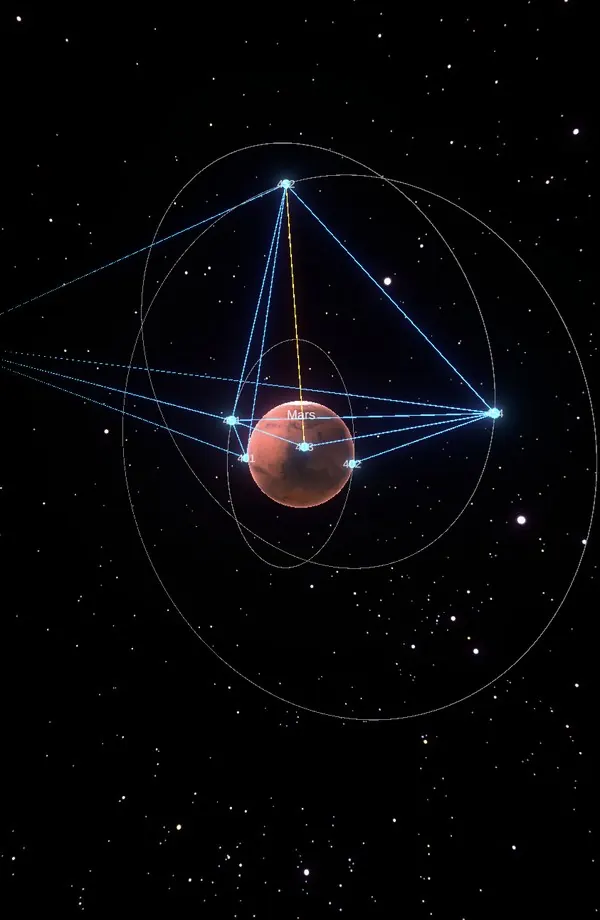
A signal to Mars takes minutes, and spacecraft see each other only now and then. Delay-tolerant networks keep data on board and forward it when the next link opens. I design the contact plans and routing behind them; my routing code runs in NASA's ION and HDTN.
A signal takes 3 to 22 minutes to reach Mars, depending on where the two planets are.
Explore delay-tolerant networks02

A sensor on a farm or a buoy can talk to a satellite directly. A handful of small satellites can then cover the whole planet, if devices wait for the next pass. I design these sparse constellations and the radio access that lets cheap, battery-powered devices use them.
Explore satellite IoT03

Thousands of satellites linked by lasers form a network that reshapes itself every second. I work on routing through that mesh, on pointing and holding optical links, and on how AI can help operators run fleets of this size.
Explore mega-constellations04

Computers in orbit can process data where it is collected, and whole data centres in space are now being proposed. Up there nothing can be repaired, every kilogram is launched, and all heat must be radiated away. I measure where it pays off and what it costs.
SpaceX says each of its Star Mind AI spacecraft will carry over 250 kW of solar power. All of it ends up as heat: at the ISS-based density we use, about 760 m² of radiator, some 7.6 tonnes.
Explore orbital computingParis, at Cnam: NTN Days 2026 on 13–14 October, which I co-organise with V. Conan and P. Gu and where I also give a talk. Then, on Thursday 15 October at 4 pm, a Cnam seminar: AI for Space, Space for AI: the rise and limits of the space cloud.
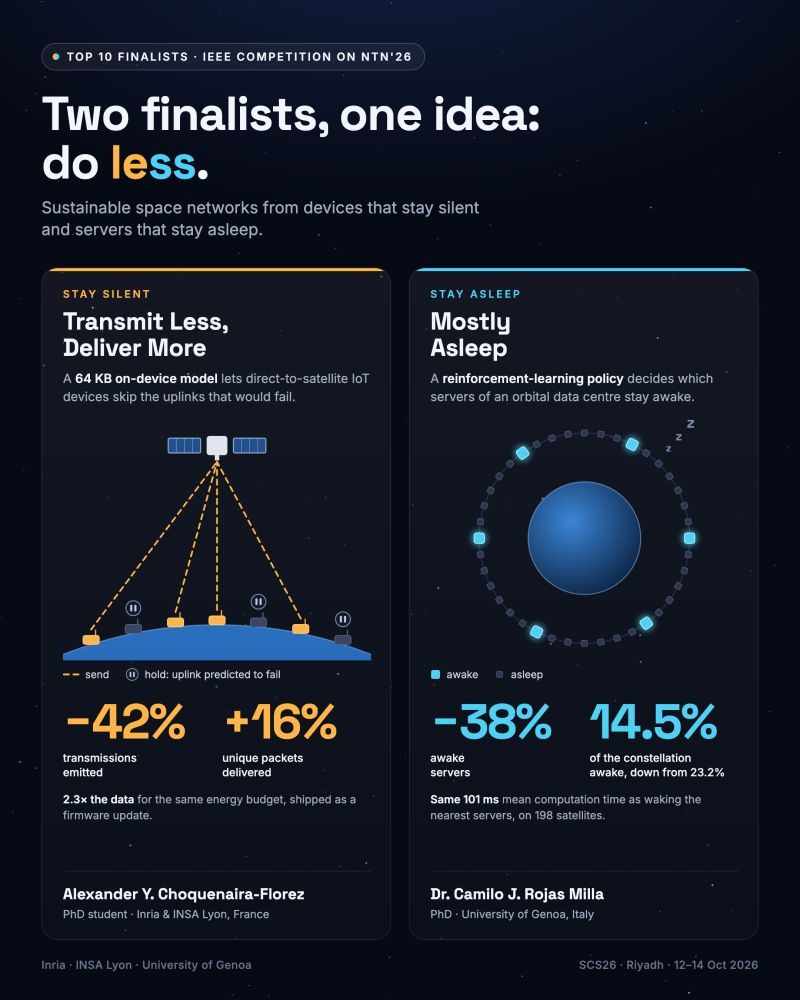
Two of my PhD students are among the ten finalists of the IEEE Competition on Non-Terrestrial Networks (NTN'26) 🛰️ 🎉
🟠 Transmit Less, Deliver More: Alexander Ylnner Choquenaira Florez, PhD student at Inria Lyon.
🔵 Mostly Asleep: Dr. Camilo Rojas Milla, PhD from the University of Genoa.
Two layers, one shared idea: in space, the most sustainable operation is often the one you skip.
The top 3 will be announced on 12 October at SCS26 in Riyadh. Camilo will be there to present both works, his own and Alex's.
Congratulations to both! Many thanks to my fellow supervisors Hervé Rivano and Fabio Patrone, and to the IEEE ComSoc Satellite & Space Communications TC and CST for organizing the competition Gunes Karabulut Kurt Giovanni Giambene Tomaso de Cola.
🔗 scs26.sa/ieee-competition-ntn26
#NonTerrestrialNetworks #SpaceSustainability #DirectToSatellite #OrbitalComputing #NTN
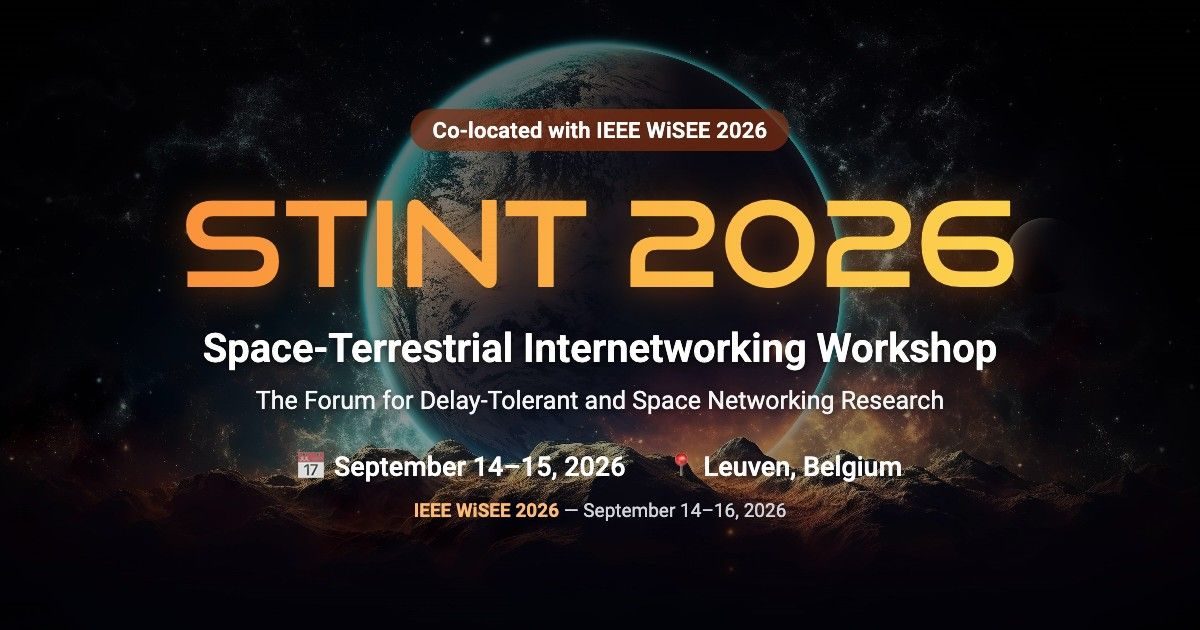
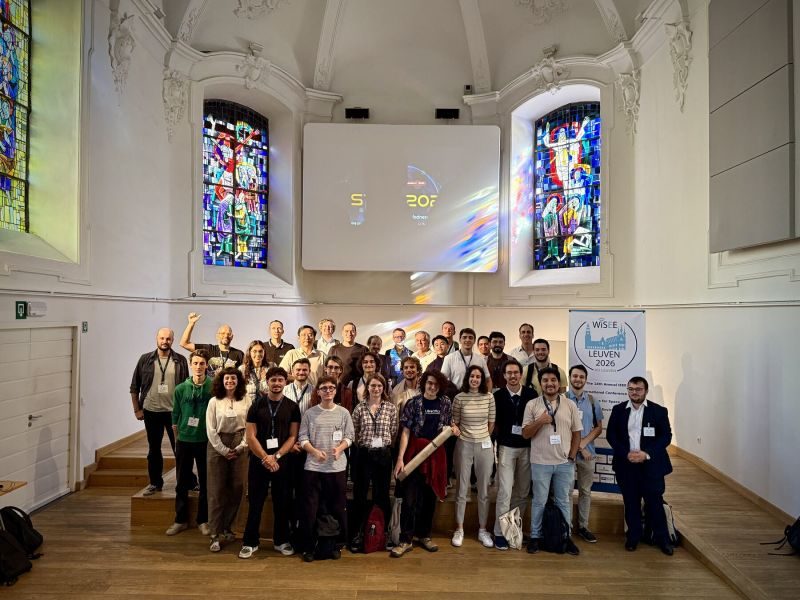
🛸 STINT 2026 is a wrap 🛸
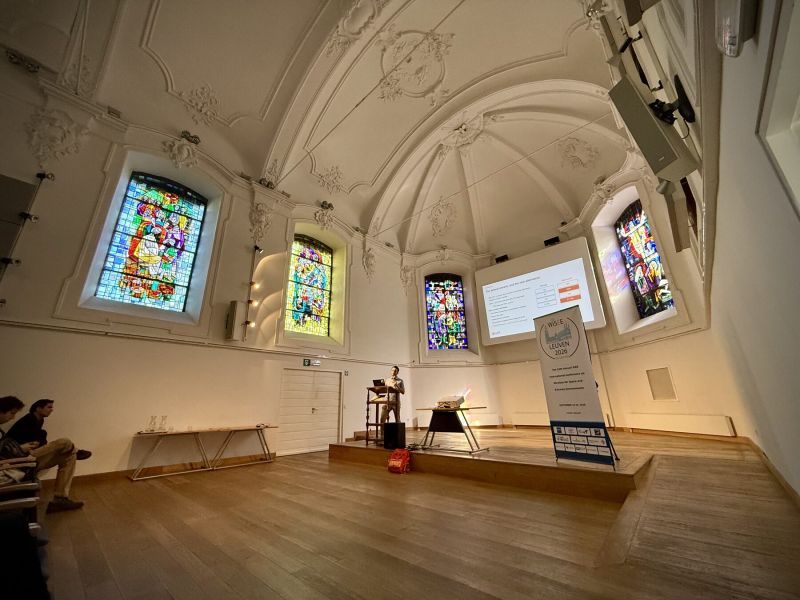
Two days at the Irish College in Leuven 🇧🇪, co-located with IEEE WiSEE 2026, for the 13th edition of the Space-Terrestrial Internetworking Workshop 🛰️.
The programme
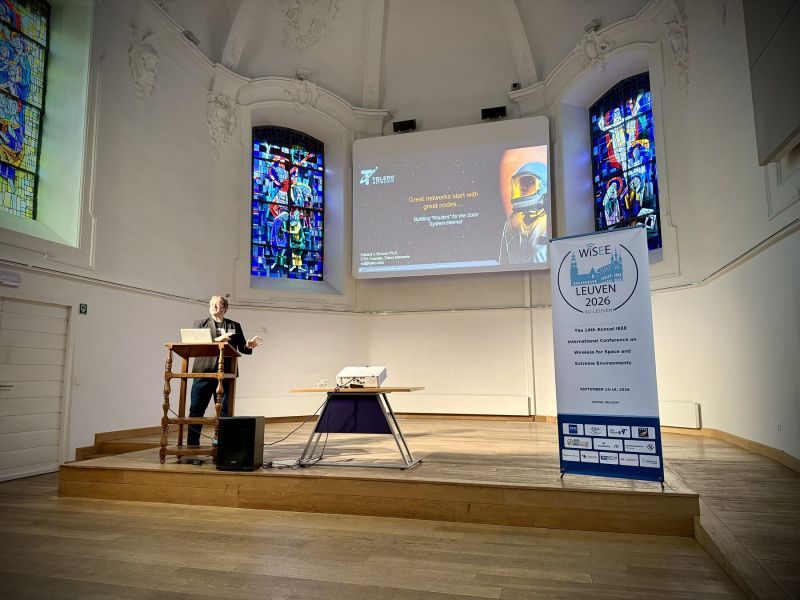
🔸 4 keynotes: Ed Birrane (Tolero Networks), Marius Feldmann (D3TN), Felix Flentge (ESA), Dr. Alberto Montilla (Spatiam)
🔸 4 invited talks, 10 peer-reviewed papers, 9 posters
🔸 Dedicated MISSION (mission-project.eu) and D3-CONNECT (d3-connect.space) sessions
🔸 A closing panel on where DTN and the Internet meet, with Kanglian Zhao (Nanjing University) joining the keynote speakers
Slides and photos from both days are online: stintworkshops.org
Thank you to Ali Abedi and the IEEE WiSEE team, to KU Leuven for the venue, and to our sponsors D3TN, IPNSIG and the MISSION project.
STINT 2027 is in planning. Watch this space.
#DTN #SpaceNetworking #DelayTolerantNetworking #IEEEWiSEE #InterplanetaryInternet

I'm a researcher at Inria in Lyon, France, and a guest researcher and professor at CONICET–UNC in Córdoba, Argentina, and at Saarland University in Germany. I chair the SPACE Research Group of the IRTF, where the Internet community works on networking beyond Earth, and the STINT workshop, which I co-founded in 2014. I have written more than 160 papers on space networking.
ORCID Google Scholar DBLP GitHub LinkedIn Inria page Full CV (PDF)